
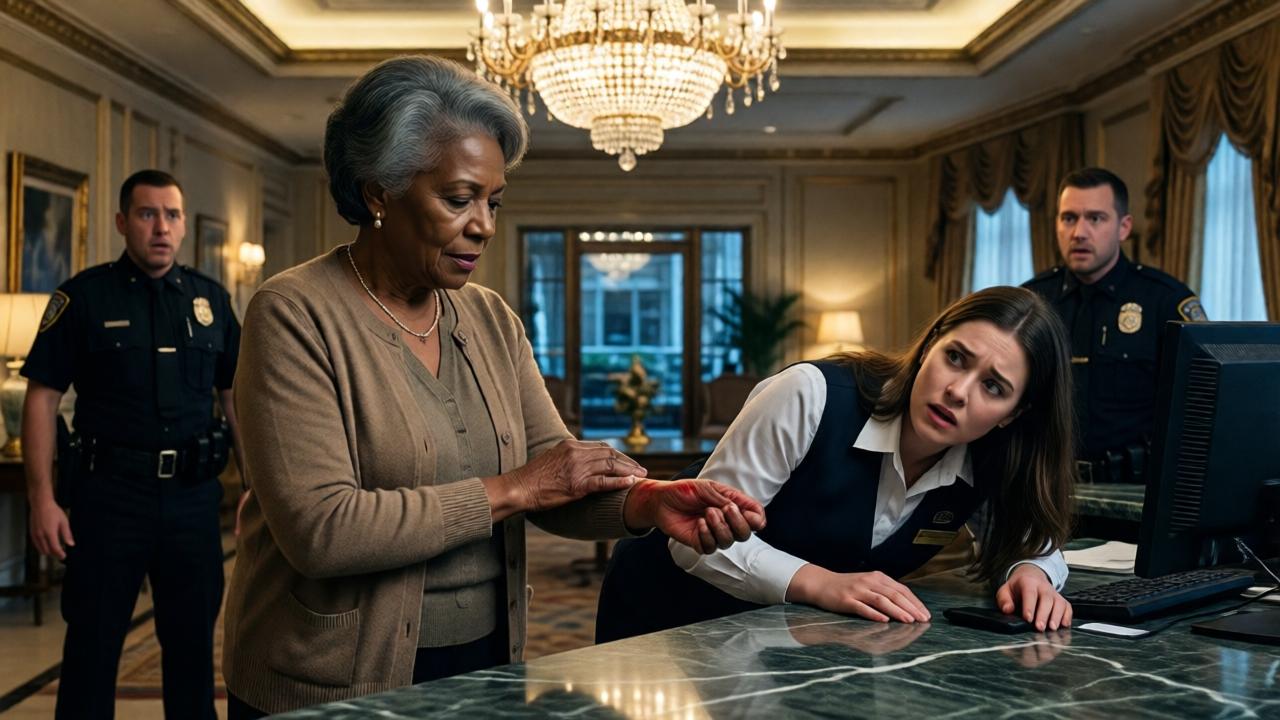
The silence in the Bennett Grand’s opulent lobby was thicker than the Italian marble. As the handcuffs clicked open, Claire, the front desk clerk, slid down the registration desk, her professional facade crumbling into sheer terror. Margaret Bennett, the 68-year-old woman in the faded cardigan she had just described to 911 as a ‘suspicious, possibly armed person,’ calmly rubbed her wrists. The general manager, Mr. Thorne, was stammering apologies that evaporated in the air. Margaret’s gaze swept the room—the stunned white couple, the horrified elderly woman in fur, the two police officers frozen in place, and the dozens of smartphone cameras silently recording everything. ‘My office,’ she said, her voice not loud, but carrying the weight of absolute authority. ‘All of you. Now.’
Inside the panoramic suite that served as her office, Margaret did not sit behind the monumental desk. She stood by the window, looking down at the city. ‘The lawsuit,’ she began, turning to face the assembled group—Claire, Mr. Thorne, the hotel’s head of security, and the two officers, whose sergeant had now joined them. ‘Will be for wrongful arrest, racial profiling, and intentional infliction of emotional distress. The settlement demand is five hundred thousand euros.’ The number hung in the room like a physical blow. Claire gasped. ‘But… I didn’t know!’ Margaret’s eyes finally showed a flicker of the storm within. ‘You never needed to know who I was to treat me like a human being,’ she repeated her lobby statement, each word precise. ‘Your ignorance is not a defense; it is the core of the offense.’
The consequences unfolded with brutal efficiency. The city’s police department, eager to avoid a scandalous court battle and the viral video evidence, agreed to a 250,000 euro contribution to the settlement. ‘This isn’t a fine to the city,’ Margaret specified. ‘This is a direct fund for community de-escalation and implicit bias training for every officer.’ The remaining 250,000 euros came from the Bennett Grand’s corporate insurance. Mr. Thorne, pale and defeated, confirmed the policy would pay, but the hotel’s premiums would skyrocket. ‘A cost of doing business when your business fails at basic decency,’ Margaret noted. For Claire, being fired was just the start. The viral video made her unemployable in hospitality. ‘No one would touch me,’ she confessed in a later interview. ‘That half-million euro price tag followed my name in every background check.’

But Margaret Bennett wasn’t finished. The incident, she declared, revealed a systemic rot. She announced the immediate closure of the Bennett Grand for a ‘renovation of its soul.’ For one month, the hotel would operate not for paying guests, but as a free, luxury respite center for elderly homeless women and survivors of domestic violence, staffed by the existing employees as part of a mandatory retraining program. ‘You will learn who your guests really are,’ she told her staff. The story exploded. News outlets dubbed it ‘The Half-Million Euro Lesson.’ The hotel’s brand was paradoxically burnished; what could have been a PR catastrophe became a story of radical accountability.
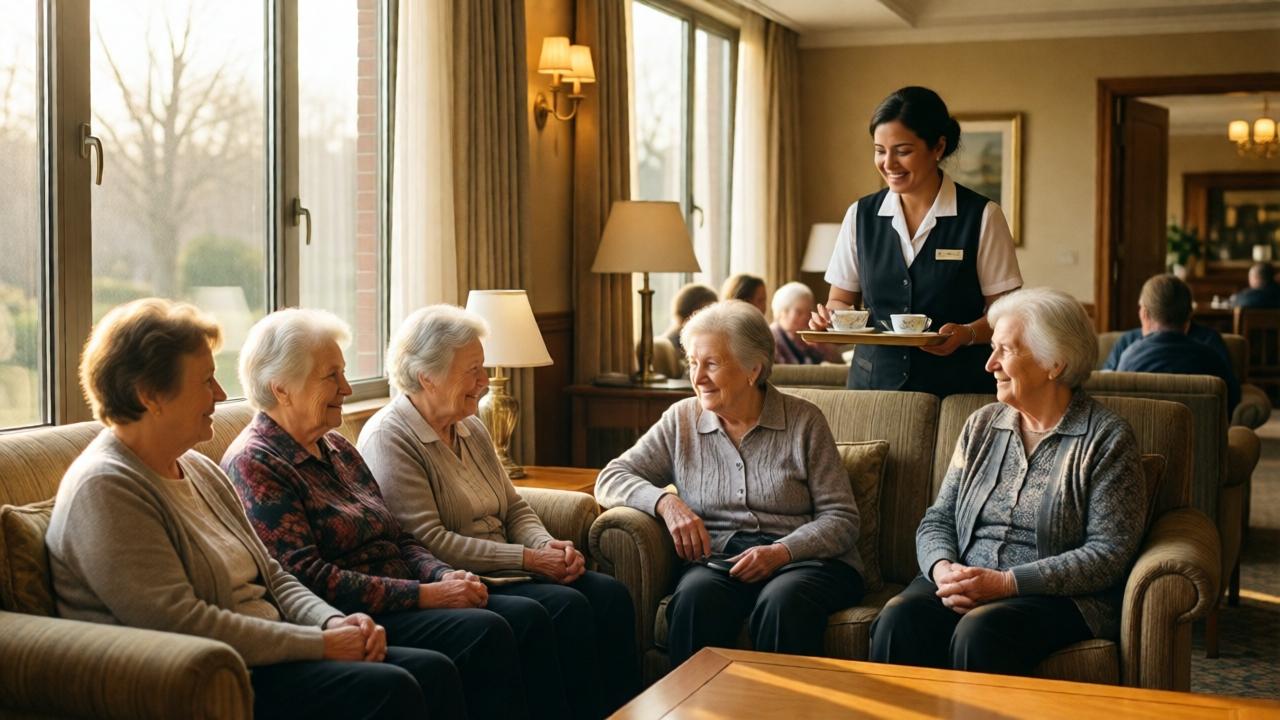
On the final day of the community program, Margaret walked through the grand lounge, now filled with women enjoying afternoon tea, their laughter echoing off the crystal. She found Claire, who was volunteering as part of a court-ordered community service, quietly helping an older woman with a blanket. They didn’t speak. Claire simply met her gaze, and for the first time, there was no venom, no fear, just a profound, weary understanding. The cost had been quantified—500,000 euros—but the value of the lesson was immeasurable. As the hotel prepared to reopen, a new plaque was installed discreetly behind the front desk, visible only to the staff. It read: ‘Every person who walks through these doors is the owner of their own dignity. Treat them accordingly.’
The story of the faded cardigan and the half-million euro reckoning became a case study in boardrooms and ethics seminars. Margaret Bennett, when asked if it was worth the massive financial and operational hassle, simply said, ‘What price do you put on the moment a person is made to feel subhuman in their own home? I merely presented the invoice.’ The Bennett Grand reopened, its marble a little less cold, its chandelier light a little less harsh, carrying within its gilded walls a story that cost exactly 500,000 euros to tell—a permanent reminder that humanity is always the most valuable asset on the balance sheet.