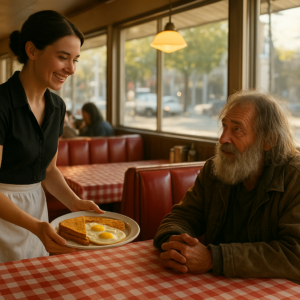

The studio kitchen was a cavern of polished steel and silent judgment. Nikol’s cruel offer—’If you cook well, I’ll give you $60,000’—hung in the air, mingling with the condescending smirks of the twenty established chefs. Tanisha, in her worn sneakers and simple clothes, felt the heat of their stares more intensely than any stove she’d ever worked. She was a speck of dust in their pristine, Michelin-starred world. For a heartbeat, the old voices echoed: ‘You work in a dump.’ ‘Just do the basics and shut up.’ She almost turned to leave, the weight of a lifetime of being unseen pressing down. But then she remembered Dorothy’s fierce eyes in that Brooklyn kitchen, and the taste of that thrown-away sauce. She took a slow, deep breath, walked past the laughing chefs, and stood before her assigned station. It was bare except for a single, ordinary knife.
The challenge was deceptively simple: elevate a classic beef bourguignon in two hours. As the other chefs erupted into a flurry of activity, sourcing truffle oil, foie gras, and rare morels from the show’s lavish pantry, Tanisha stood perfectly still. Nikol watched from the judges’ table, a faint, cruel smile playing on her lips. ‘The clock is ticking, darling. Or would you like to forfeit and save us all the time?’ Tanisha ignored her. She was not in a TV studio; she was back in her Brooklyn kitchen, hearing the sizzle of onions, feeling the rhythm of a dozen tasks at once. She moved. She selected her ingredients with a quiet, unerring certainty: chuck roast, carrots, onions, a bottle of robust red wine, thyme from the herb garden. No gold leaf, no caviar.
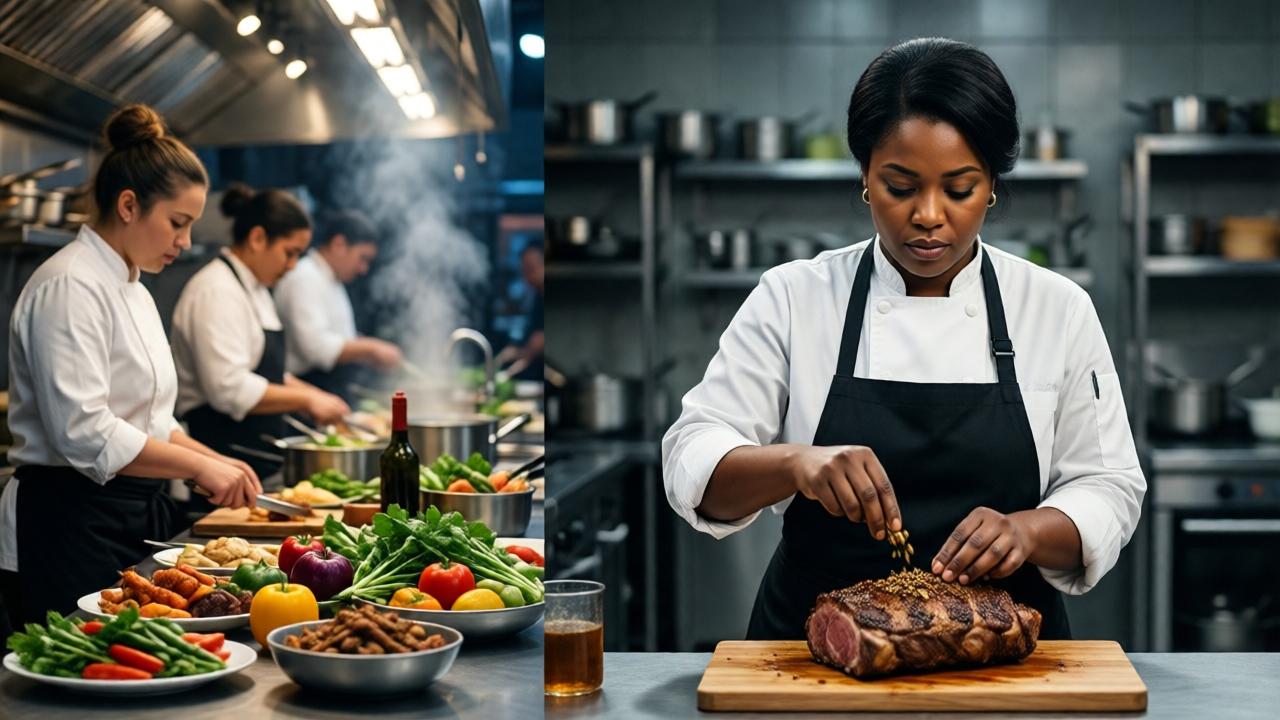
While others fussed with molecular gastronomy kits, Tanisha began the patient work of building flavor. She seared the meat until it sang with a deep, caramelized crust, deglazed the pot with wine that hissed and steamed, and built a broth that whispered of patience. One chef nearby, a man named Laurent with a resume longer than his knife, sniffed derisively. ‘This is peasant food. You cannot win a competition with stew.’ Tanisha didn’t look up. ‘My grandmother always said,’ she replied softly, her hands never stopping, ‘the most expensive ingredient you can add is care. And it’s free.’ The studio, for the first time, grew quiet around her station. The producers’ cameras, initially focused on the flashy chefs, began to linger on her methodical, almost meditative process.
As the two hours dwindled to minutes, a rich, profound aroma began to emanate from Tanisha’s pot—a scent of earth, wine, and slow-cooked love that cut through the clinical air of the studio. The judges, including a skeptical Nikol, approached for the tasting. One by one, the elaborate dishes were sampled: technically perfect, visually stunning, but somehow cold. Then, they reached Tanisha’s bourguignon. It looked humble in its plain white bowl. Nikol took a bite. Her eyes, which had been narrowed in anticipation of failure, widened. She chewed slowly, then stopped. The studio held its breath. ‘What… what is this?’ Nikol finally asked, her voice uncharacteristically quiet.

“It’s food,” Tanisha said, her voice clear and steady for the first time. “It’s the food of people who work hard and want something good at the end of the day. It’s the taste of my neighborhood.” Nikol put the spoon down, a complex war of emotions on her face—disbelief, respect, and a dawning horror that she had been utterly wrong. The head judge, a celebrated French chef, tasted next. He closed his eyes. “This… has soul,” he murmured. “The layers… you can taste every hour it simmered.” When the scores were revealed, the result was unprecedented. Tanisha won not just the challenge, but a unanimous vote from the judges. Nikol, forced by the rules of her own show, had to present the symbolic chef’s jacket. Her hand trembled slightly as she held it out.
Backstage, amid the chaos of crew and eliminated chefs, Nikol found Tanisha alone. The bravado was gone. “I owe you an apology,” Nikol said, the words seeming to cost her dearly. “And the sixty thousand. It’s yours.” Tanisha looked at the check, then back at Nikol. “Keep the money,” she said. “Use it to fund a scholarship for someone who cooks in a ‘dump’ but has the heart for it. I didn’t come here for your cash. I came to prove that a dish made with respect is worth more than a dish made for show.” She walked out of the studio, not to the subway back to Brooklyn, but to a meeting with Dorothy and a lawyer.