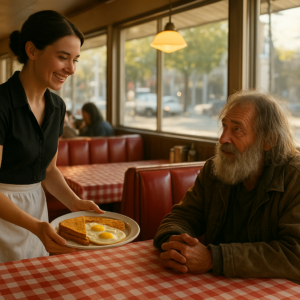

Sir, I would like to order a plate of cream mushroom pasta. Those were the words I spoke, my voice steady despite the worn coat and battered hat that clung to my frame. I had walked into my own restaurant, a modest establishment in a small town near Sedona, Arizona, to observe how my staff treated an ordinary-looking customer when the boss wasn’t around. The manager, a man named Derek with a permanent sneer, barked back, “Get out of here. We don’t serve beggars like you. What do you want cream mushroom pasta? You people are so stingy. You don’t even leave tips.” Laughter erupted from the diners, phones raised to capture the spectacle. But I sat quietly, absorbing every word.
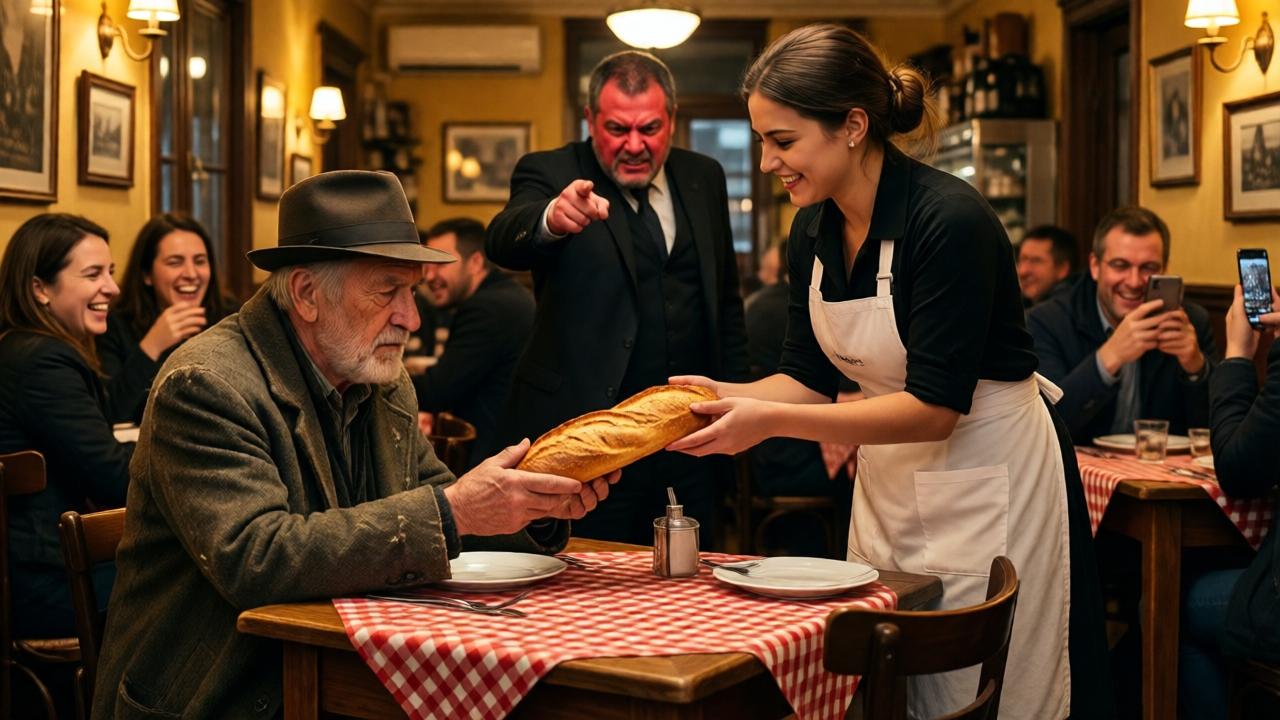
Then a young waitress, her name tag reading “Elena,” rushed from the kitchen, clutching a warm, freshly baked baguette. Her hands trembled as she leaned close and whispered, “Sir, this just came out of the oven. Please take it.” The manager’s face went pale. “Are you crazy? That’s our signature baguette. You’re giving it to someone like him? Get him out of here now!” But Elena ignored him, her eyes meeting mine with a kindness that cut through the mockery. I took a note from my pocket, slipped it into her hand, and said, “Tomorrow at 10 in the morning, come to this address.” Then I turned and left, the laughter chasing me to the door.
Elena opened the envelope that night, her hands shaking. The address read: “Headquarters of the Group, 980 Sunset Boulevard, Beverly Hills, Los Angeles.” She told me later that her heart stopped. “I thought it was a prank at first,” she confessed. “But something in your eyes made me believe.” The next morning, she took the bus, her uniform pressed and her hopes fragile. She arrived at a gleaming glass tower, the lobby filled with polished marble and the scent of expensive coffee. A receptionist directed her to the top floor, where I sat behind a mahogany desk, clean-shaven and dressed in a tailored suit.
When Elena walked in, her jaw dropped. “You… you’re the founder?” she stammered. I smiled and gestured for her to sit. “Elena, you showed compassion when everyone else showed cruelty. That is the quality I value most.” I told her that the manager, Derek, had been fired that morning, along with the staff who had joined in the humiliation. “But you,” I continued, “are now the new manager of that restaurant. And I’m enrolling you in our executive training program.” Tears welled in her eyes as she whispered, “I don’t know what to say.” I handed her a contract. “Say yes.”

A month later, Elena returned to the restaurant in Sedona, but this time as the manager. She gathered the remaining staff and said, “I want you to remember this: every customer who walks through that door deserves respect, whether they wear a suit or rags.” She implemented a new policy: free meals for anyone in need, no questions asked. When I visited incognito again, wearing the same old coat and hat, she recognized me instantly and hugged me. “Thank you for giving me a chance,” she said. I replied, “No, thank you for reminding me why I started this business.”
- The old manager and staff were terminated for violating company values
- Elena received a full scholarship to the group’s hospitality management program
- The restaurant now serves a ‘Pay It Forward’ menu for those in need

The story spread quickly. Local news picked it up, and soon the restaurant became a symbol of second chances. People drove from miles away just to meet Elena and hear her story. “I never expected this,” she told a reporter. “All I did was give a hungry man some bread.” But I knew it was more than that. She had shown that true wealth isn’t measured in bank accounts, but in the kindness we extend to strangers. As for me, I still visit my restaurants in disguise, because you never truly know your business until you see it through the eyes of those who have nothing.