
The wave of laughter crashed over Emma like a physical blow. The host’s mocking smile, the audience’s cruel delight, the blinding stage lights—it all fused into a single, suffocating moment of humiliation. She stood frozen, her knuckles white around the neck of her cracked guitar, the only solid thing in a world that seemed to be spinning. ‘If you sing well, I’ll give you $100,000, and I’ll even marry you,’ he had said, his voice dripping with condescension. The promise was a joke, and she was the punchline. In the front row, she could see Victoria and the other contestants smirking, their earlier backstage taunts now validated for a national audience. Emma closed her eyes, seeking the dark, familiar silence of the bus shelter, but found only the roar of the crowd.
Then, a memory surfaced—not of the streets, but of home. Her mother’s voice, soft and clear, singing a lullaby. Her father’s rough hand strumming the very guitar she now held. ‘Sing for the joy of it, Emmy,’ her mother had said. ‘The song is yours, no one can take that.’ The host was still chuckling, adjusting his cufflinks, waiting for her to flee. Instead, Emma opened her eyes, looked directly into the nearest camera, and whispered into the microphone, ‘This isn’t for the money. Or a plate of food. This is for them.’ A hush, curious and tentative, began to fall over the auditorium.
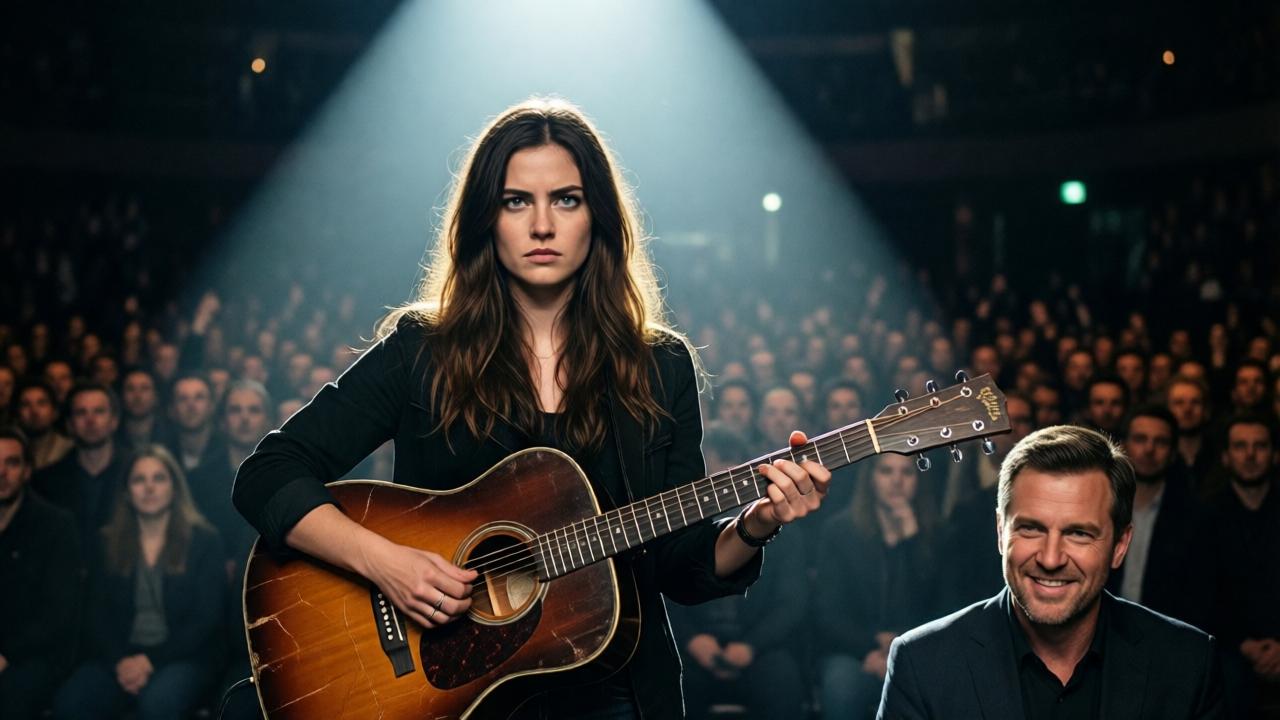
Her fingers found the strings, calloused and sure. She began to play a simple, haunting melody, one she had composed during countless cold nights. The first note that left her lips was pure, clear, and filled with a raw, aching vulnerability that sliced through the last remnants of laughter. She sang of loss, of empty doorways and hungry nights, but also of stubborn hope, of stars seen through shelter roofs, and the kindness of strangers like David, Sarah, and Marcus. ‘You see a shadow where I stand,’ she sang, her voice gaining strength, ‘but I’m built from dust and dreamland.’ In the audience, the mocking smiles vanished, replaced by stunned silence. The host shifted uncomfortably in his shiny shoes.
As the chorus swelled, something magical happened. The technical imperfections—the slight rasp, the old guitar’s muted tone—melted away, leaving only undeniable, soul-shaking truth. The camera cut to Victoria, whose arrogant smirk had completely dissolved into open-mouthed shock. It panned to Richard, the contest owner, who was leaning forward, his earlier paternalistic kindness replaced by the sharp calculation of a man recognizing a goldmine. Backstage, Marcus pumped his fist, whispering, ‘That’s my sister. That’s my street sister.’

The final note hung in the air, trembling, then faded into absolute silence. For three full seconds, nothing moved. Then, a single person in the balcony stood up and began to clap. Then another. And another. The applause erupted not as polite recognition, but as a thunderous, cathartic roar. The host, utterly flustered, stumbled toward her, microphone in hand. ‘I… I don’t know what to say,’ he stammered, the mocking tone entirely gone. Emma simply looked at him, her chest heaving. ‘The offer,’ she said quietly, the stage mic catching her words. ‘The $100,000. And the marriage. Were you serious?’ The audience’s laughter this time was warm, cheering for her boldness. The host turned beet red, saved only by Richard striding onto the stage.
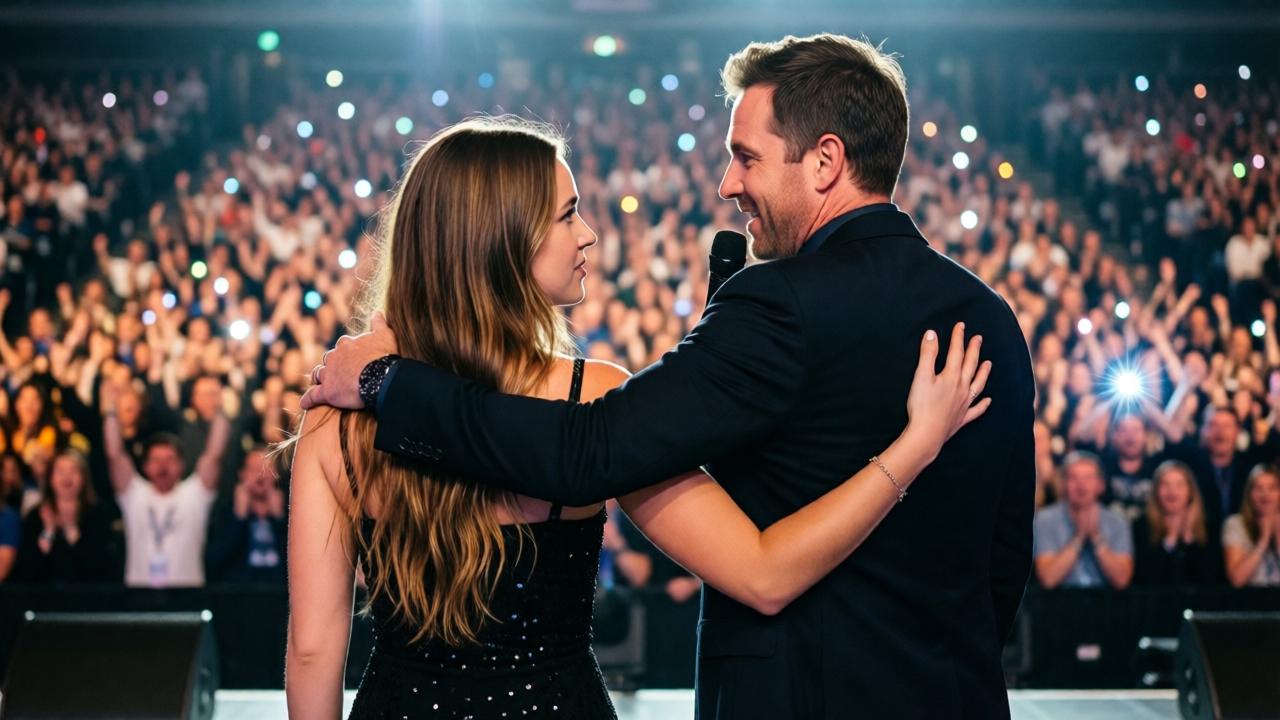
Richard took the microphone, placing a seemingly protective arm around Emma’s shoulders. ‘Ladies and gentlemen,’ he boomed, ‘America, you have just witnessed the birth of a true star! This is what Rising Stars is all about!’ He turned to Emma, his smile broad and televisual. ‘The offer from our host was made in poor taste, and we apologize. But your talent, young lady, is priceless. You have a place in the next round, and a contract waiting backstage.’ The audience cheered again. Yet, as Emma looked from Richard’s gleaming smile to the host’s embarrassed grimace, and then out to the sea of applauding strangers, she realized the game had only changed, not ended. She had won the battle for the stage, but the war for her own voice was just beginning.