

The auction house hummed with the low murmur of bidders and the occasional clatter of a paddle. Nora had been here before, enough times to know the rhythm. But this time, everything felt different. She had her eye on a Victorian walnut desk, 1880s, original hardware, a hidden drawer that still latched clean. She’d run the numbers until they made sense—flip it right, cover two months of back rent on her workshop, lose it, and Friday’s deadline became a wall she couldn’t climb. Then Walter stepped into her path.
“Miss, I’m 240 short. That desk belonged to my wife. She passed in March. I just need to bring it home.” His voice didn’t rise. That was the part that cut through everything. Nora looked at his hands—they were shaking around $740 in cash, every bill he had. The attendant was already moving toward them. Five minutes to full payment or it transfers to the next bidder. Nora looked at the desk. She looked at her bid number on the table. She opened her wallet and counted out 240. “Pay the man.” Walter stared at her like she’d said something in a language he was still translating.

She drove back to her workshop on NW Couch and sat down at her bench without taking off her jacket. The budget sheet was still open on her laptop. No desk. No new inventory. No way to cover the workshop by Friday. She didn’t close the laptop. She just sat there under the fluorescent light with sawdust on her sleeves and let the math be what it was. Thursday afternoon she called the landlord and asked for two more weeks. He said someone else had already been asking about the space. Friday was Friday.
That same Tuesday, Walter went back to Cascade to sort some paperwork on the desk. He overheard the floor manager on the phone, frustrated. A restorer had just pulled out of a contract to assess and prep a full estate lot coming in from Lake Oswego. 17 pieces. Needed someone immediately. Walter didn’t hesitate. “I know someone,” he said, and wrote down Nora’s number on a scrap of receipt paper.
- 17 pieces of antique furniture from a Lake Oswego estate
- Assessment and restoration needed within two weeks
- Budget of $8,000 for the full contract
- Previous restorer backed out due to scheduling conflicts
Nora got the call Wednesday morning. She nearly dropped her coffee when the floor manager explained the scope. “Walter said you were the best he’d ever seen. Said you knew the value of things, not just the price.” She drove to the estate that afternoon, notebook in hand, and spent hours examining each piece. A Chippendale sideboard, a Federal-style secretary desk, a set of Queen Anne chairs—each one a story waiting to be told. She took detailed notes, snapped photos, and felt something she hadn’t felt in weeks: hope.
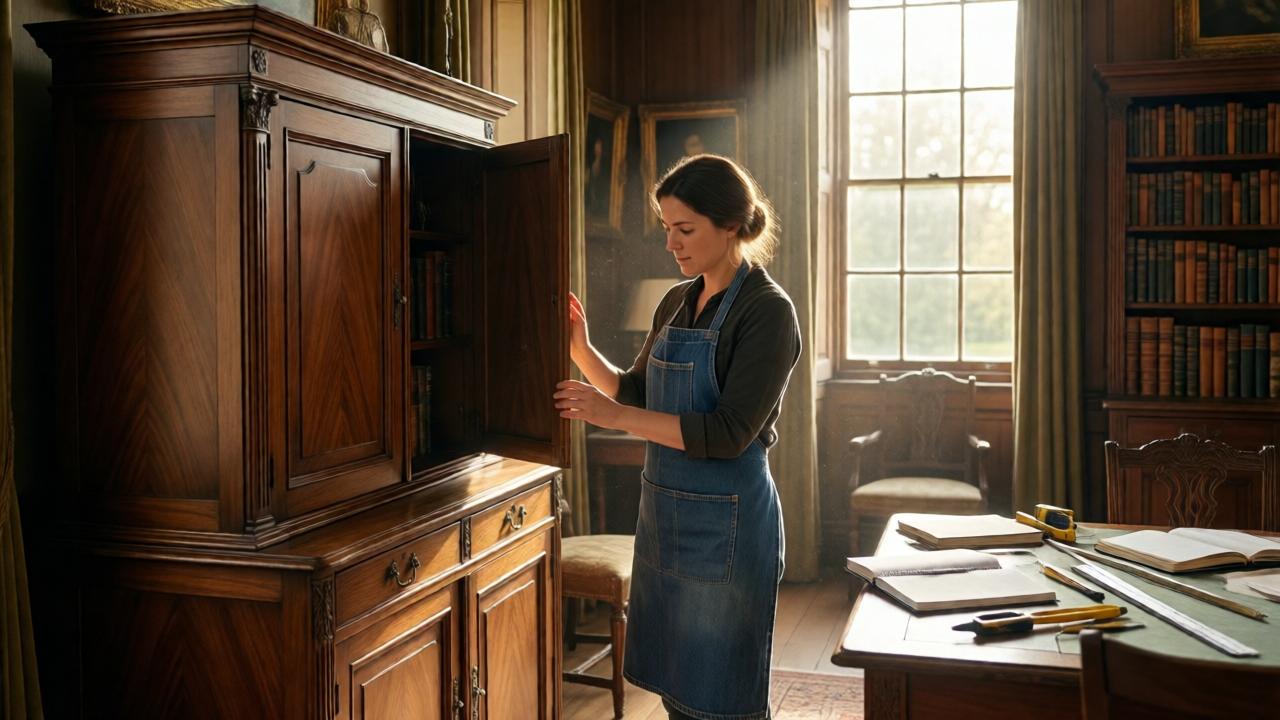
The contract was signed by Friday. Nora walked into her landlord’s office with a check for two months’ back rent and a smile that felt foreign on her face. “I’ll need another six months at least,” she said. The landlord nodded, surprised. That evening, she drove to Walter’s house to thank him. He was sitting on the porch, the Victorian walnut desk visible through the window behind him, polished and loved. “She would have liked you,” he said quietly. “You gave me more than a desk. You gave me her memory back.”
Nora didn’t have words. She just nodded and handed him a small card—her workshop number. “If anything ever needs fixing, call me.” She walked back to her car, the evening air cool and clean. The budget sheet in her laptop was closed now. The workshop lights were on. And for the first time in months, the math didn’t feel like a wall. It felt like a door.
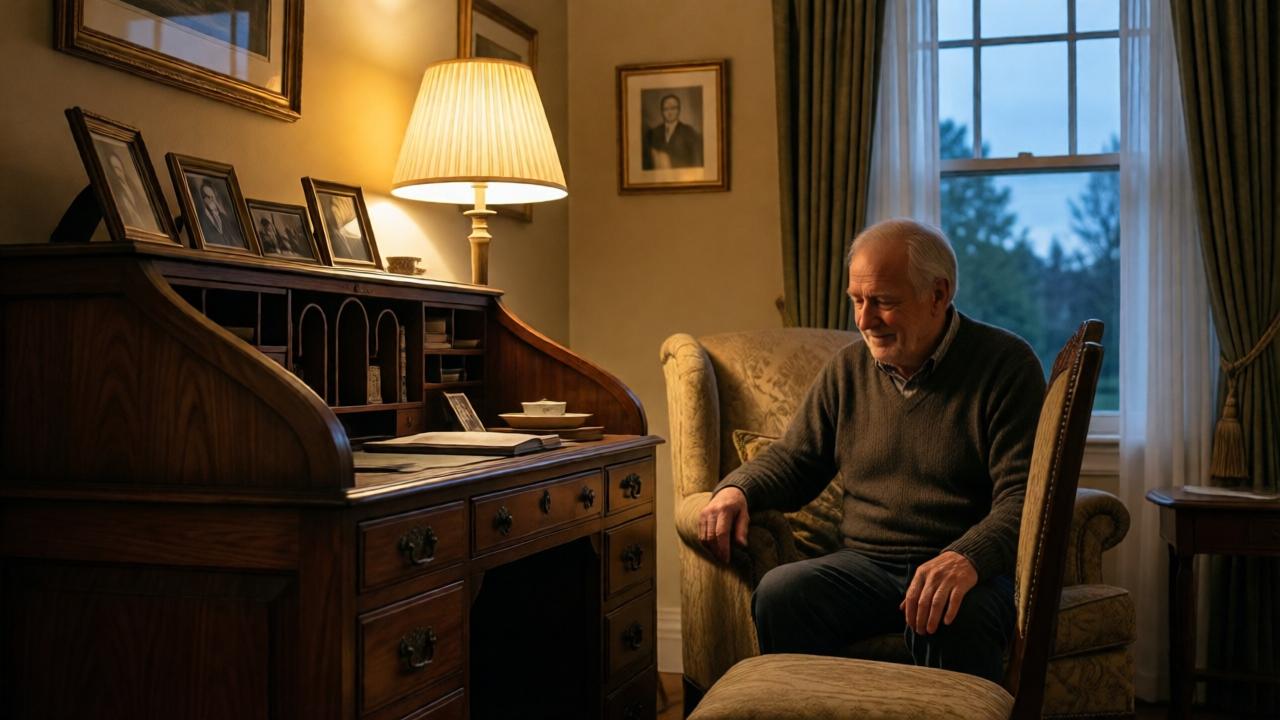
The Lake Oswego estate turned out to be the biggest job Nora had ever landed. Word spread among collectors and dealers. Within a month, she had three more contracts lined up. She never did flip that Victorian walnut desk for profit. But she learned something more valuable: sometimes the best investment isn’t in furniture. It’s in people. And when you give without counting the cost, the returns have a way of surprising you.