
The cafeteria had never felt so quiet. After Gloria’s words, the clatter of trays and chatter of students faded into a distant hum. Nadia sat frozen, her fingers gently touching the hearing aid now back in her ear. She could hear again, but something else had shifted—a warmth spreading through her chest. Gloria didn’t walk away. She pulled up a chair and sat down beside Nadia, her knees creaking as she settled. “You okay, honey?” she asked softly. Nadia nodded, but her eyes glistened. “Thank you,” she whispered, the words barely audible. “Don’t thank me yet,” Gloria said with a gentle smile. “We’ve got work to do.”
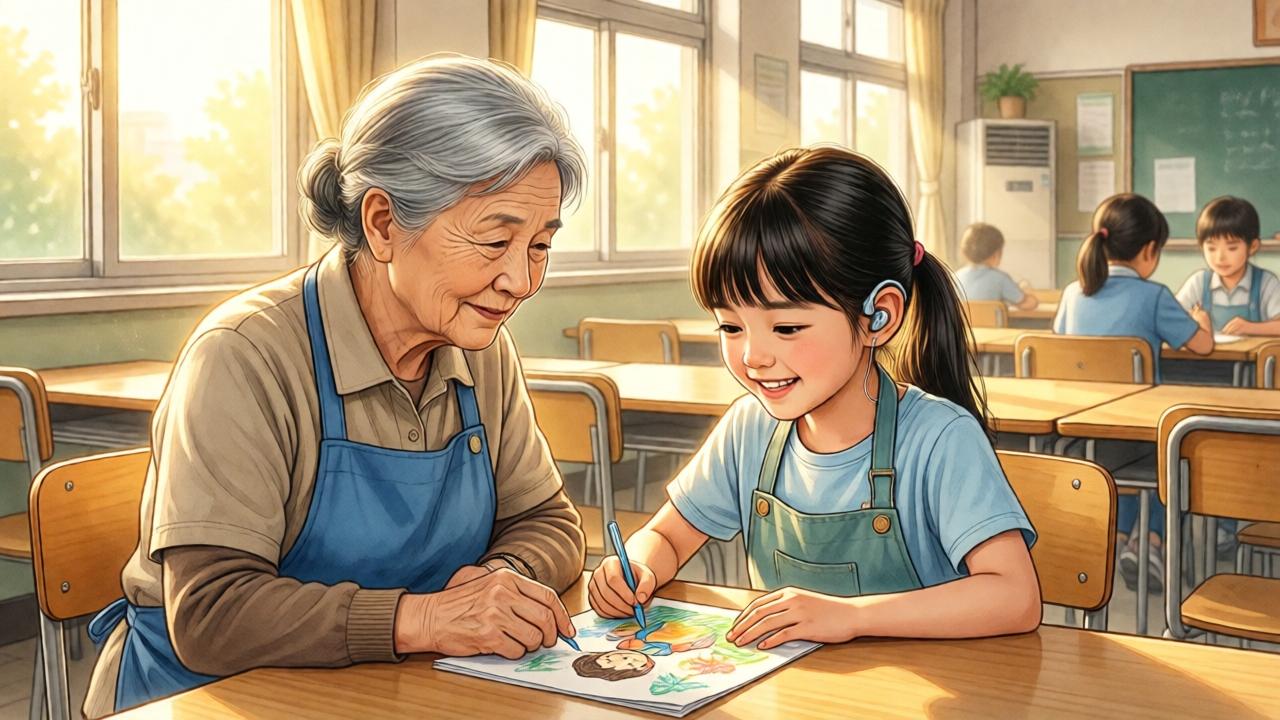
That afternoon, after the last bell rang, Gloria found Nadia waiting by the lunch counter. The girl clutched a crumpled piece of paper. “I drew this for you,” she said, holding it out. It was a crude but heartfelt sketch of two figures—one tall with a hairnet, one small with a hearing aid—holding hands under a rainbow. Gloria’s eyes welled up. “It’s beautiful, Nadia. I’m going to frame it.” She reached into her apron pocket and pulled out a small card. “I want you to have this,” she said. “It’s a coupon for free ice cream every Friday—just for you.” Nadia’s face lit up like the sun breaking through clouds.
Weeks passed, and the incident with Brittany faded from the headlines of school gossip, but not from Nadia’s heart. She started sitting at the lunch counter every day, close enough to see Gloria’s kind face. One Tuesday, Gloria brought a small device from home—an old tablet with a sign language app. “I’ve been learning,” she said, her fingers clumsy but determined as she spelled out “H-E-L-L-O.” Nadia laughed—a real, full laugh that echoed across the room. “You’re doing great,” she signed back, her hands moving gracefully. Other students began to notice. A boy named Marcus asked, “Can you teach me too?” Soon, a small group gathered around the counter, learning basic signs from Nadia.
- Nadia became the unofficial sign language teacher at lunchtime.
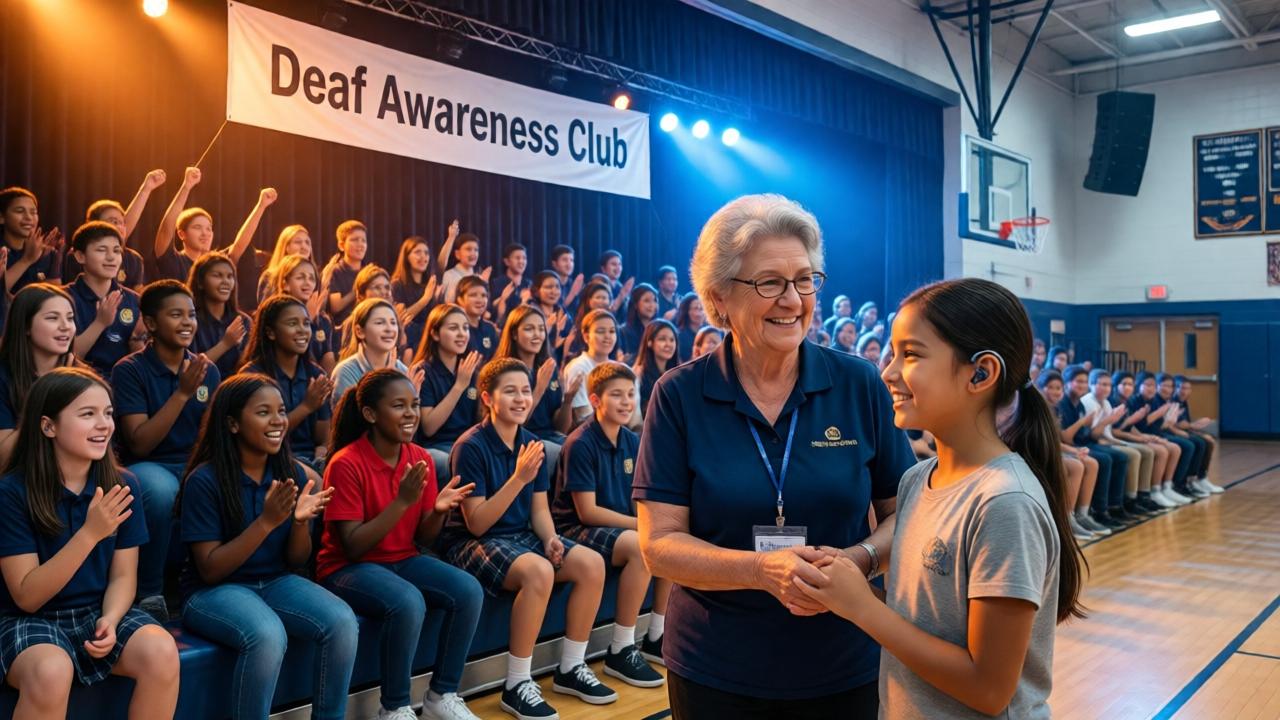
- Gloria convinced the school to start a weekly Deaf Awareness Club.
- Brittany returned from suspension, quiet and avoiding eye contact.
- Three other students with hearing aids came forward, no longer hiding.
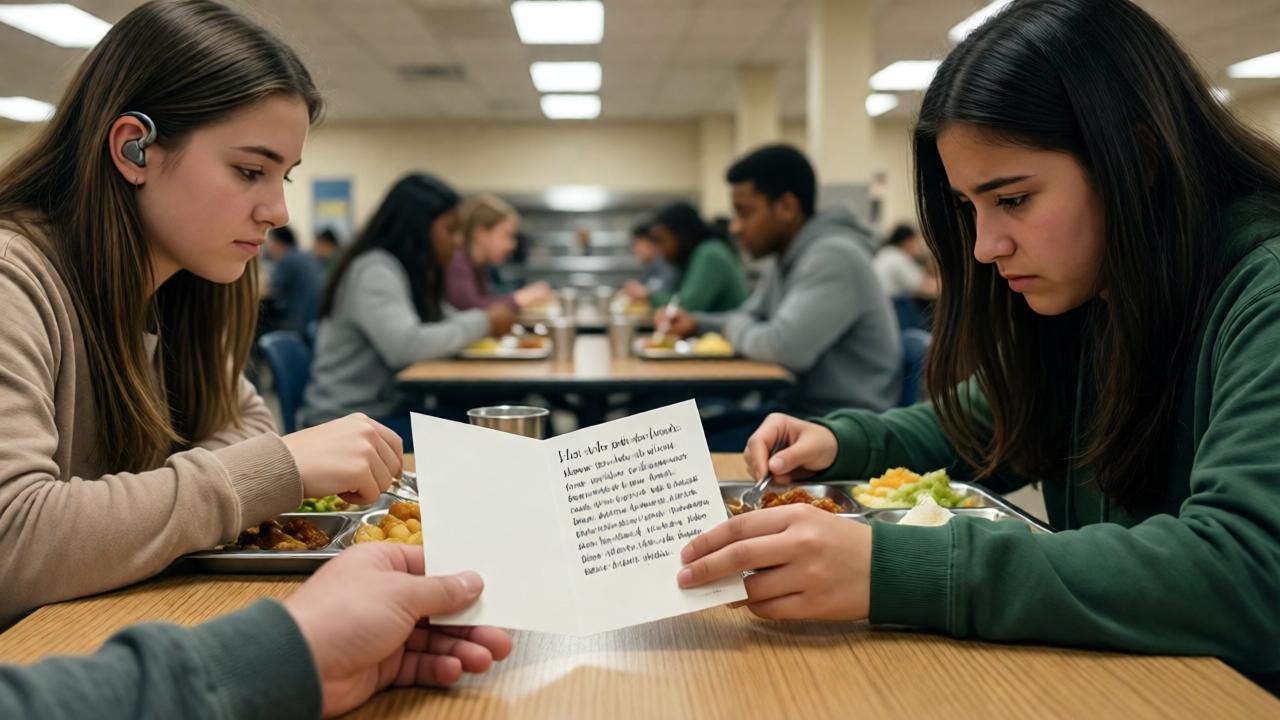
The turning point came three months later. Brittany approached the lunch counter alone, her face pale. She didn’t look at Nadia directly. “I’m sorry,” she mumbled, pushing a small envelope across the counter. “I don’t expect you to forgive me. But I want you to have this.” Inside was a hand-drawn card with a simple message: “I was wrong. You’re not broken. I was.” Nadia looked at Gloria, who nodded encouragingly. “Thank you,” Nadia said quietly. Brittany’s shoulders sagged with relief. “Can I… sit with you sometime?” she asked. Nadia hesitated, then nodded slowly. “Sure. But you have to learn the sign for ‘sorry’ first.” A small smile flickered across Brittany’s face.
By the end of the school year, the Deaf Awareness Club had 30 members. Gloria’s grandson’s name, Tommy, was stitched onto a banner that hung in the cafeteria. “He would have loved this,” Gloria told Nadia one afternoon, her voice thick with emotion. “He always wanted to feel like he belonged. Now, because of you, a lot of kids do.” Nadia shook her head. “Because of you, Gloria. You moved when everyone else stayed still.” The lunch lady hugged her tightly, and for a moment, the noise of the cafeteria didn’t feel like static anymore—it felt like music.
Nadia never forgot that day in the cafeteria—the crack of her hearing aid on the tile, the silence that followed, and the woman with bad knees who stood up for her. Years later, when she became a teacher herself, she kept a framed drawing in her classroom: two figures under a rainbow. And every time a student felt invisible, she would tell them this story. “You don’t need a title to change someone’s world,” she would say. “You just need to move when everyone else stays still.” The lunch lady had taught her that. And some lessons, once learned, echo forever.