
The room was thick with the scent of antiseptic and despair. Grandpa had been in a wheelchair for years, his legs as still as stone, and no one—not the doctors, not the treatments, not the endless prayers whispered in the dark—had been able to change that. The family had accepted it, but acceptance didn’t stop the tears. In the living room, everyone was quietly breaking down. Everyone except the youngest grandson, Jack.
Jack sat apart from the others, a small Bible tucked into the pocket of his jacket. He heard the mocking whispers from his older brother, who snapped angrily, “Your faith can’t save him. It’s over.” But Jack said nothing. He simply watched his grandpa’s trembling hands, his own heart beating with a quiet certainty that defied the gloom around him.
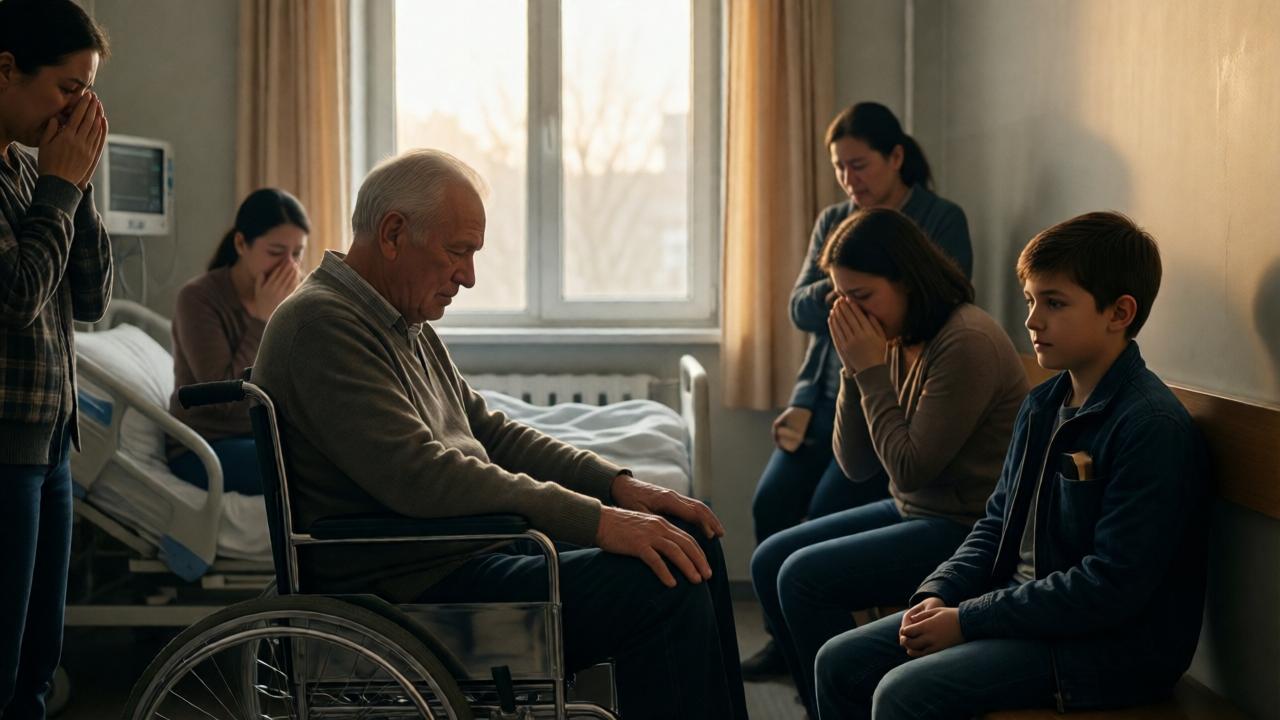
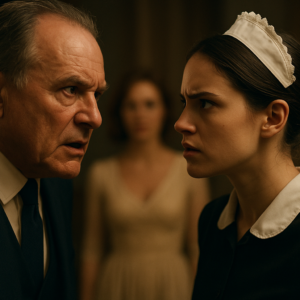
The nurse, clearly fed up with all the crying in the room, snapped, “Let’s see if your God can make your grandpa walk.” Her voice was sharp, laced with the exhaustion of years of seeing hope fail. Jack’s mother sobbed into her hands, and his father turned away, unable to watch. But Jack slowly walked forward, his small footsteps echoing in the sudden silence.
He placed his hand on his grandpa’s weak knees, feeling the cold, stiff fabric of the blanket. Then he softly spoke, his voice barely a whisper: “Lord, what’s impossible for us is easy for you.” The room held its breath. And then something happened. Grandpa’s feet began to move—first a tremor, then a steady shift. He gripped the armrests, his knuckles white, and slowly, shakily, he stood up.
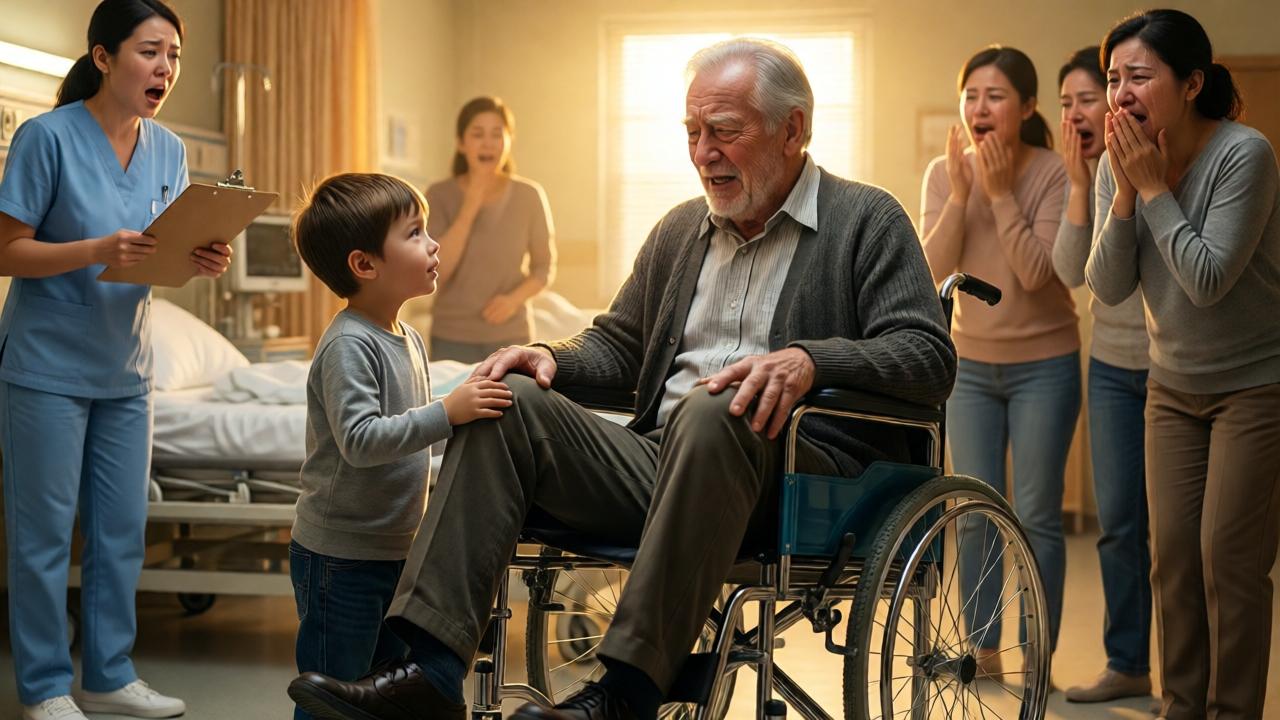
The room fell completely silent. The nurse dropped her clipboard with a clatter. The family gasped. Grandpa, tears streaming down his face, turned and tightly hugged his grandson, his body still unsteady but standing. “This can’t be explained by science,” a doctor said, his voice shaking as he stepped into the doorway. Jack took a deep breath and spoke, his voice steady and clear: “This is the God who gives strength to the weak. The God who lifts up those no one else can lift. The God who keeps his promises.”
The family gathered around, questions and tears mingling. Jack’s older brother stood frozen, his mocking words now ashes in his mouth. “Jack,” he whispered, “how did you know?” Jack pulled out the small Bible from his pocket, its pages worn and marked. He opened it to a page where a single verse was underlined: ‘My grace is sufficient for you, for my power is made perfect in weakness.’ He said, “Grandpa never lost his faith. He just needed us to stand with him.”
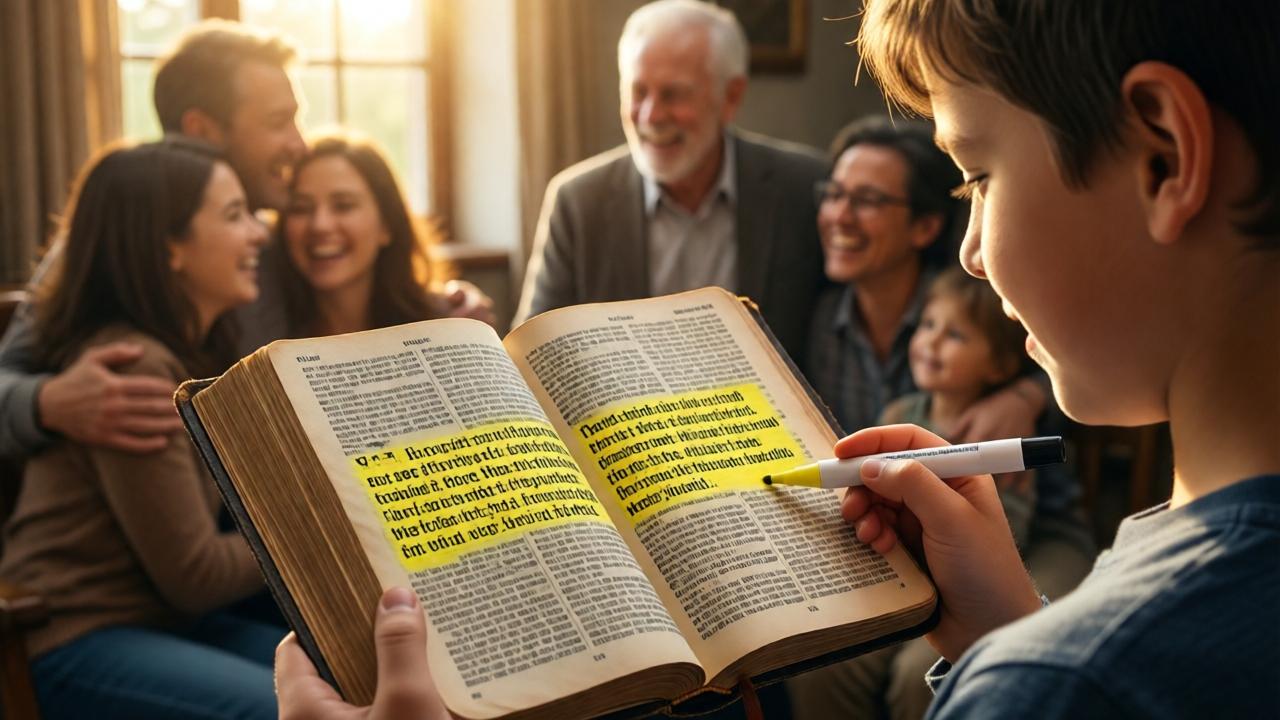
Later that evening, after the doctors had run every test and found nothing but a healthy, standing man, Jack’s grandfather pulled him aside. “Jack,” he said, his voice thick with emotion, “you never told me what that note in your Bible really meant.” Jack smiled and opened the worn cover. Tucked inside was a small, folded piece of paper, yellowed with age. He read it aloud: ‘For I know the plans I have for you, plans to prosper you and not to harm you, plans to give you hope and a future.’ “That note,” Jack said, “was from Grandma. She wrote it the day before she passed. She said to give it to you when you needed it most.” Grandpa’s eyes filled with tears as he held the paper. “She knew,” he whispered. “She always knew.”
The miracle in that room wasn’t just the standing—it was the love that had been planted years before, waiting for the right moment to bloom. Jack learned that faith isn’t about having all the answers; it’s about holding on to hope when everyone else lets go. And sometimes, the smallest voice, the quietest prayer, can move mountains—or at least, a wheelchair. If you believe, comment ‘Amen.’ This God can help you too and lift you back up.