
The sting was a white-hot needle of agony, a final, cruel punctuation to a day of endless toil. As the scorpion scuttled away into the sand, the boy dropped his bundle of firewood and clutched his shoulder, a raw cry tearing from his throat. ‘What kind of life is this?’ he shouted to the empty, ochre sky. ‘I trip when I walk, my whole body aches when I rest, and even gathering wood brings poison!’ His voice echoed into the vast silence, a familiar litany of despair. He was alone, a solitary figure in a sea of yellow sand, where bad luck seemed to be the only constant companion.
Days later, festering in his shabby hut, he heard a knock. ‘Go away!’ he bellowed, wanting no witness to his misery. The knock came again, persistent and gentle. In a fury, he yanked the door open, only to smash his toe against the frame. ‘What terrible luck!’ he roared, but the curse died on his lips as he lifted his head. Before him stood a being of serene light, an angel whose presence made the barren air shimmer. ‘My Lord,’ the boy whispered, bewildered. ‘A messenger of God… how could you come to a place this dry and forgotten?’
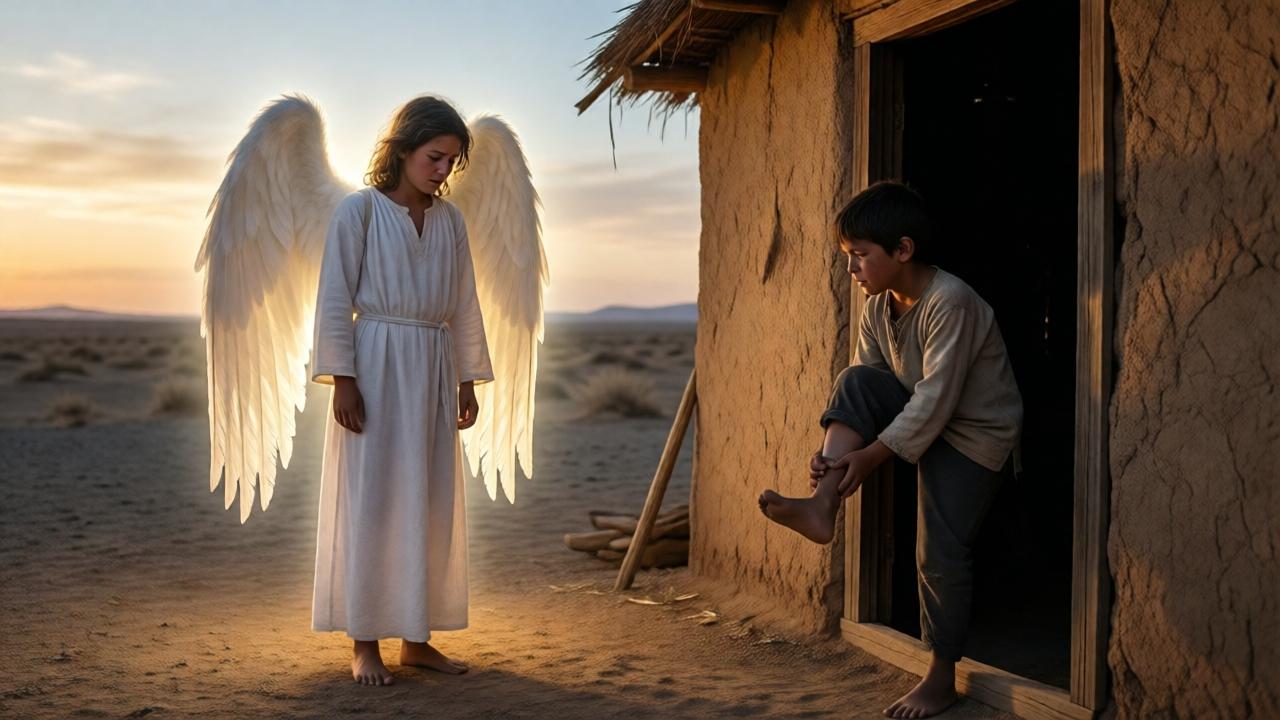
The angel looked at him calmly. ‘I’ve noticed that you complain far too much. Do you want me to go ask God about your life for you?’ ‘Yes!’ the boy answered without hesitation, a spark of desperate hope in his eyes. ‘Please, tell Him I’ve truly had enough of this miserable life.’ The angel departed, leaving the boy in a state of anxious anticipation. He returned to the divine presence and posed the question: ‘Lord, how long will this boy have to suffer?’ ‘Until the last day of his life,’ God answered. ‘Everything has already been written.’ The angel was troubled. ‘But if I tell him that, he will completely lose hope. Is there really nothing I can say to encourage him?’
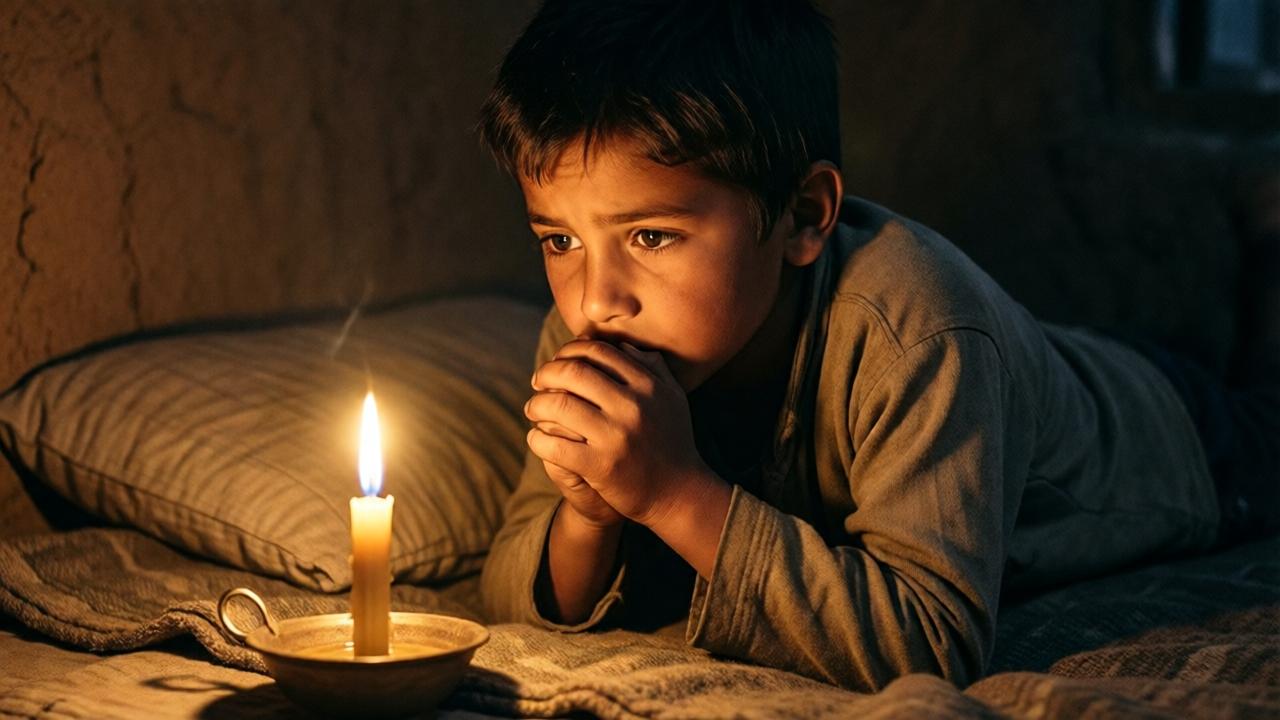
Then God said, ‘Tell him to pray every day with one simple sentence. *Thank God for giving all things.* Say it in the morning, say it at noon, and say it at night too.’ The angel delivered this curious instruction and left. The boy, though skeptical, had nothing left to lose. The next morning, as he stumbled over a rock, instead of cursing, he muttered through gritted teeth, ‘Thank God for giving all things.’ At noon, under the scorching sun, he repeated it. At night, aching and hungry, he said it once more. It felt hollow, a bitter pill on his tongue.
Seven days later, the angel returned. He stopped at the edge of what was once a barren expanse, shocked into silence. A small, clear river now cut through the yellow sand, its banks lush with green shoots. And there was the boy, no longer gaunt and grim, but harvesting crops with a smile on his sun-kissed face, singing as he worked. Filled with confusion, the angel returned to God. ‘Lord, what happened? You clearly said he would suffer until he died.’ God smiled. ‘That was indeed how it had been written. But later, when he stumbled, he would say, *thank God for giving all things.* When he fell, he would repeat it. Little by little, gratitude completely rewrote his destiny.’
The angel understood. The change was not in the circumstances first, but in the heart. The boy had stopped seeing the scorpion’s sting as a curse and began, inexplicably, to see the firewood as a gift. He saw the hard ground not as something that tripped him, but as something that held him up. His gratitude did not remove the pain, but it transformed his relationship to it, opening his eyes to the latent possibilities around him—a hidden water source, resilient seeds in the sand. His thankful heart became a magnet for grace.

And so the story passes down, a whisper on the desert wind: sometimes, the real change in life does not come because we asked for less pain, but because we finally learned that even while living in pain, we are still willing to give thanks. Gratitude is a remedy more powerful than any medicine. It does not erase the script; it gives you new eyes to read it by. When you change the way you look at life, the path beneath your feet is rewritten, not by a distant hand, but by your own thankful steps. The boy’s hut may have been forgotten, but his lesson echoes forever: ‘Thank God for giving all things.’