
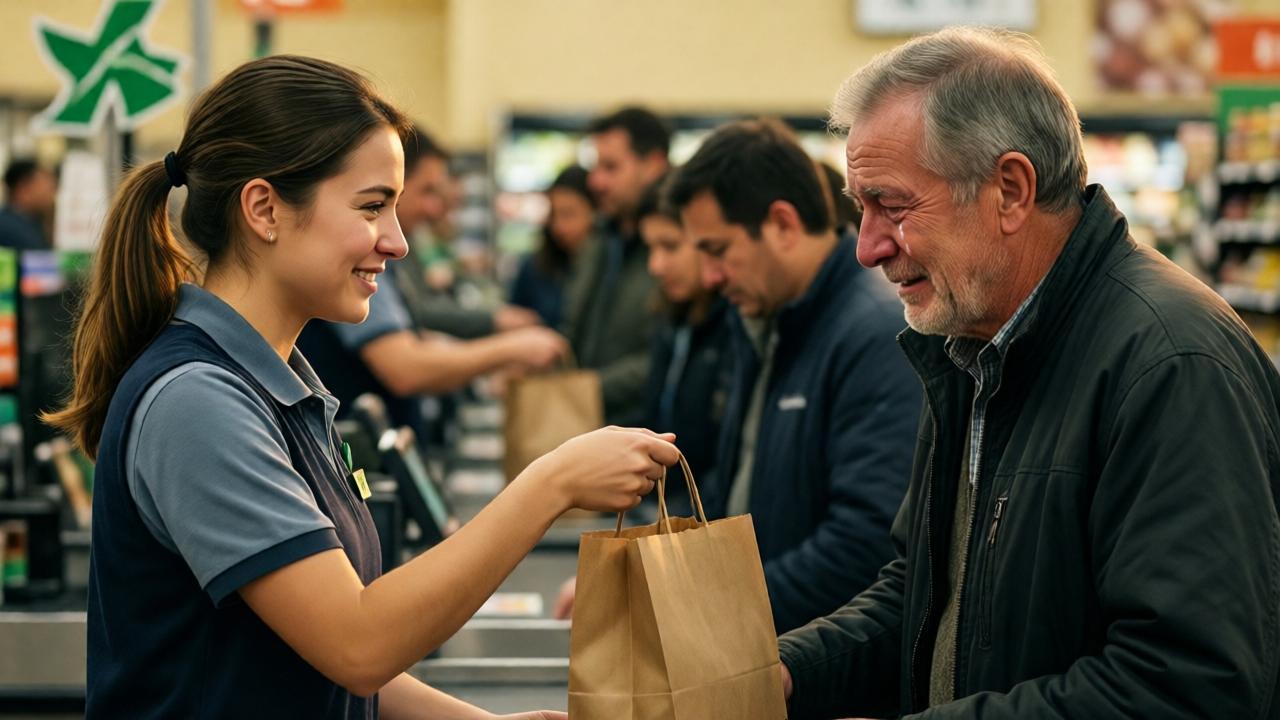
The air in the grocery store was thick with impatience. “Sir, your card was declined.” The words hung heavily between the elderly man and the young cashier, Maya. He froze, his hands beginning to shake as he stared at the modest pile of essentials. “Can you remove some things,” he whispered, his voice barely audible over the hum of the freezers, “just leave the bread and milk.” A collective sigh rippled through the line. “Some of us have places to be,” a woman in a sharp business suit snapped, tapping her phone. Maya, a college student saving every dime for textbooks, felt her chest tighten. The total was $23.67.
Without a word, Maya made a decision that felt both reckless and right. She quietly swiped her own debit card. “Senior discount today,” she said softly, offering a warm smile. The old man’s eyes, clouded with shame, suddenly filled with tears. “Thank you,” he murmured, gathering his bags with trembling hands. “You don’t know how much this means.” He shuffled away, leaving a silence that was quickly broken. The impatient woman stepped forward, her expression stern. “I want your manager. This cashier is wasting time on people who can’t pay.”
Minutes later, the district manager, Mr. Evans, arrived, his brow furrowed. But before the complaining customer could speak, others in line quickly intervened. “She actually paid for the man herself!” one said. “With her own money!” added another. Mr. Evans looked from the angry customer to Maya, who stood nervously wringing her hands. “You used your own money?” he asked, his tone shifting from stern to incredulous. Maya simply nodded. To everyone’s surprise, Mr. Evans smiled, reached into his wallet, and handed her three crisp $20 bills. “Here’s your money back, and extra. People with a heart like yours are rare. Consider it a ‘kindness bonus.'” The store erupted in soft applause, the earlier tension dissolved.
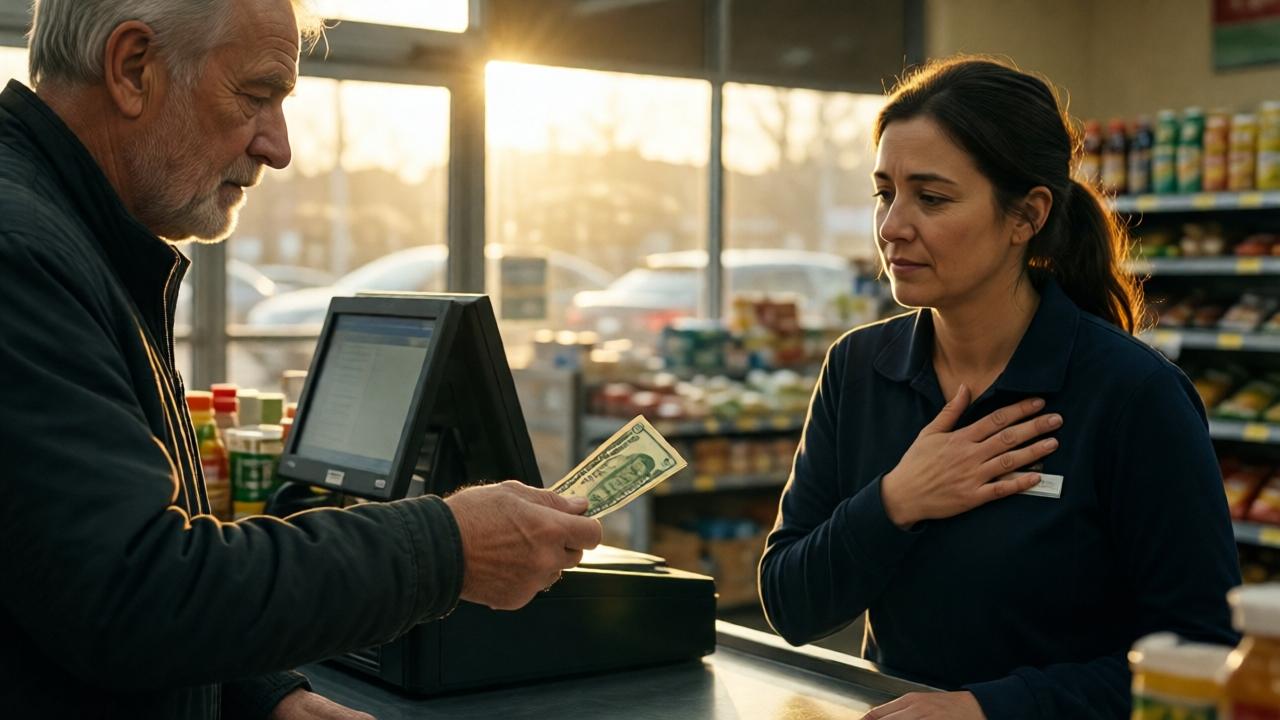
The story, however, was far from over. An hour later, as Maya’s shift was winding down, the elderly man returned. He approached her counter, his steps more certain now. “You paid for my groceries, didn’t you?” he asked softly. Maya hesitated, then nodded. He held out a wrinkled $20 bill. “Please. I went home and… I found this.” She shook her head gently. “You can keep it. Really.” The man’s voice trembled as he placed the bill on the counter. “My wife, Clara, passed away three months ago. Today… today was our wedding anniversary. I just wanted to make her favorite soup one more time.” Maya felt her own eyes well up.
This confession marked the beginning of Part Two. Moved by his story, Maya did not let the connection end at the register. She learned his name was Arthur. In the following weeks, she would occasionally visit him, bringing a loaf of fresh bread or just stopping by for tea. She listened to stories of Clara, of their life together, and in doing so, helped Arthur navigate the heavy silence of his grief. Meanwhile, the video of the initial incident, filmed discreetly by another customer, found its way online. It went viral, not just for the act of kindness, but for the manager’s supportive response.
The ripple effects were extraordinary. The grocery chain’s corporate office, inspired by the positive publicity and the genuine values on display, launched a formal “Community Care Fund” to discreetly assist customers in need, naming Maya as the first ambassador. The rude customer from that day, after seeing the video and the full story, wrote a heartfelt apology letter to the store, admitting her own stress had blinded her to humanity. “You taught me a lesson in patience I needed,” she wrote. For Maya, the extra money helped with books, but the true reward was far greater. “It wasn’t about the money,” she later told a local reporter. “It was about seeing a person, not a problem. Arthur became a friend. That’s the real ending.”

And Arthur? He found a renewed sense of purpose. With Maya’s encouragement, he began volunteering at a community kitchen, sharing his soup recipe and his stories. The $23.67 transaction became a local legend, a reminder that compassion is a currency that always appreciates in value. It started with a declined card, but it ended with a community strengthened, a life less lonely, and a powerful truth: sometimes, the smallest act of seeing someone can write the most beautiful ending of all.