
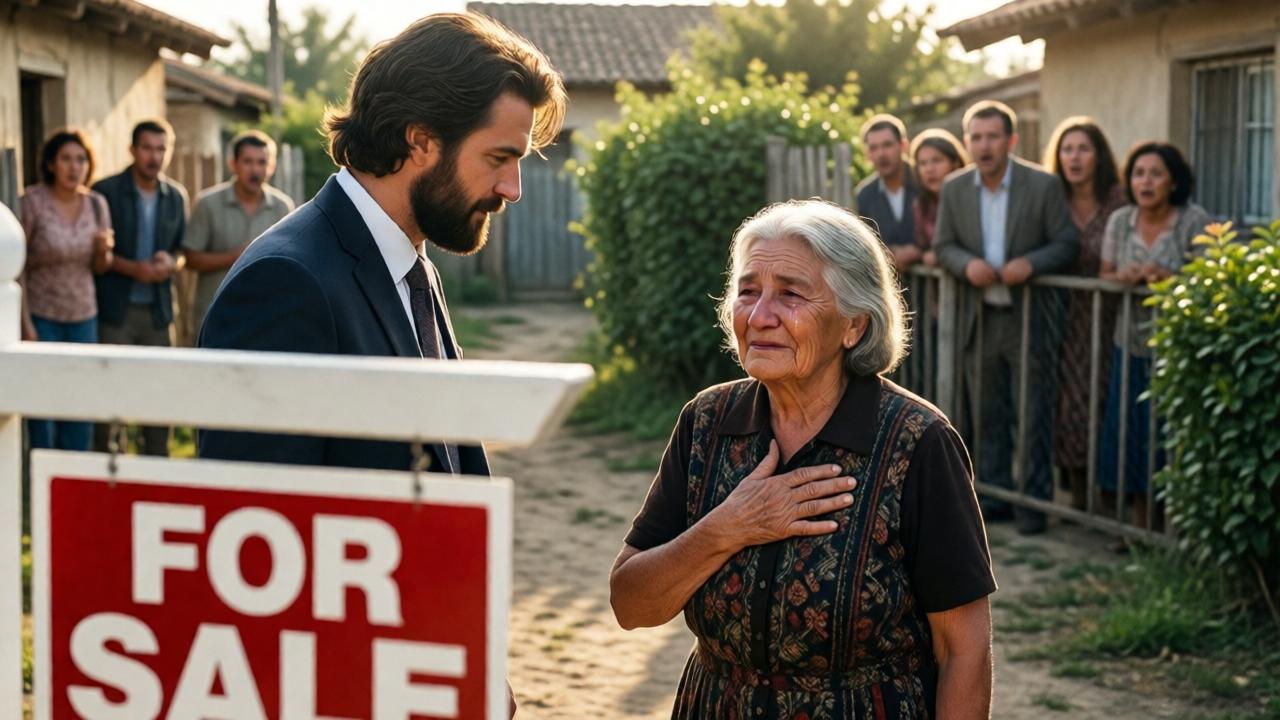
The ‘For Sale’ sign in front of Doña Rosa’s weathered cottage was less an invitation and more a declaration of surrender. Her neighbors, clustered by their manicured hedges, saw only a crumbling eyesore finally exiting the neighborhood. “Finally getting rid of that dump,” one muttered, the words carrying on the dry country air. “Who would ever buy that place? It looks like it could fall apart any second. Not even for free.” Unseen in her kitchen, Doña Rosa heard the echoes of their scorn, her heart heavy as she traced the cracks in her wall—each one a timeline of a life fully, if quietly, lived.
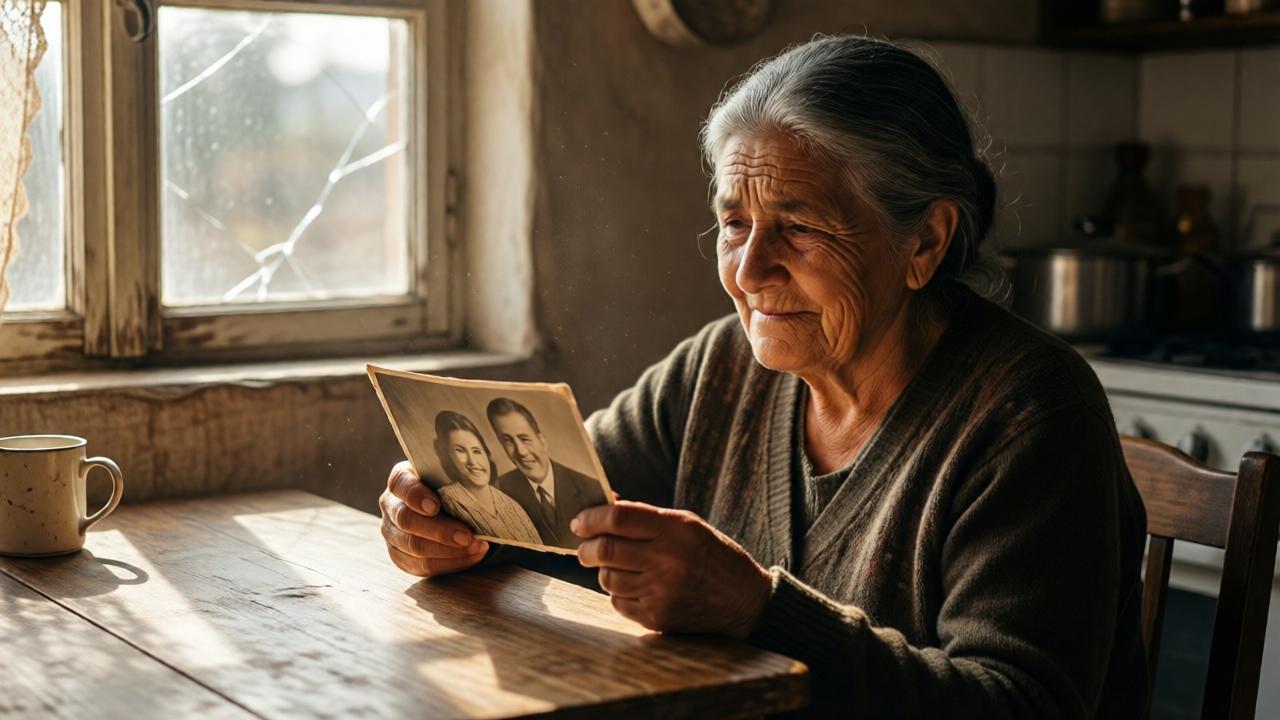
Her name was Doña Rosa. For sixty-five years, the small, humble house had been her universe. She raised her son within its cracked walls, buried her husband under the shade of the yard’s solitary orange tree, and spent her entire life listening to the rhythm of its old tile roof in the rain. But time, as it does, had turned harsh. Medicine grew expensive, her pension shrank, and her own body began to fail. “I thought that if I sold the house,” she confided to a framed photo of her late husband, Antonio, “I could move somewhere smaller, closer to the hospital.” That night, in her rocking chair, she looked up at the sky and whispered, “Forgive me, old man. I can’t take care of it by myself anymore.”
The next morning, as she swept fallen orange blossoms from the yard, the sound of a car horn shattered the quiet. A sleek, expensive sedan was parked at her gate. A man in an impeccably tailored suit stepped out. “Are you Doña Rosa?” he asked, his voice surprisingly gentle. “Yes,” she answered, confused, clutching her broom like a shield. “Is the house still for sale?” With a trembling voice, she said yes, but hurried to explain, “It’s a very simple house. It has no luxury at all.” The man smiled, a warmth reaching his eyes. “I’m not looking for luxury.” Then he asked a question that froze her in place. “Is it true that Don Antonio lived here?”
Doña Rosa turned pale. “You knew my husband.” The man’s composed demeanor softened, his eyes glistening. “He saved my life,” he said, emotion thickening his voice. “When I was a kid, I lived on the streets. I had no parents, no food, nothing. One day, Don Antonio found me, starving behind the market. He brought me into this very house, gave me food, taught me how to read, and paid for my school. He told me, ‘Everyone deserves a second chance.’” The man, named Leonardo, took a deep breath. “I came to buy the house, but you are never leaving this place. This house is sacred.” On the sidewalk, the mocking neighbors stood in stunned silence, their mouths agape.
Leonardo was one of the richest businessmen in the country, but as he later said, his greatest wealth wasn’t money—it was gratitude. The following week, crews arrived. They installed a new roof, repaired the walls, and laid down new floors. But Leonardo gave one firm instruction: the orange tree, the rocking chair, and the photos on the wall were not to be touched. “That doesn’t get touched,” he told the foreman. “That’s memory.” Humbled, one of the neighbors finally approached Doña Rosa to ask for forgiveness. She simply smiled, her face serene. “There’s no need. May God bless you, because the good things we do in silence are never forgotten.”
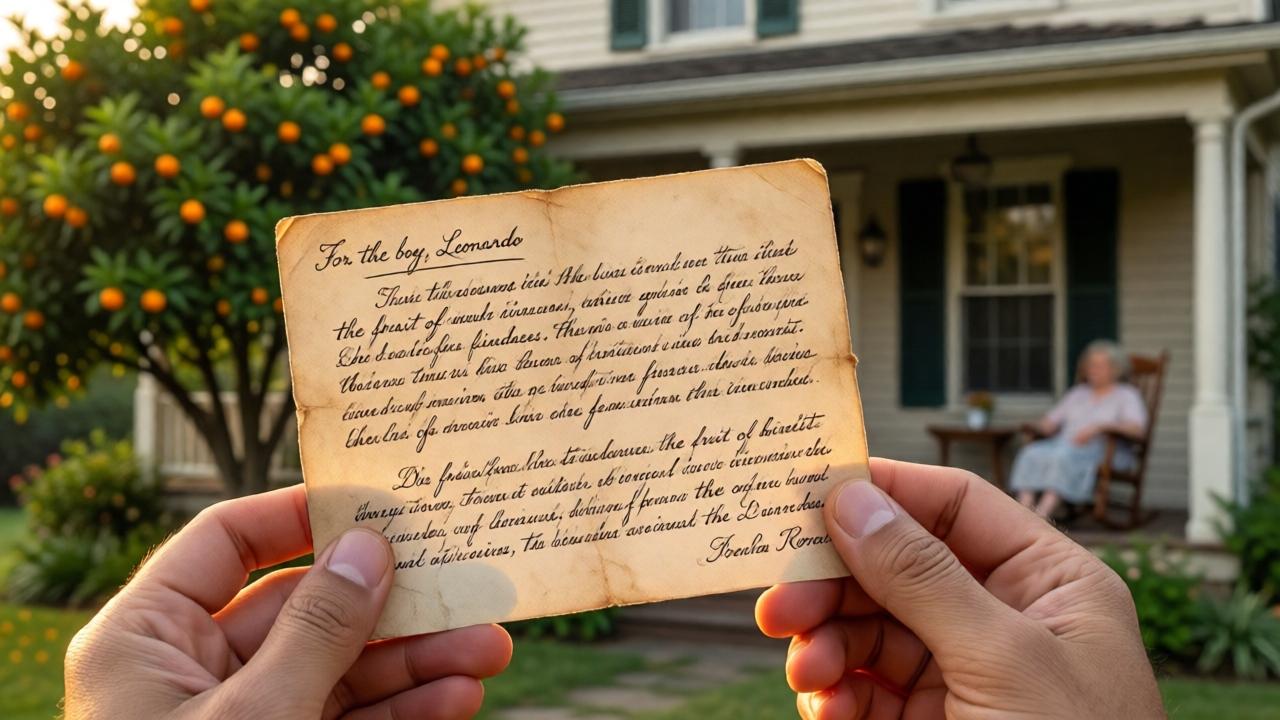
But the story, as Doña Rosa hinted, had a second part. After the renovations were complete, Leonardo asked to see her late husband’s old desk. Tucked inside a hidden drawer, behind a stack of faded letters, was a small, yellowed note in Don Antonio’s handwriting. It read: “For the boy, Leonardo. If I am gone and he ever finds his way back, this house and the tree are his. The fruit of kindness is the only harvest that never spoils.” It was a formal addendum to his will, never filed with a lawyer, a silent promise kept by the universe itself. Leonardo held the note, his own tears now falling freely. He hadn’t just repaid a debt; he had fulfilled a sacred trust, proving that the echoes of a single quiet act of kindness can rebuild a home, redeem a community, and shelter a heart for a lifetime.