
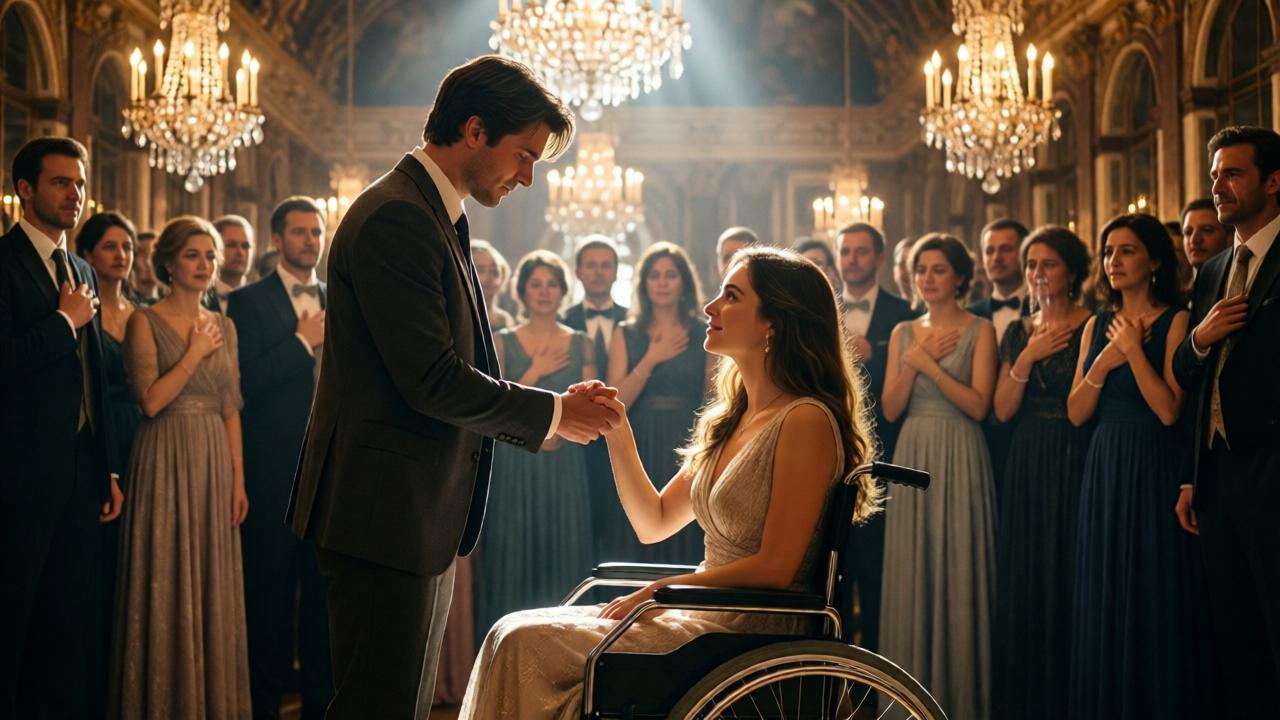
The applause that erupted in the grand hall was not the polite, expected kind. It was a thunderous, emotional wave that seemed to shake the very crystals of the chandeliers. For Amanda Morales, the sound was a distant hum compared to the roaring in her own heart. As she looked up at Gabriel, his hand still warm in hers, the world had fundamentally realigned. “Thank you,” she whispered, the words barely audible, but he heard them. He simply nodded, his own eyes bright with an understanding that needed no speech. In that suspended moment, the invisible walls of privilege and pity that had caged her for years simply dissolved.
The crowd parted as Esteban Morales made his way through. The titan of industry, a man who commanded boardrooms with a glance, now moved with an uncharacteristic hesitation. He stopped before his daughter and the young man in the simple suit. The hall held its breath, expecting a scene, a dismissal, a reassertion of the natural order. Instead, Esteban looked at Amanda—truly looked at her—and saw not a fragile object to be protected, but the radiant woman she was in that moment. He then turned to Gabriel. “Young man,” his voice was low, stripped of its usual authority, “that was… the bravest thing I have witnessed.”
That night was the beginning, not an ending. The following week, Gabriel received a formal invitation to the Morales estate. He expected a payoff, a polite ‘thank you’ bundled with a check to ensure he stayed away. What he found was Amanda waiting for him in a sun-drenched library, a chessboard set up between them. “My father is in a meeting,” she said with a sly smile. “I thought we could talk without an audience.” And talk they did. They spoke of books, of dreams, of the absurdities of their respective worlds. Gabriel spoke of his mother’s tired hands and his father’s pride. Amanda spoke of her loneliness in gilded rooms. “You saw me,” she said finally. “Not the chair, not the name. Just me.”
Esteban, meanwhile, was undergoing his own quiet revolution. The image of his daughter’s face during that dance haunted him. He began to listen. He commissioned a state-of-the-art, accessible design studio for Amanda, who had a hidden talent for architecture. More importantly, he started asking for her opinion. One evening, over dinner, Amanda proposed an idea: a foundation to fund scholarships and improve accessibility at universities, co-directed by her and Gabriel. Esteban studied them both. “The business case?” he asked out of habit. Amanda met his gaze. “The human case, father.” He approved it that night.

The “Morales-Gabriel Initiative” launched to both skepticism and acclaim. Working side-by-side, Amanda and Gabriel became an unstoppable team. He understood the struggle from the ground up; she understood how to navigate the corridors of power and influence. During one particularly tense planning session, Gabriel sighed, running a hand through his hair. “Sometimes I feel like we’re trying to move a mountain with a spoon.” Amanda wheeled closer, her eyes fierce. “Then we’ll get more spoons,” she declared. Their partnership, built on mutual respect and a shared mission, slowly deepened into something more. It was a love that grew in boardrooms and late-night strategy sessions, in shared laughter and quiet support.
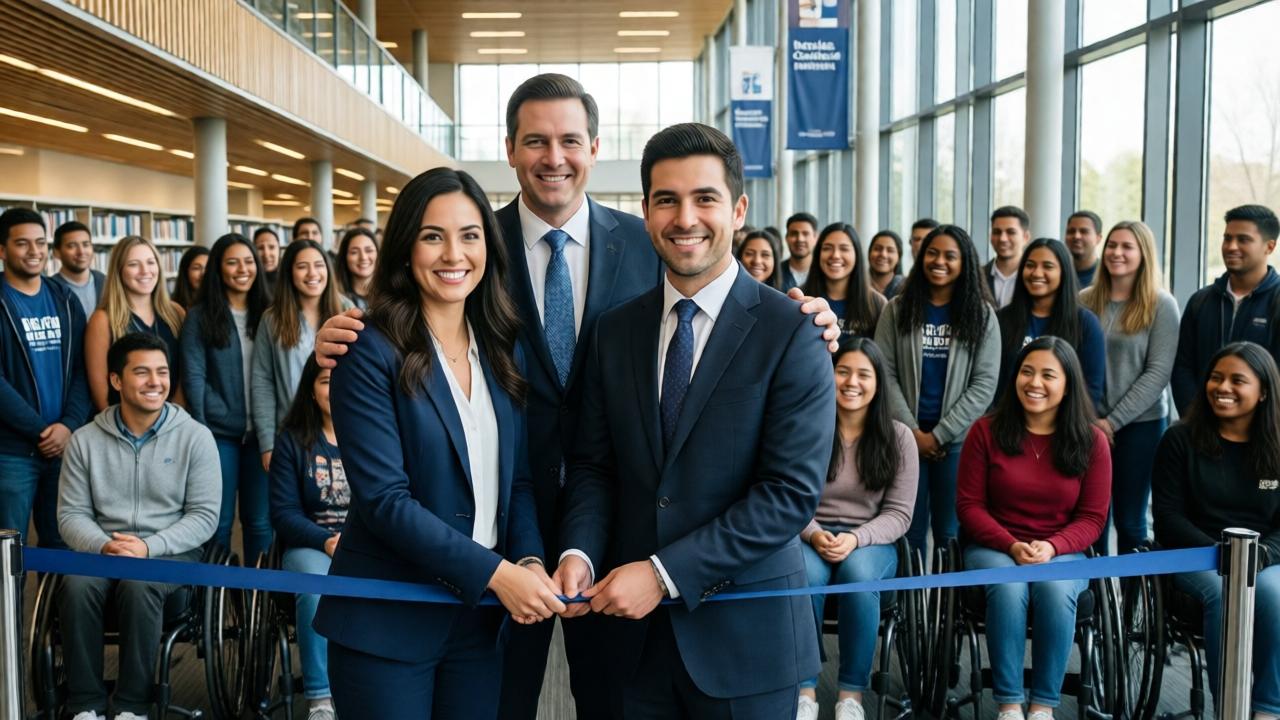
Years later, at the opening of the first fully accessible campus library funded by their foundation, Esteban stood to give a speech. He looked out at the diverse crowd of students, at his daughter who was now a confident advocate, and at Gabriel, the young man who had become like a son. “I once believed that legacy was built of steel and stock prices,” he began, his voice thick with emotion. “I was taught a different lesson, on a dance floor, by two remarkable young people. They taught me that true legacy is built of empathy, of opportunity, and of the courage to extend a hand when everyone else looks away.” As the crowd cheered, Amanda reached for Gabriel’s hand, just as he had once reached for hers. The journey that began with a single dance had become a symphony of change, proving that the most powerful revolutions often start with the simplest, most human of gestures.