
The water lapping against the shores of upstate New York has carried many names through the centuries, whispered by Indigenous peoples long before European cartographers arrived, then etched into maps as Lake Ontario. Now, President Donald Trump has decided that for Americans, at least officially, it should be called something else entirely: Lake America.
It’s a move that has stirred more confusion than patriotism, more eye-rolls than applause. A fresh Reuters/Ipsos poll reveals that a striking majority of Americans—63 percent—oppose the renaming of one of the Great Lakes, with just 14 percent supporting the symbolic gesture. The numbers are even more lopsided than those for Trump’s escalating trade war with Canada, which itself enjoys only slim backing.
Robert Corradino, the Republican mayor of Oswego, New York, a lakeside community that would be directly affected by the change, didn’t mince words. “I don’t believe it’s a good idea to change the name of Lake Ontario to ‘Lake America,'” he told LiveNOW’s Josh Breslow. “It would mean changing all of the signage, all of the maps, all of the official documents. It’s a lot of work for something that doesn’t really solve any problem.”
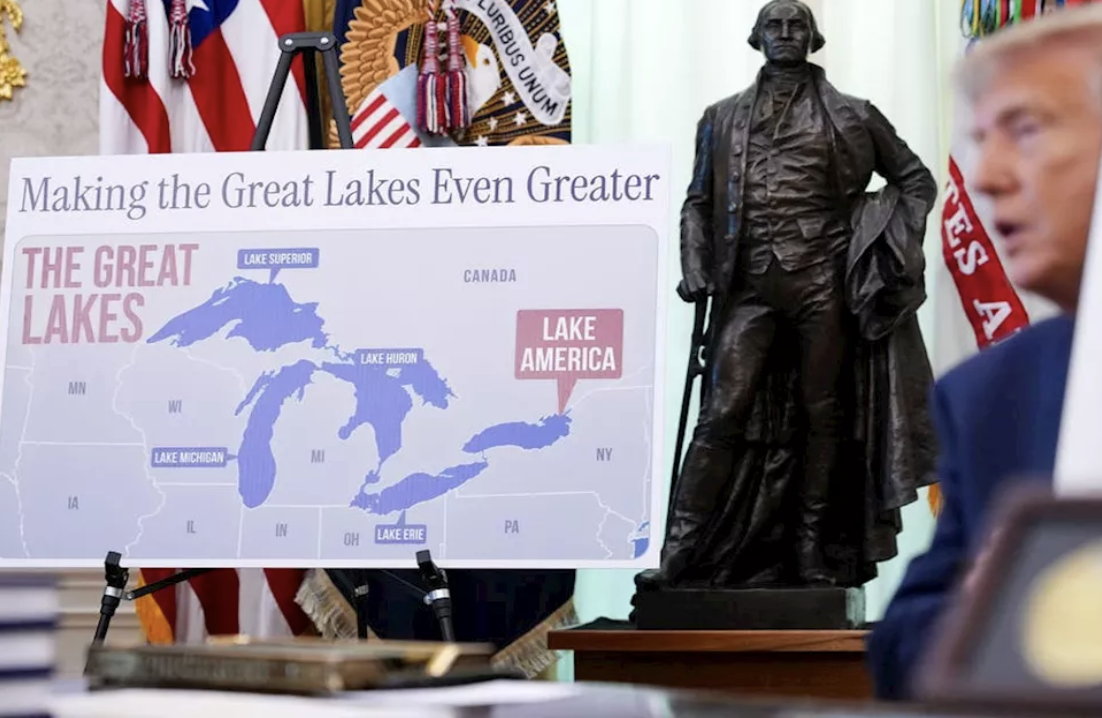
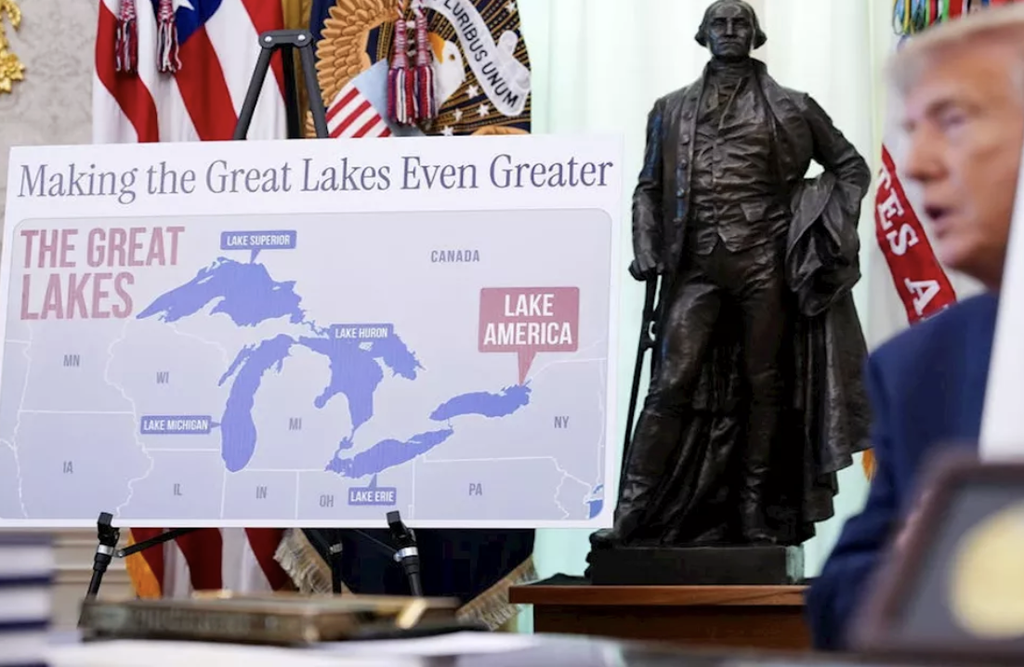
The mayor’s sentiment echoes across the political spectrum. The poll, conducted online with 1,023 U.S. adults nationwide and carrying a margin of error of about four percentage points, found that even among Republicans, enthusiasm for the renaming is hardly overwhelming. The symbolic gesture, signed into an executive order on August 27, 2026, in the Oval Office, was accompanied by a map labeling the lake as “Lake America,” a visual that quickly went viral for all the wrong reasons.
But the renaming is just one piece of a broader, more consequential puzzle. The same poll revealed that 57 percent of Americans oppose Trump’s additional tariffs on Canadian goods, with only 20 percent in support. Another 21 percent said they didn’t know or skipped the question, and about one in five respondents admitted they hadn’t even heard about the tariff development.
The tariffs, announced on July 20 and taking effect on August 22, are part of Trump’s ongoing pressure campaign against Canada, a longtime ally and the United States’ largest trading partner. Canada has retaliated, with its own tariffs scheduled to take effect on September 8, 2026. The tit-for-tat escalation has economists on both sides of the border warning of higher prices for consumers, disrupted supply chains, and a souring of a relationship that has been a cornerstone of North American stability for decades.
“This isn’t about trade policy anymore,” said Grant Reheer, a professor of political science at Syracuse University, during a LiveNOW from FOX segment with Christy Matino. “This is about a broader deterioration in relations. The renaming of Lake Ontario is not a policy; it’s a provocation. It’s a symbolic middle finger to a neighbor that has been an ally through two world wars, countless economic crises, and the fight against terrorism.”
Reheer’s point is sharpened by the historical weight of the name itself. Lake Ontario has been known by that name in written records for more than 400 years. “Ontario” has Indigenous origins, generally Wendat or Iroquoian, though translations vary—some say it means “beautiful lake,” others “great lake.” The province of Ontario later adopted the lake’s name, cementing its place in the cultural and geographic identity of the region.
Trump’s order directs the U.S. Department of the Interior to implement the name change for federal usage only. It does not control what Canada, international organizations, or other entities call the lake. In practice, this means American government documents, maps, and signage would refer to “Lake America,” while the rest of the world—and likely most Americans—would continue to say “Lake Ontario.”
This isn’t Trump’s first foray into geographic rebranding. Earlier in his second term, he ordered the Gulf of Mexico to be renamed the “Gulf of America” for U.S. government use. That move also drew criticism, but it was at least a body of water that the United States shares with Mexico, not one that is almost entirely within Canadian territory. Lake Ontario is bordered by the Canadian province of Ontario to the north, west, and southwest, and by the U.S. state of New York to the south and east. It is the smallest of the five Great Lakes by area, but it is deeply intertwined with Canadian history and identity.
The poll’s findings suggest that Americans, even those who voted for Trump, are not rallying behind this particular culture war. The 63 percent opposition to the renaming cuts across party lines, with a significant chunk of Republicans expressing discomfort with the move. It seems that even in an era of hyper-partisanship, there are some things that unite Americans—and one of them is a shared sense of geographic common sense.
For Corradino, the mayor of Oswego, the issue is practical as much as symbolic. His city, located where the Oswego River meets Lake Ontario, relies on the lake for tourism, fishing, and shipping. A name change would mean updating everything from highway signs to nautical charts, at a cost that would ultimately fall on taxpayers. “We have more pressing concerns,” he said. “We need to focus on the economy, on infrastructure, on making sure our communities thrive. This is a distraction.”
The distraction comes at a delicate moment in U.S.-Canada relations. Trump has repeatedly criticized Canada, at times threatening to make the country the 51st U.S. state—a comment that Canadian officials have dismissed as a joke, though not everyone is laughing. The trade war, the renaming, and the rhetoric are all part of a pattern that has left Canadian leaders puzzled and frustrated.
“We’ve always been there for the United States,” said a Canadian official who spoke on condition of anonymity. “We fought alongside them in Afghanistan, we took in their citizens after 9/11, we are their largest energy supplier. And this is how we’re treated? With tariffs and name-calling?”
The Reuters/Ipsos poll, conducted in the final days of August, captures a nation that is weary of the constant conflict. Fifty-seven percent opposition to tariffs is a clear signal that Americans are worried about the economic consequences of a trade war with a neighbor that is also a vital economic partner. The United States exports more goods to Canada than to any other country, and Canada is the top export market for 35 U.S. states. Disrupting that relationship could have ripple effects across the American economy, from auto manufacturing to agriculture to energy.
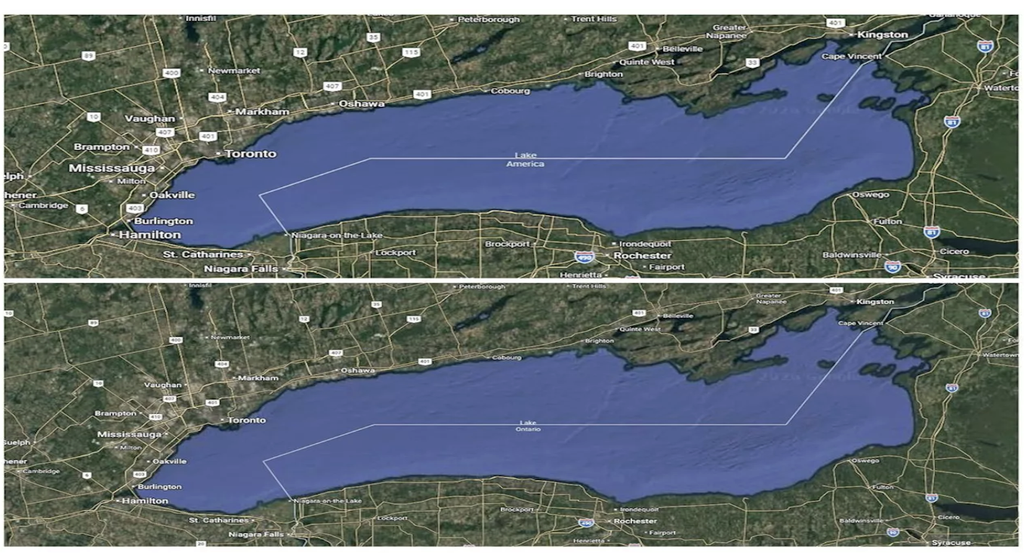
Yet Trump shows no signs of backing down. His executive order on the lake renaming was a theatrical event, complete with a map display in the Oval Office. It was designed to send a message, and it did—but perhaps not the one intended. The message that many Americans received was that their president is more interested in picking fights with allies than in solving problems at home.
As the September 8 deadline for Canada’s retaliatory tariffs approaches, businesses on both sides of the border are bracing for impact. The uncertainty is already taking a toll, with some companies delaying investments and others stockpiling goods to avoid the new duties. Economists warn that the longer the dispute drags on, the more damage it will do to both economies.
For now, the lake remains Lake Ontario to the people who live along its shores, fish in its waters, and sail its expanse. The name “Lake America” may appear on some federal documents, but it will take more than an executive order to change what people actually call it. As Corradino put it, “You can’t rename a lake by decree. You have to earn it, and we haven’t earned the right to take away a name that has been here for centuries.”
The poll is a reminder that even in a polarized nation, there is common ground. Most Americans, regardless of party, see Canada as a friend and neighbor, not an enemy. They see the Great Lakes as a shared treasure, not a trophy to be claimed. And they see the constant provocations from the White House as a distraction from the real issues that matter: jobs, healthcare, education, and the future of the country.
As the trade war escalates and the rhetoric heats up, one thing is clear: the vast majority of Americans are not on board with this particular train. Whether that will change Trump’s calculus remains to be seen, but for now, the poll numbers are a stark rebuke to a policy that seems designed more for headlines than for the good of the nation.