
The Persian Gulf is once again teetering on the edge of a wider conflagration. On Monday, United States President Donald Trump issued a stark warning that Washington would “hit Iran hard” in response to recent retaliatory strikes, while simultaneously claiming that the US Navy was successfully escorting dozens of ships through the strategic Strait of Hormuz. The comments came just hours after the US bombed Iran’s Larak Island and Tehran launched counterstrikes against American military assets in Jordan and the United Arab Emirates, marking the first direct exchange of fire between the two nations in over a month.
Speaking to reporters in the Oval Office, Trump sought to project an image of control and stability in a region fraught with tension. He asserted that the Strait of Hormuz, a vital chokepoint for global oil shipments that Tehran has blockaded since the outbreak of the US-Israel war in February, was in “extremely good shape.” “We’re taking over. Many, many ships got through last night. As you know, with the navy’s assistance, and we’ve been averaging 30 ships a night,” he declared, painting a picture of a waterway that remained open for business despite the military standoff.
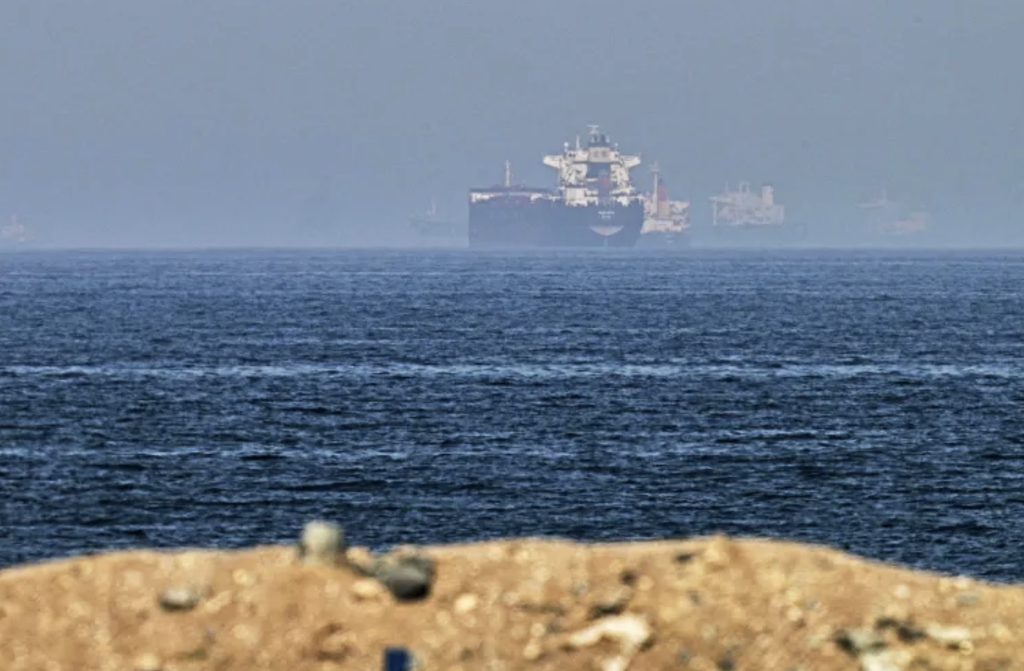
Earlier in the day, the president had been more bellicose, promising an unequivocal military response to Iran’s actions. “We’re going to hit them hard,” he told Fox News in an interview, adding ominously, “There will be a response.” This rhetoric signals a potential escalation that could plunge the region into a broader conflict, with far-reaching consequences for global energy markets and international security.
Iran, for its part, has issued a stern counter-warning. In a joint statement, the General Staff of the Armed Forces and the Khatam al-Anbiya Central Headquarters declared that any site used to launch US attacks on Iranian territory would be considered a legitimate target. The statement accused the United States of continuing to utilize the territory, airspace, and facilities of regional countries to carry out aggression against Iran, despite previous warnings and assurances from certain nations in the area. While affirming that Iran respects the sovereignty of its neighbors, the military leadership vowed it “will never tolerate aggression.” They further warned that any additional attack would draw a response that is “much heavier,” and insisted that “the US has no choice but to leave the region.”
The latest round of hostilities began with a US strike on Iran’s Larak Island, which Washington claimed was targeting launchers preparing to fire rockets carrying naval mines at the Strait of Hormuz. This military action came weeks after the Trump administration announced a shift in strategy from military operations to economic pressure, yet Monday’s exchange underscores the fragility of the situation. Without a permanent agreement to end the war, the risk of renewed fighting remains dangerously high, with both superpowers seemingly locked in a cycle of attack and retaliation.
In a lengthy social media post on Monday, Trump escalated his war of words, declaring Iran a “failed nation” and heaping scorn on its leadership. “Iran is officially a Failed Nation,” he wrote. “IT IS DEAD! They have no Navy, they have no Air Force, they have no currency, they are not paying their soldiers or police, Inflation is at 300%, and their leadership is in total disarray and incapable of properly representing the country.” He went on to suggest that Iran’s brutal crackdown on antigovernment demonstrators was the only thing preventing the government from collapsing entirely. “The only thing they have is FAKE NEWS from the USA, a willingness to kill their protesters (now over 100,000 people dead. They must be tried for war crimes against humanity!), and a good line of ‘BULL****,’” he wrote.
This figure of 100,000 protesters killed represents the highest number Trump has cited to date. Previously, he had mentioned that Iran had killed as many as 60,000 people during demonstrations earlier this year. The source of these numbers remains unclear, as Iranian authorities have provided a vastly different count. According to Tehran, the death toll stands at 3,117, including members of the security forces, and they attribute the deaths to what they describe as Israel-backed “rioters.” The vast discrepancy in these figures highlights the deep propaganda battle that accompanies the physical conflict, with each side seeking to frame the narrative in its favor.
Iran has leveled its own accusations of war crimes against the United States, pointing to civilian casualties resulting from American strikes. A particularly tragic incident occurred on the first day of the conflict, when a strike on Minab, a city in southern Iran, hit a girls’ school, killing 168 people, most of them children. Such attacks have inflamed public opinion in Iran and hardened resistance to American demands, even as the country faces severe economic hardship and internal dissent.
Diplomatic observers are increasingly concerned about the trajectory of the conflict. Joey Hood, a former US ambassador to Tunisia and former acting director of the State Department’s Office of Iranian Affairs, told Al Jazeera that regional countries will need to step up and find a solution that allows both sides to step back from the brink. “It’s going to require countries of the region getting together and finding those creative solutions that would allow both sides to save face and back away from this conflict,” he said.
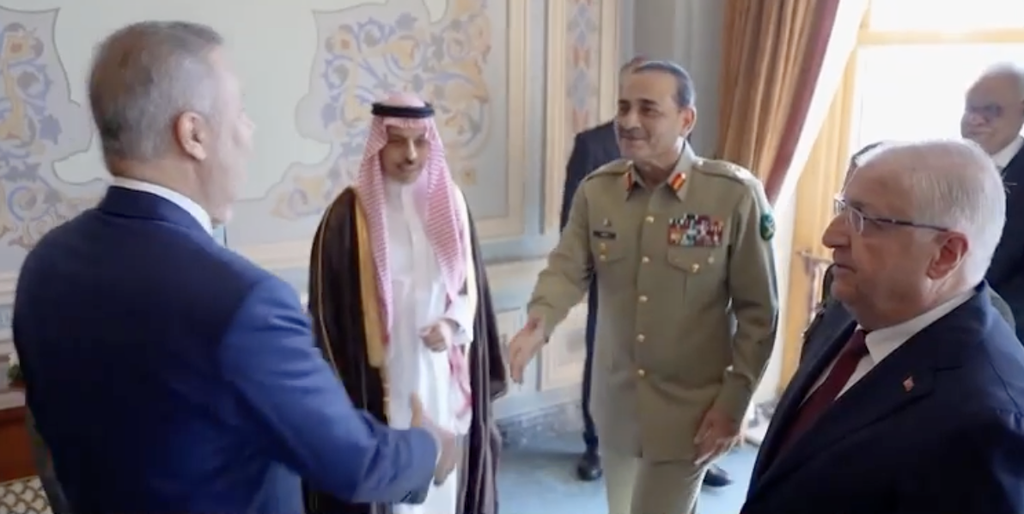
Hood offered a potential pathway forward, suggesting an international maritime coalition could help de-escalate tensions. “You could imagine, for example, an Islamic naval coalition led by Pakistan and Turkiye that could monitor the strait and assure Iran that everything going through it is peaceful. That would allow Iran the ability to back off without saying that it gave up its rights to the strait,” he added. Such an arrangement, while ambitious, could provide a face-saving mechanism for all parties involved and reduce the immediate risk of a catastrophic confrontation.
As the world watches with bated breath, the situation in the Persian Gulf remains volatile. The United States and Iran appear locked in a dangerous game of chicken, with each side unwilling to show weakness. Trump’s promise to “hit Iran hard” suggests that further military action is imminent, while Iran’s warnings of a “much heavier” response indicate that it will not back down easily. The coming days will be critical in determining whether the conflict spirals into a full-scale war or whether cooler heads prevail and a diplomatic solution can be found.
For now, the Strait of Hormuz remains a flashpoint, with the US Navy escorting ships through its waters under the watchful eyes of Iranian forces. The global economy, already reeling from the effects of the war, depends on the safe passage of oil tankers through this narrow waterway. Any disruption could send energy prices soaring and trigger a worldwide recession. The stakes could not be higher, and the world is watching to see whether President Trump’s tough talk translates into action that brings lasting peace or merely prolongs a cycle of violence that has already claimed countless lives.