
On a warm August morning, Portugal’s Official Gazette carried a piece of legislation that would ignite a nationwide debate. Law 58/2026, published on August 24, sets a clear rule: from September 23, concealing one’s face in public spaces will be a punishable offense. Though the law never mentions the burqa or niqab by name, it has quickly earned the nickname ‘the burqa law’ for its impact on full-face coverings worn by some Muslim women.
The law defines public spaces broadly—covering streets, parks, government buildings, and any place offering services to citizens. It prohibits clothing ‘intended to conceal or obstruct the display of the face’ and goes a step further by outlawing any attempt to coerce someone into hiding their face based on gender, religion, age, or origin.
Penalties range from €150 to €750 for negligent violations, but deliberate breaches can cost between €400 and €3,000. The law also introduces a criminal dimension: forcing another person to cover their face through threats or violence carries a prison sentence of up to two years, increased by a third if the victim is a minor.
Not everyone sees this as a straightforward security measure. When the bill was first introduced in Parliament by the Chega party in October last year, its leader André Ventura framed it as a move to ban ‘women from wearing the burqa in Portugal,’ explicitly targeting immigrants. The final version, amended during committee review, won approval on July 17 with votes from Chega, PSD, CDS, and IL, while PS, Livre, PCP, BE, and JPP opposed it, and PAN abstained.
President António José Seguro, who promulgated the law on August 18, acknowledged its ‘great social and cultural sensitivity.’ In a statement, he argued that ‘an uncovered face is a structural dimension of social trust, characteristic of Portuguese society.’ He added, ‘Everyday coexistence is based on mutual recognition and the possibility of establishing a direct relationship between people. This common rule is essential to life in a democratic, free and plural society. It is a rule of coexistence between human beings of equal dignity.’
The law includes notable exceptions. Face coverings remain allowed for medical and professional reasons, artistic performances, advertising, and weather-related needs. They are also permitted on aircraft, in diplomatic and consular premises, and in places of worship or other sacred sites. Security forces can still require coverings when necessary, and the law does not override other legal permissions.
Enforcement falls to security forces, while municipal councils handle proceedings and impose fines. This decentralized approach means local authorities will interpret the law in their communities, potentially leading to uneven application across the country.
Supporters argue that visible faces are essential for security, identification, communication, and gender equality. They believe this measure strengthens social cohesion and prevents situations where individuals might hide their identity to evade accountability.
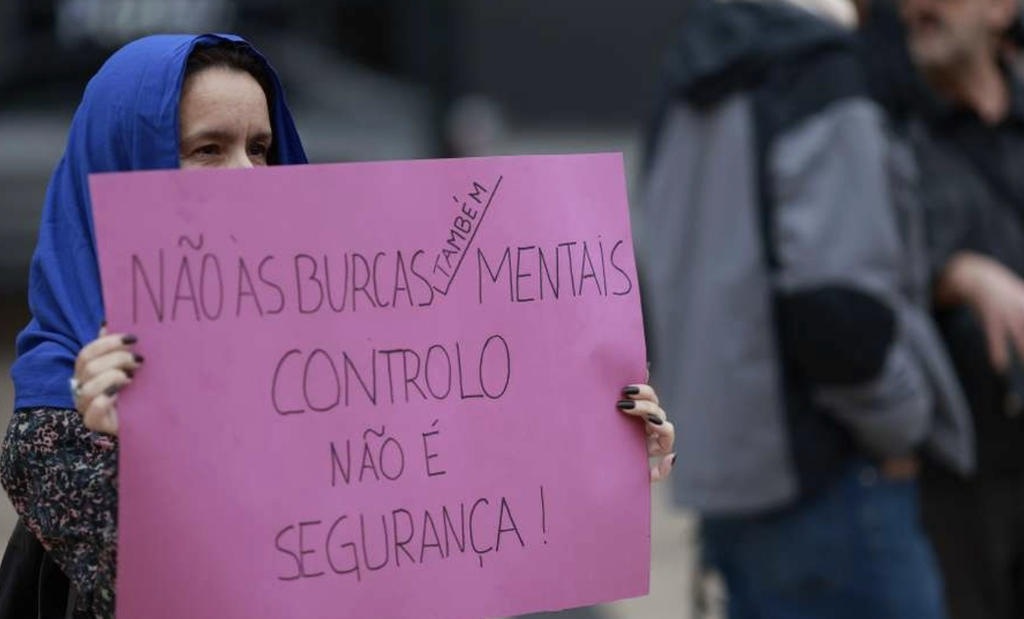
Opponents, including Amnesty International, warn that the restrictions unfairly target Muslim women and interfere with religious freedom, personal autonomy, and freedom of expression. They argue that the law, despite its neutral wording, carries a disproportionate impact on a specific religious minority, potentially driving women into isolation rather than integrating them into society.
The debate extends beyond Portugal’s borders. Across Europe, countries have grappled with similar questions—France, Belgium, and Denmark have already implemented face-covering bans, while others have rejected them. Each nation’s approach reflects its own balance between security concerns and civil liberties.
As September 23 approaches, Portuguese authorities are preparing to implement the new rules. For many, this law represents a necessary step toward a transparent society. For others, it marks a troubling intrusion into personal choice. The coming months will reveal how this balance plays out in practice—on the streets, in the courts, and in the daily lives of those who choose to cover their faces for reasons of faith, custom, or personal preference.