
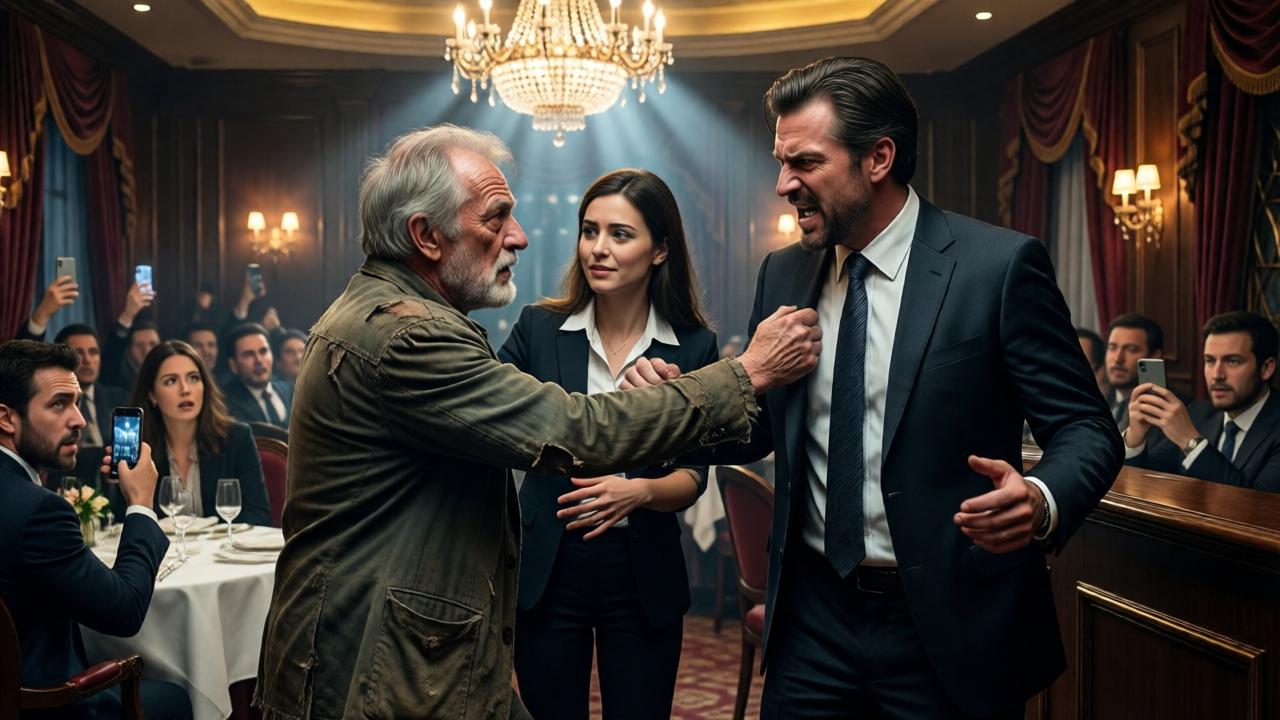
The air in the restaurant, usually filled with the soft clink of fine china and murmured conversations, turned cold and sharp. I stood there, the manager’s grip tight on my ragged sleeve, the weight of the old suitcase at my feet feeling heavier than the 200 gold bars inside. ‘This is a luxury restaurant, not a shelter,’ he yelled, his voice cutting through the hushed room. ‘Poor people like you ruin our image.’ Around us, phones were raised, their screens glowing as customers recorded the spectacle, some laughing nervously. I lowered my head, not in shame, but to hide the storm of disappointment brewing behind my eyes. I had built this place, and now I was being exiled from it for the price of a bowl of rice.
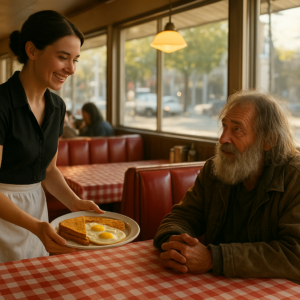
The receptionist, a young woman named Clara whose name tag I had designed myself, stepped forward. ‘Sir, please, he’s just asking for a simple meal,’ she said, her voice firm but trembling. The manager, a man I had hired for his efficiency, scoffed. ‘Clara, we have standards. Seven dollars?’ He laughed loudly, a harsh, grating sound. ‘That isn’t even enough for a tip here.’ I looked at Clara, seeing the conflict in her eyes—the fear of losing her job against the sincerity I had glimpsed moments before. ‘I haven’t eaten well in five days,’ I repeated softly, more for her benefit than his. ‘I just want something so I can go look for work.’
That’s when I made my decision. The test was over. As the manager gestured for security, I straightened my posture, the years seeming to fall from my shoulders. I placed the battered suitcase on the nearest marble-topped table with a solid thud that silenced the room. ‘Standards,’ I said, my voice now clear and carrying, devoid of its previous tremor. ‘You speak of standards, yet you lack the most basic one: humanity.’ I looked directly at Clara. ‘You offered to pay for my meal. Why?’ She met my gaze, her eyes glistening. ‘Because everyone deserves dignity, sir. Especially when they ask for so little.’
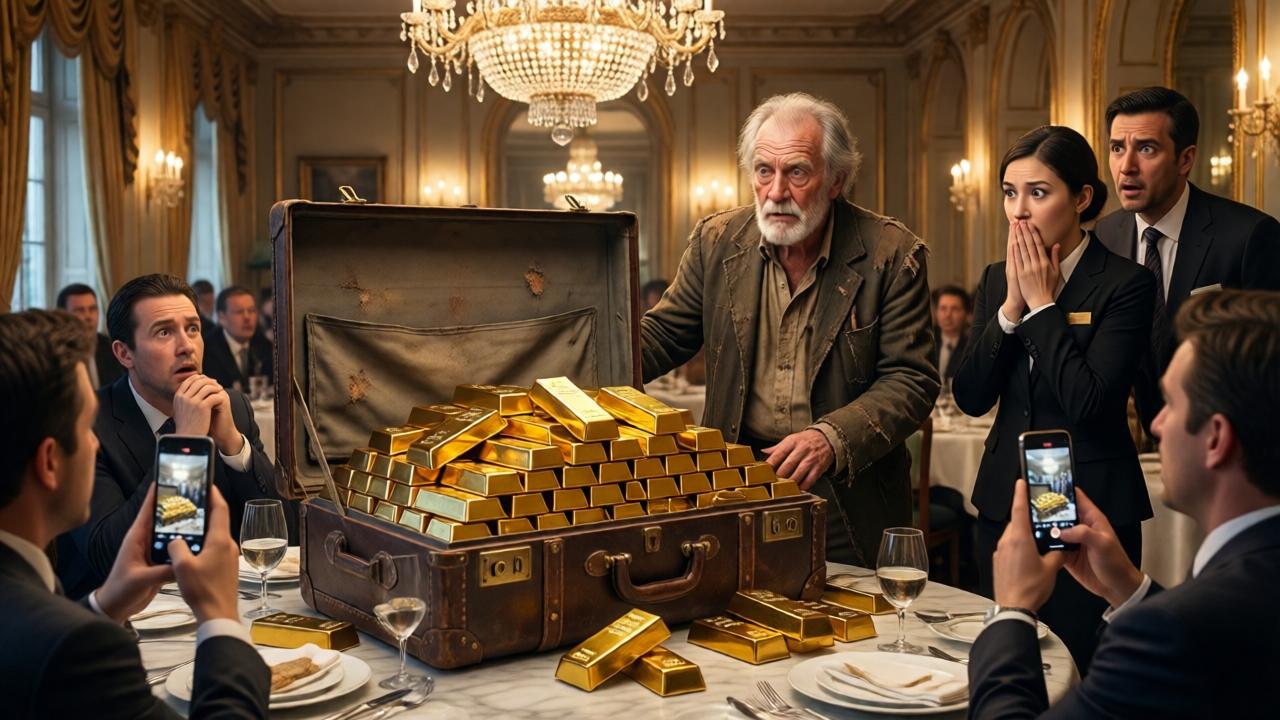
A hush fell. The recording phones were now pointed steadily at me. I unlatched the suitcase’s worn clasps. The sound echoed. Then, I flipped it open. The interior light of the restaurant caught the ingots, erupting in a dazzling blaze of reflected gold that painted streaks across the astonished faces of the patrons. Two hundred gold bars, neatly stacked, glowed against the frayed fabric lining. The manager’s jaw went slack; his face drained of color. ‘What… what is this?’ he stammered. ‘This,’ I said, my voice calm, ‘is the fortune you just threw out for seven dollars.’ I turned to address the entire restaurant, my own restaurant. ‘My name is Alistair Thorn. I own this place.’
The silence was absolute. Then, I reached into the suitcase, not for a bar, but for the folded document beneath the top layer. I smoothed it on the table—the deed to the restaurant. ‘I wanted to see who my true successor could be,’ I continued, my eyes finding Clara’s. ‘Not someone who judges by a suit, but by heart.’ I picked up a single gold bar, its weight familiar and comforting. I walked over to the paralyzed manager and placed it in his limp hand. ‘Your severance package. You are fired, effective immediately.’ I then turned to Clara, who stood with tears now streaming down her cheeks. ‘And you, Clara. Your kindness today was worth more than this entire case. This restaurant is yours to manage. The rest of this gold is a trust to ensure it always has a seat at the table for anyone asking for a simple bowl of rice.’
The ending was not one of vengeance, but of restoration. As I walked out, leaving the suitcase and its contents behind, I felt lighter than I had in years. The cameras followed me, but I didn’t mind. Let them see. Let them see that wealth is not in gold bars, but in the choice to see a person, not their clothes.
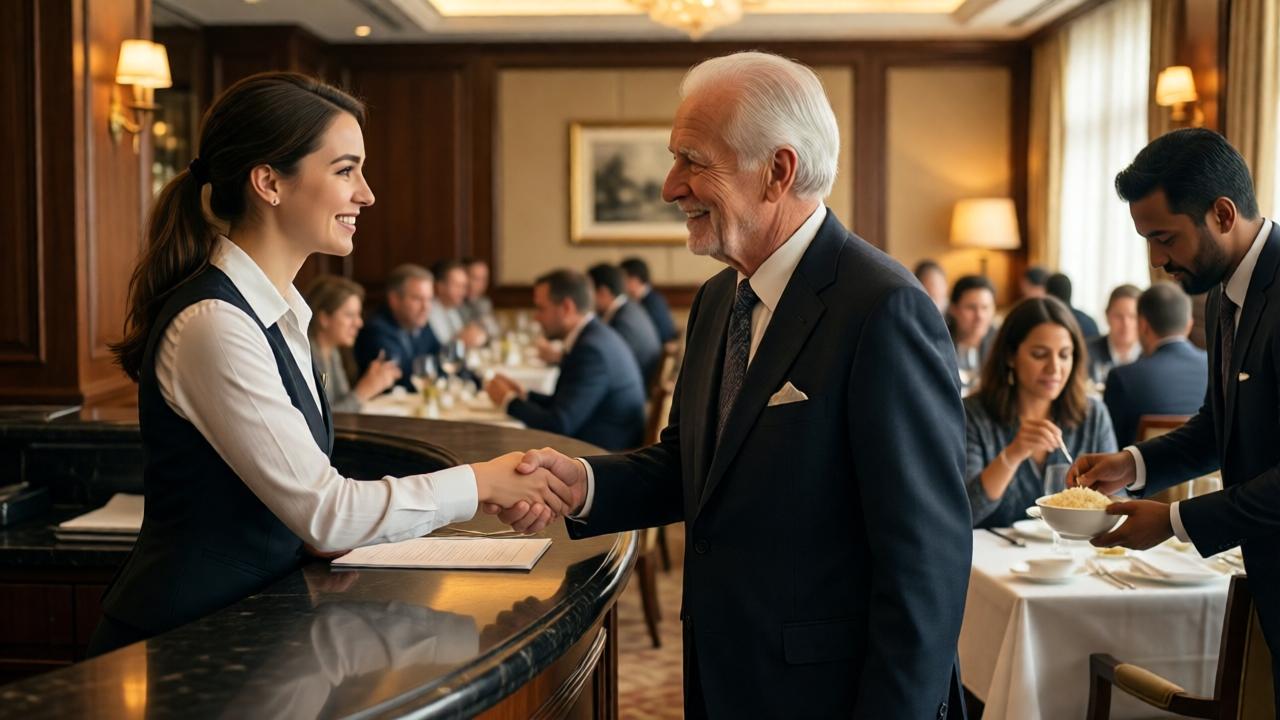
Clara later told me the manager left without another word, the single gold bar clutched like a shameful trophy. The restaurant, under her guidance, instituted a new policy: a simple, nourishing meal for anyone in need, no questions asked, paid for by a discreet fund. Sometimes, I still visit, dressed in my finest suit, and order the house special. Clara always greets me with that same soft smile and says, ‘Welcome back, sir. You’re always welcome here.’ And for the first time, I truly believe it.