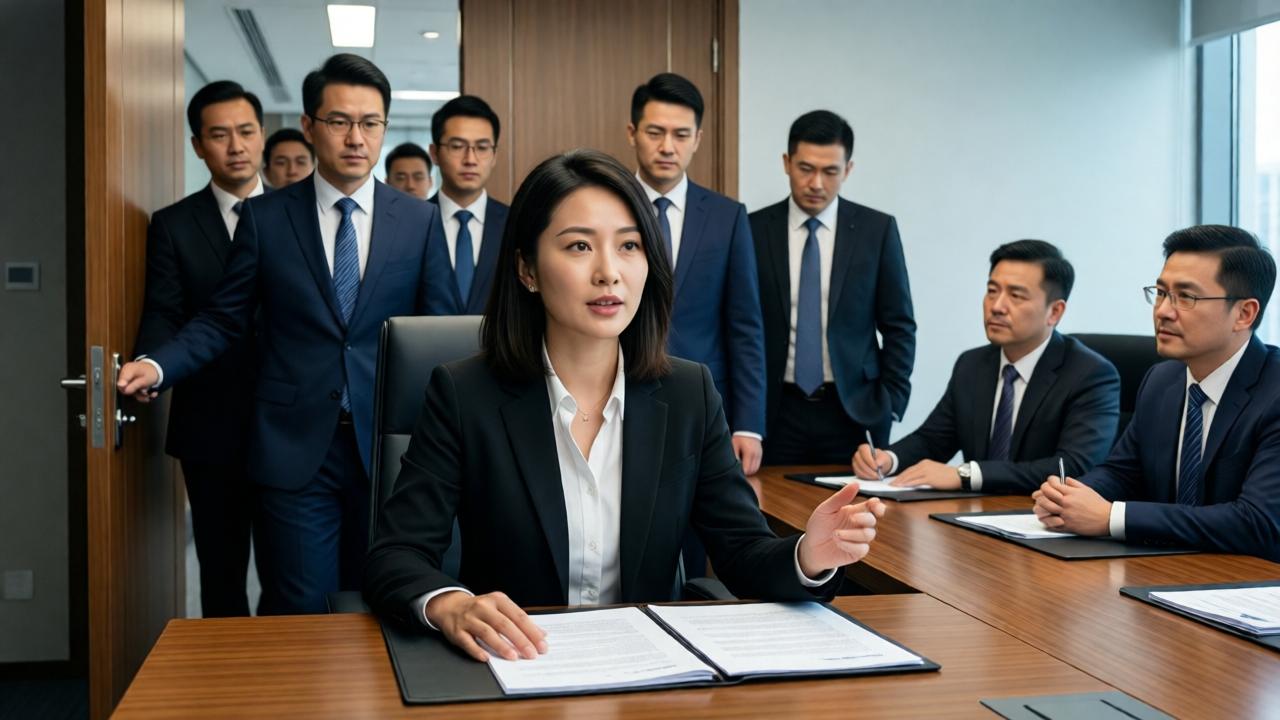

“You, the cleaning lady? If you can translate this, I’ll put this entire company in your name.” Leonardo’s booming voice echoed in the silent boardroom, followed by a dismissive, hearty laugh. Ten lawyers sat frozen around the polished mahogany table, their eyes fixed on Clara in her worn cleaning uniform, a bucket still at her feet. She had just announced she could translate the critical Mandarin contract, and the room’s disbelief was a palpable, suffocating force. One lawyer leaned over to another, whispering, “She barely speaks English fluently.” Leonardo gestured grandly toward the door. “Go back to mopping,” he said, his tone dripping with condescension, “and leave the serious work to the professionals.” But Clara, 26 years old and holding her ground, did not move.
The crisis had been brewing for a week. Clara, who arrived daily at 5:00 AM to clean the prestigious Manhattan law firm, had been dusting Leonardo’s desk when his phone rang with the frantic news. A $60 million deal with Chinese investors—the firm’s largest ever—was in jeopardy. Their official translator had quit without warning. Desperation set in as every translation agency in New York failed them, and internal attempts using online tools and university professors proved useless. With the Chinese investors confirming their 3:00 PM arrival and only two hours to spare, Leonardo had stormed into the conference room, slammed the documents down, and shouted at his silent team, “Can anyone here translate this contract? You’re all a bunch of useless incompetents!” It was in that heavy silence that Clara, dusting a bookshelf in the corner, recognized the characters on the page.

After Leonardo’s mocking challenge, Clara didn’t laugh. She met his gaze directly, her expression unreadable. Without a word, she pulled up an empty chair at the massive conference table, the leather sighing as she sat. The lawyers watched, a mixture of horror and morbid curiosity on their faces, as she picked up the first page of the dense contract. The only sound was the rustle of paper. She pulled a simple pen from her uniform pocket, ignoring the gold-plated ones laid out for the partners. “The preamble here,” she began, her voice clear and steady, “uses a specific formal construct common in Sino-foreign joint venture agreements. Your previous draft mistranslated the clause about intellectual property licensing—it implies perpetual ownership transfer, not a renewable term.” Leonardo’s smirk faded, replaced by a flicker of stunned confusion.
Clara worked with a quiet, methodical precision. Her pen moved in quick, sure strokes, annotating the margins in both Mandarin and English. “This liability clause on page seven is dangerously vague,” she noted, looking up at the firm’s lead counsel. “The term ‘不可抗力’ (bùkě kànglì) is being interpreted too broadly as ‘force majeure.’ In this context, referencing the specific Chinese Civil Code article, it has a narrower definition that would not cover a supply chain disruption from a third-party vendor. It’s a loophole big enough to sink the deal.” The lead counsel, a man named Richardson, paled. “She’s right,” he muttered, scrambling for his own copy. “We missed that entirely.” The room’s energy shifted from disdain to a focused, electric attention. Clara was not just translating words; she was interpreting legal intent.
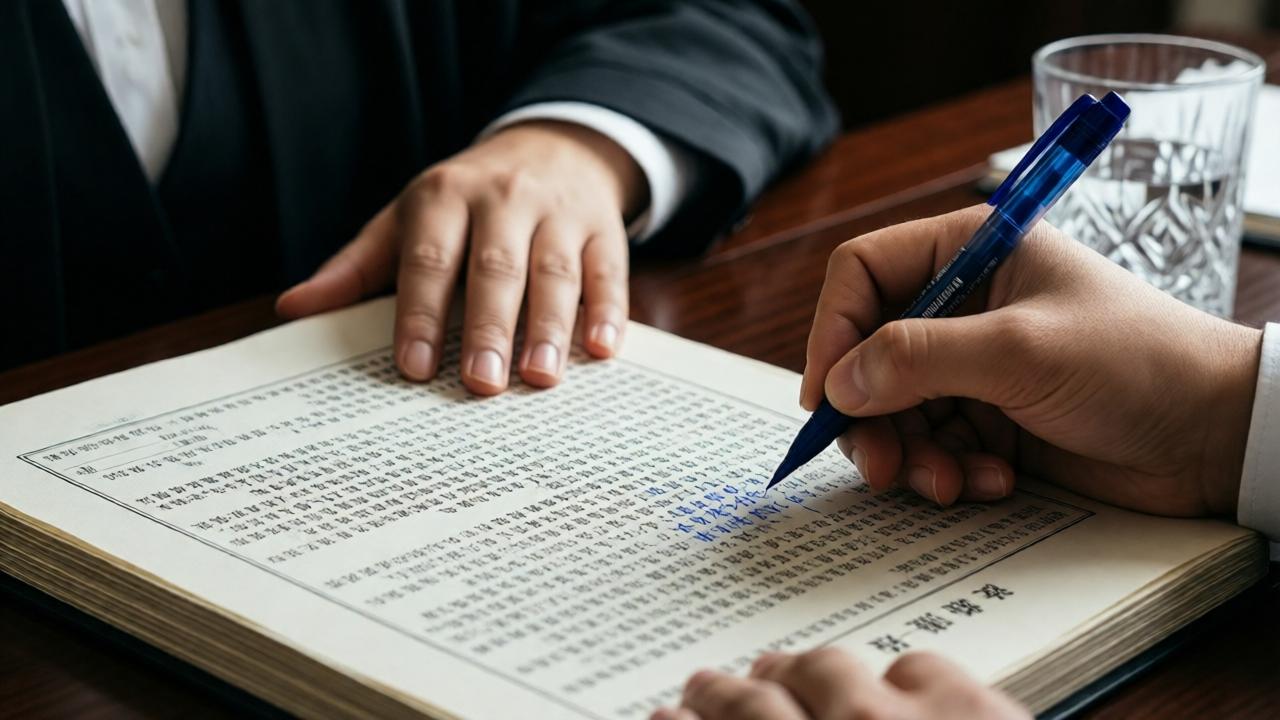
As the clock ticked toward the investors’ arrival, Clara reached the final pages. She paused, her brow furrowed. “There’s a problem here,” she said, her voice cutting through the concentrated silence. “The arbitration clause designates a venue in Hong Kong under specific rules that favor the investor’s home jurisdiction. But there’s an appended addendum, referenced in a footnote, that switches it to mainland China under different procedural laws. It’s contradictory. Was this intentional?” Leonardo, who had been pacing, stopped dead. “What? No! That can’t be. That would give them an overwhelming home-field advantage in any dispute.” Panic returned to his eyes. “Can you fix it? Draft a clear, neutral clause?” Clara glanced at the clock. “I can propose a standard UNCITRAL Model Law clause with a Singapore venue. It’s fair and common for cross-border deals like this.”
“Do it,” Leonardo commanded, his earlier bravado gone, replaced by the raw need of a man watching his career hang in the balance. Clara wrote swiftly on a fresh sheet of paper, her Mandarin characters flowing as naturally as her English. She presented the new clause, explaining its implications with the calm authority of a seasoned attorney. Just as she finished, the receptionist’s voice announced over the intercom: “The delegation from Shanghai has arrived.” The lawyers stood in a flurry of activity. Leonardo looked at Clara, then at the perfectly annotated, crisis-averted contract. The laughter was a distant memory. “Stay,” he said, the single word loaded with a new respect. “Sit at the table. Explain the changes to them.” Clara nodded, setting her cleaning cloth aside for good. The door opened, and the future of the firm walked in, guided by the most unlikely professional in the room.