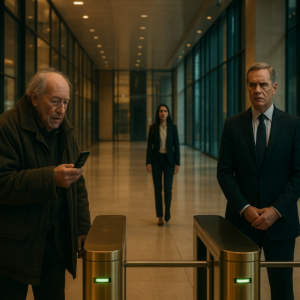

The metallic chime of the elevator doors closing felt like a final verdict to Maya. Balancing on her crutches, she watched the numbers light up: 2, 3, then darkness. A jarring halt. ‘No, no, no, no,’ she whispered, the mantra of her last six months of rejections escaping her lips. A calm voice cut through the blackness. ‘It happens. Give it a minute.’ It was the maintenance man who had slipped in just before the doors sealed. In the profound silence, she slowly lowered herself to the floor, the cold linoleum a stark contrast to the heat of her anxiety.
To her surprise, she heard a rustle of fabric as he sat down beside her. A flashlight beam pierced the dark, creating a small island of light around them. ‘What are you doing?’ she asked, bewildered. ‘My knees hurt standing,’ he replied simply. His unassuming presence, this small act of shared space, began to dissolve the walls she had built. After a long silence, the truth she had been carrying spilled out. ‘I’m not going to get this job anyway,’ she said quietly. ‘Because I walk in on these crutches and I watch their faces change. Before I even say one word.’
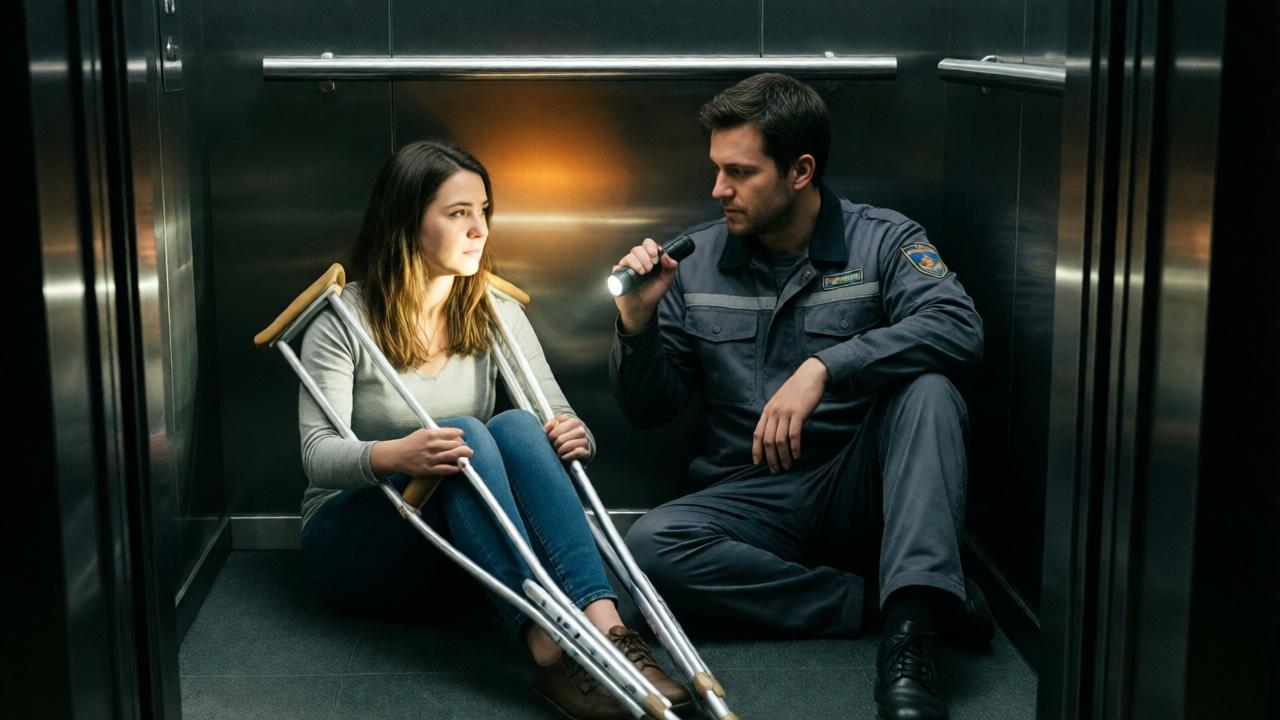
He listened, then asked a question that caught her off guard. ‘What do you see when you look at yourself?’ He clarified, ‘Not what they see. What do *you* see?’ In that dark capsule, stripped of pretense, she found her answer. ‘Someone who fought for everything,’ she said, her voice cracking with emotion. ‘Someone who never gave up. Someone who deserves a chance.’ His response was a quiet command that resonated in her bones. ‘Then walk in there like that person.’ As if on cue, the elevator hummed back to life, the lights flickering on. They stood. ’12th floor. Go,’ he said.
The encounter fueled her steps, but the reception desk was a bucket of cold water. The receptionist’s eyes traveled from Maya’s crutches to her screen. ‘You’re late.’ Then, with a dismissive glance, ‘With that many applicants today, I’m not sure why you even came. No offense. But look at your competition.’ Maya sat, defeated, hands folded in her lap, the man’s words feeling distant. A few minutes later, the maintenance man walked through the lobby. He saw her stricken face, then looked at the smirking receptionist. He approached the desk. ‘Oh, mister!’ the receptionist chirped. He leaned in, his voice low but firm. ‘Why were you rude to her?’
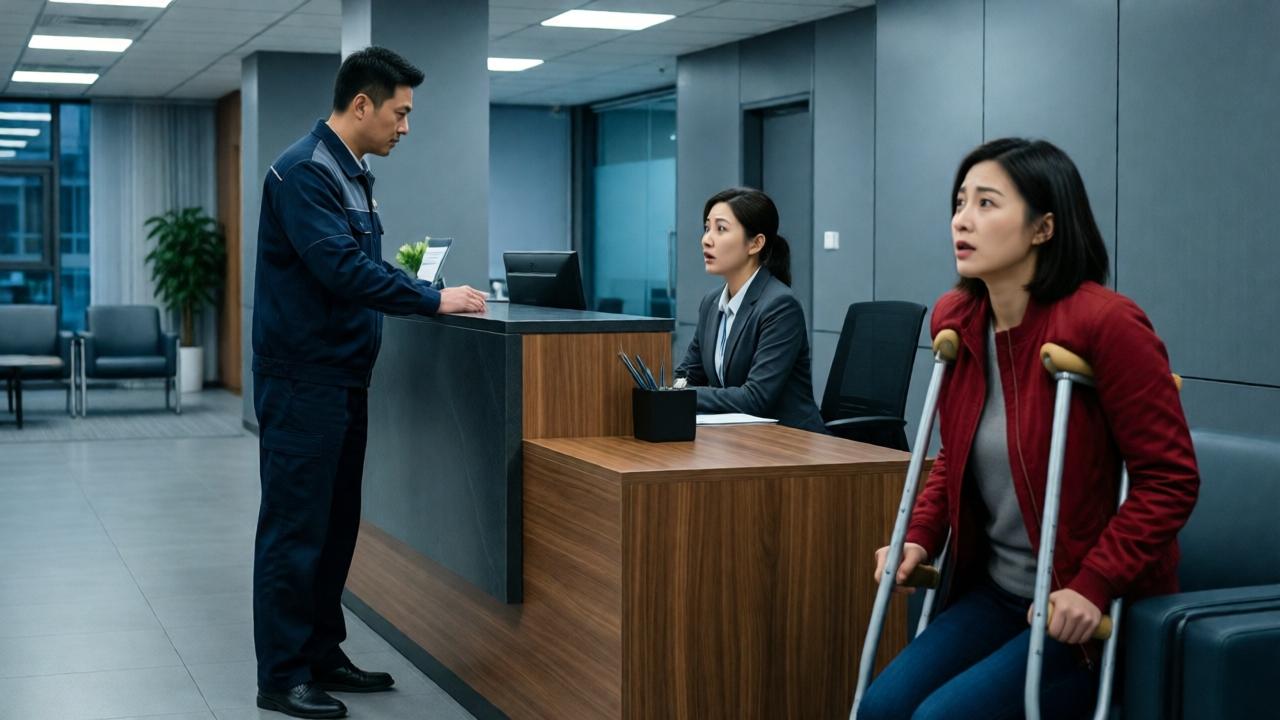
‘Sir, I was just being honest,’ the receptionist defended. ‘You looked at her crutches and decided. Before she said one word,’ he stated, his tone leaving no room for argument. ‘In this company, we treat every person with dignity. That is not a suggestion.’ He turned his back on the frozen receptionist and walked to Maya. He held out a crisp, white business card. Her eyes scanned the embossed letters: Chief Executive Officer. She looked up, speechless. ‘You told me in that elevator exactly who you are,’ CEO Daniel Reeves said. ‘That is who I want in this company. Come with me upstairs.’
The sequel to their story began in his sunlit office on the 12th floor. It wasn’t a formal interview but a conversation about vision, resilience, and the culture he wanted to build. A week later, Maya started not as an applicant, but as the head of a new department focused on inclusive hiring and workplace accessibility. Her first initiative? Mandatory empathy training for all client-facing staff. The frozen receptionist from that day was her first trainee. The lesson was simple, yet profound: ‘Treat every person with dignity. You never know who is sitting beside you.’

Months later, Maya and Daniel shared a coffee in the lobby. ‘You sat on the floor with me,’ she reminded him, her voice soft with gratitude. He smiled. ‘You needed someone to sit with you.’ That single act of shared humanity in a dark elevator didn’t just change a career; it transformed a company’s heart. It proved that the most powerful interviews don’t happen in boardrooms, but in the unscripted moments where character is revealed not by a resume, but by the courage to be seen and the wisdom to truly see another.