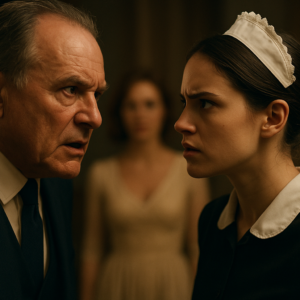

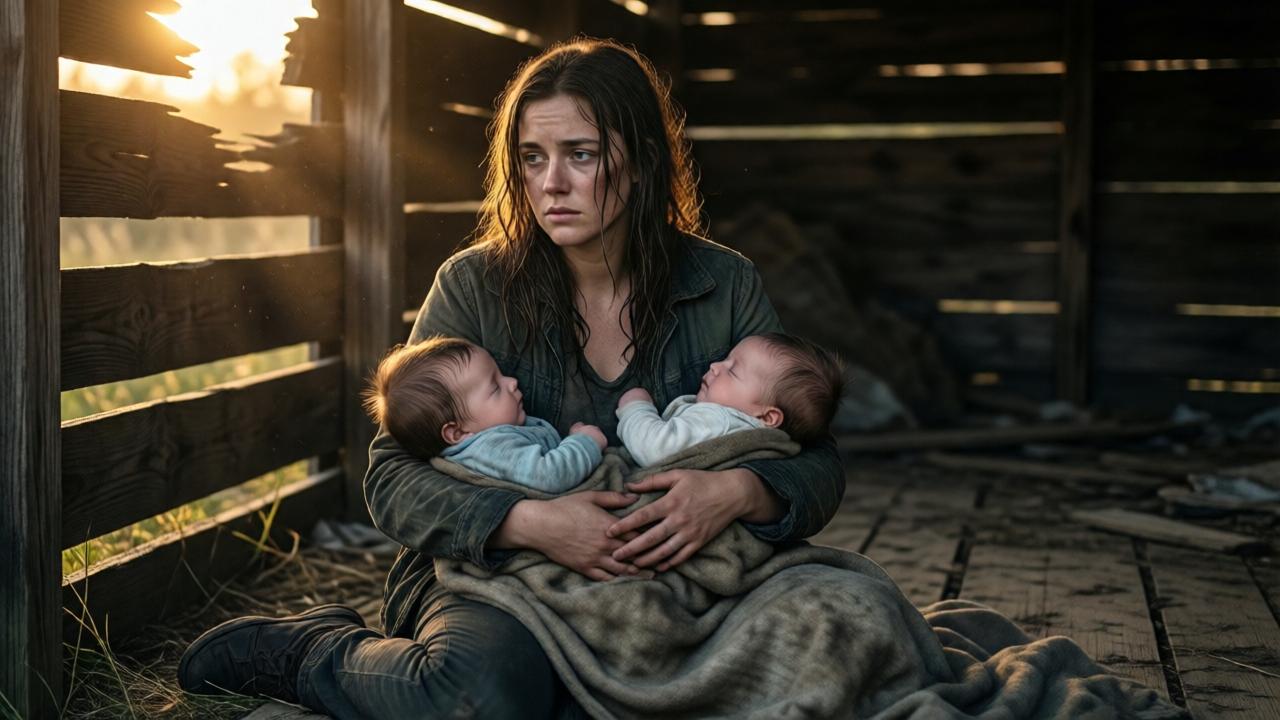
The rain that lashed the highway to Louisville was a cold, relentless curtain, matching the despair in Emily’s heart. With a twin cradled in each arm, their mewling cries barely audible over the storm, she walked. Jack’s final words, ‘I didn’t sign up for this,’ echoed with every squelching step. Her own grief for her lost child and her beloved Olivia was a raw, private wound, but the weight of the two sleeping infants was a tangible demand for survival. ‘I promise,’ she whispered into the damp blanket, repeating the vow she’d made at her friend’s deathbed. The world saw a bedraggled young woman with no prospects. Emily saw only her duty.
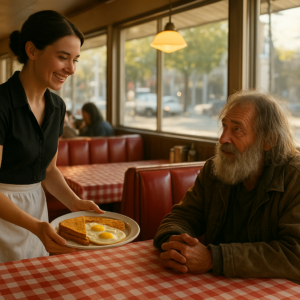
Louisville offered no warm welcome, just the stark reality of survival. An abandoned roadside produce stall, its wood rotting and windows long gone, became their first home. Emily would lay the boys—whom she named Liam and Noah—on a bed of dry straw, covering them with her only coat. Money was a ghost. ‘Milk first, then me,’ became her mantra. She foraged for discarded potatoes at the edges of farm fields, washed them in a public restroom, and sold them at a makeshift market stall. An old farmer, watching her struggle one day, tossed a few extra coins into her tin. ‘For the babies,’ he grunted, not meeting her eye. It was the first hint of kindness in a sea of indifference.
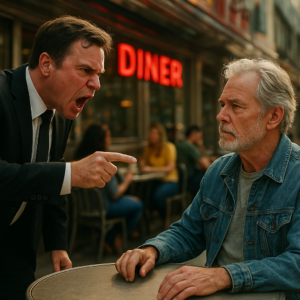
The turning point arrived not with a fanfare, but with the blare of a car horn. On a day when the sky threatened another downpour, Emily witnessed a burly truck driver berating an elderly man who had stumbled near the market. ‘Watch where you’re going, old timer!’ the driver shouted. Something in Emily snapped. ‘Leave him alone!’ she heard herself say, stepping between them, her own fears momentarily forgotten. She helped the shaken man, Mr. Henry, gather his scattered groceries and, noting his unsteady gait, insisted on walking him home. He was silent for most of the way, until the first heavy drops began to fall. ‘You’re getting wet,’ he finally said, his voice gravelly.
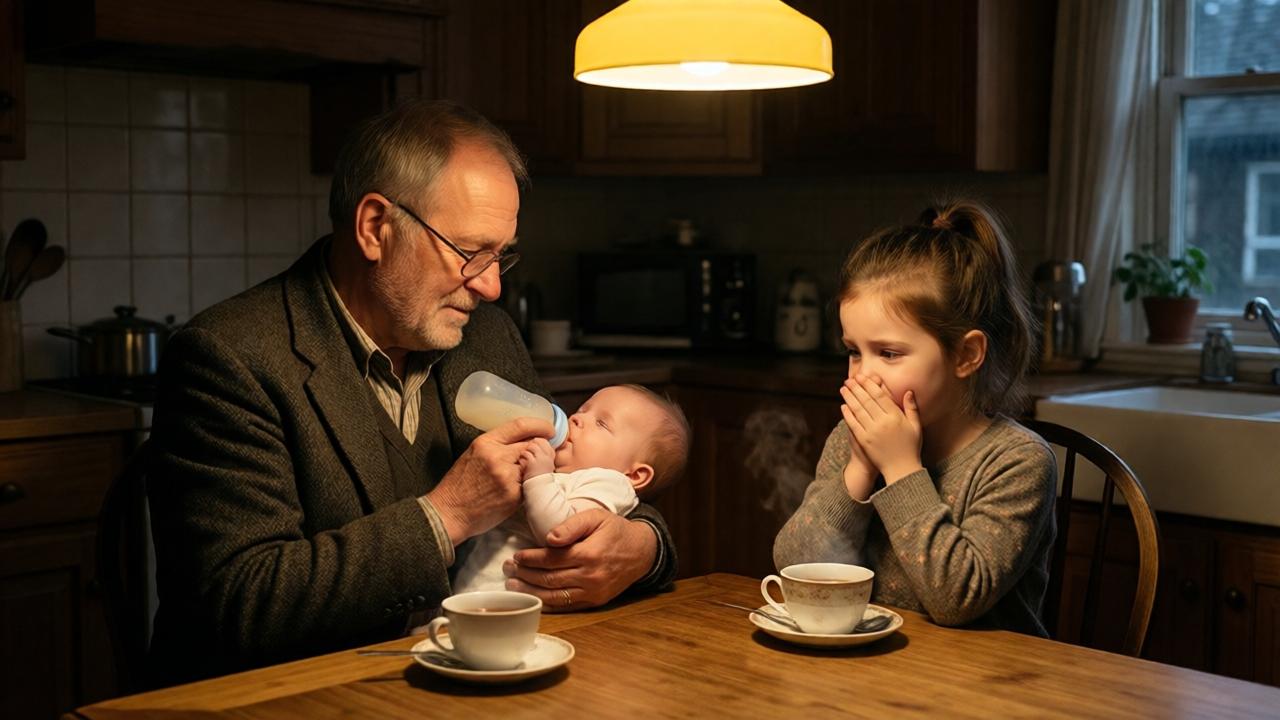
Mr. Henry’s small, cluttered house was a sanctuary of warmth. As Emily tried to quiet the now-hungry twins, the old man watched, his sharp eyes missing nothing. ‘Those boys sound empty,’ he stated simply. Without waiting for a reply, he warmed some milk. As the twins fed greedily, the storm broke in earnest outside. Over a cup of bitter tea, Emily’s story spilled out in fragments—Olivia, the promise, Jack, the stall. Mr. Henry listened, his face impassive. When the tale was done, he looked at the three drenched refugees in his kitchen. ‘You can’t raise children in a ruin,’ he declared. ‘The room upstairs is small. It’s yours if you want it.’ Emily could only stare, tears finally mixing with the rainwater on her cheeks.
Life under Mr. Henry’s roof was a foundation built on quiet routines and unspoken gratitude. He taught Liam and Noah how to plant tomatoes and fix a loose hinge. Emily took on cleaning and cooking, and with Henry’s encouragement, used his old truck to expand her potato sales into a proper small business. The boys grew, their curious minds a constant delight. At night, after they were asleep, Henry would share stories with Emily on the porch. ‘Olivia chose well,’ he said one evening, staring at the stars. ‘She saw the steel in you, even if you couldn’t see it yourself.’ That steel would be tested again, years later, when the boys were teenagers and a lawyer’s letter arrived, bearing Olivia’s final secret.
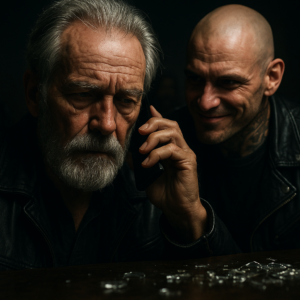
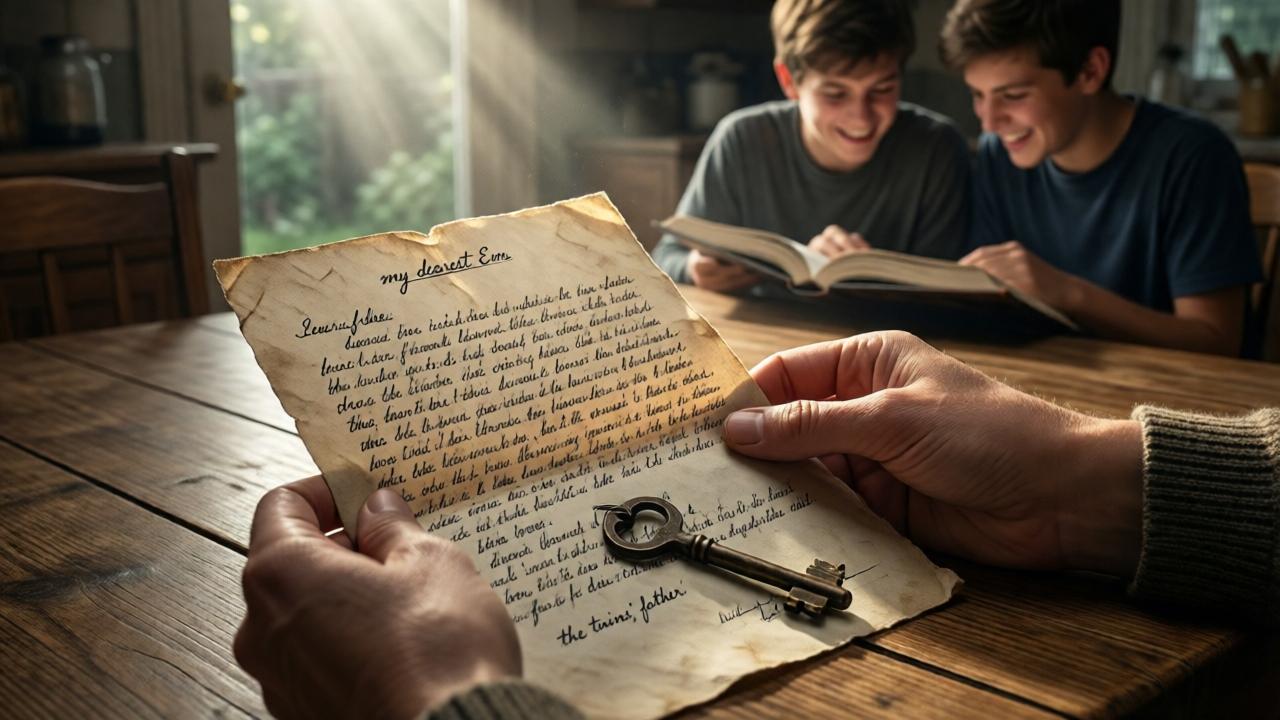
The letter, sealed for nearly two decades, was not from Olivia’s parents, who had never made contact. It was from Olivia herself, written in the desperate days before the twins’ birth and entrusted to a nurse. ‘My dearest Em,’ it began. ‘If you’re reading this, I’m gone, and you have my boys. I need you to know why I ran. It wasn’t despair. I fell for someone I shouldn’t have—a man with powerful enemies and a fortune he wanted kept from them. He’s the twins’ father. He’s gone now too, but what he left… it’s for them. There’s a safety deposit box in Louisville. The key is taped behind our childhood photo in your album. Forgive me for the burden. Love always, Liv.’ Emily’s hands trembled. The note explained everything and nothing.
The contents of that box—stock certificates, deeds, and a portfolio for a tech startup that had since become a giant—were the seed. But it was the upbringing Emily and Mr. Henry provided that made it grow. Liam, with a mind for systems, and Noah, with a genius for innovation, used that seed capital not as a handout, but as a tool. They built their own empire from the ground up, their work ethic forged in Kentucky soil and their integrity shaped by a mother who kept a promise in the pouring rain. At their company’s billion-dollar launch, Liam looked at the crowd of investors and reporters and said, ‘Our first investor was a woman who sold potatoes to buy us milk. Our first office was an abandoned stall. This isn’t just a success story. It’s a thank you note.’ And somewhere, Emily and old Mr. Henry, watching from the front row, knew exactly what that note—and Olivia’s final message—had truly meant.