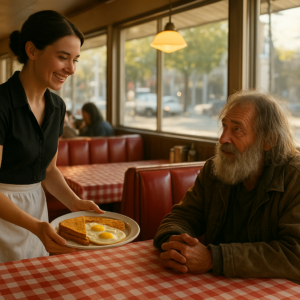

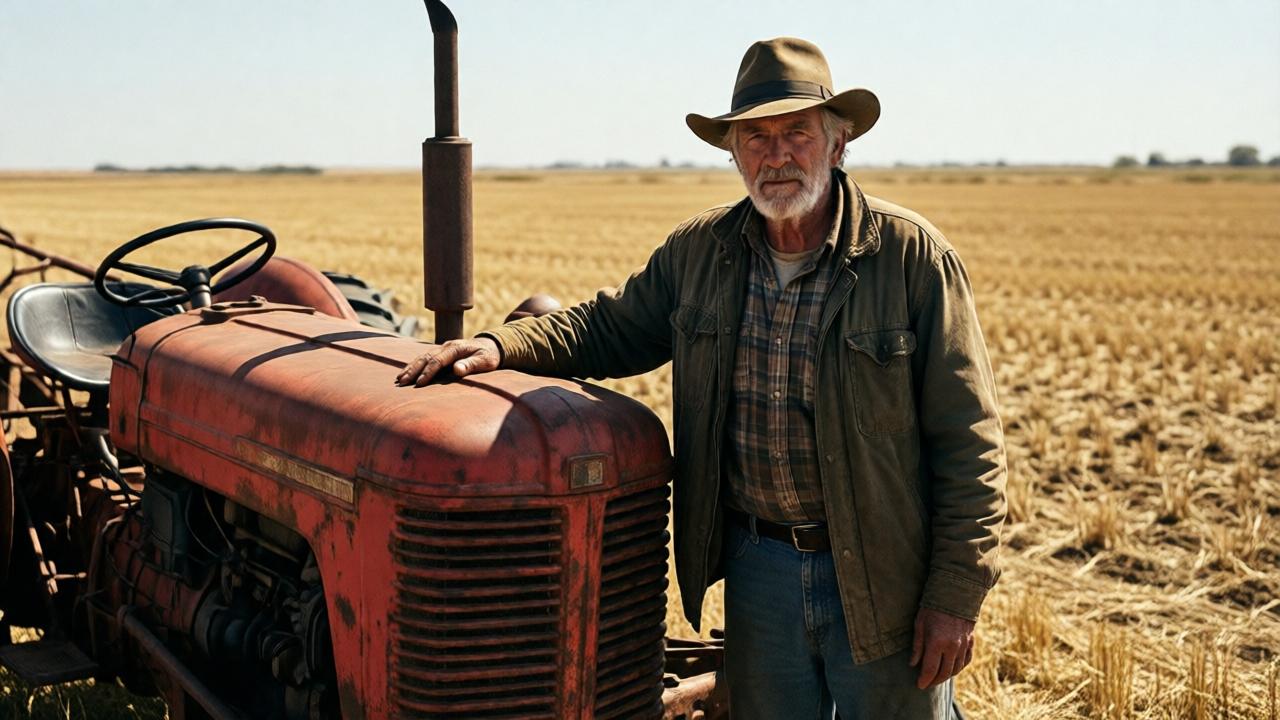
He put the sign up at sunrise. By noon the whole town knew. By noon they were already laughing. Cleet from the feed store didn’t just walk over. He brought two men along like it was worth witnessing. He circled the tractor once, kicked the front tire hard enough to rattle the frame, then turned to Virgil with a grin that had nothing friendly in it. “You’ve got to be out of your mind,” he jabbed a finger at Virgil’s chest. “Look at this thing. You really think someone’s paying for this pile of rust?” He glanced back at the men. “Seventy-two years old and still doesn’t know when something’s dead.” They laughed. “Call the scrapyard. Be grateful someone’ll haul it away. You’re embarrassing yourself, old man.” He walked off. The others followed.
Virgil stood alone beside the tractor. He rested one hand on the hood, the way you’d rest a hand on an old friend’s shoulder, then went inside. He sat at the kitchen table Eleanor had picked out their first year on this land. From the window he could see the mailbox at the end of the drive. She had painted the name herself. Whitmore. Nearly gone now, but he never touched it. Felt wrong to cover her handwriting. Taxes due in eleven days. The tractor was the last thing left to sell. No calls, no visitors. He was still sitting there when he heard a car slow at the end of the drive.
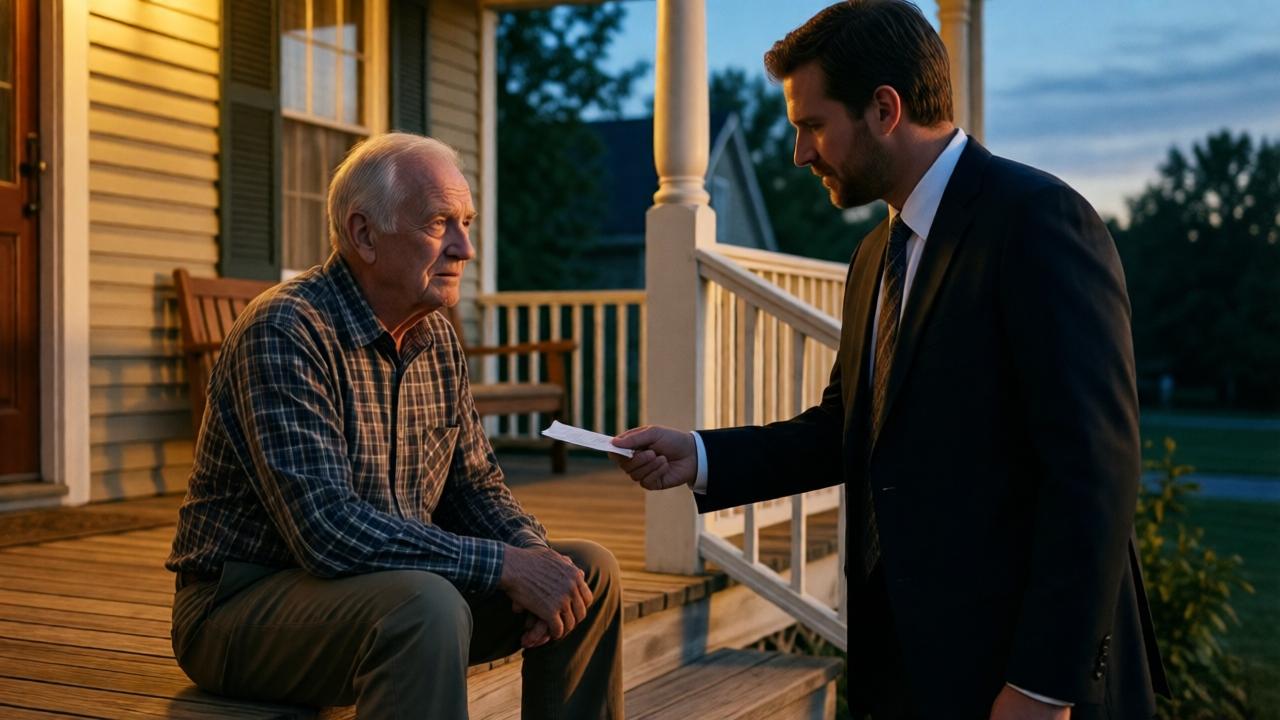
A man in a suit stepped out. Mid-forties, clean shoes, not from around here. He stood at the mailbox staring at the faded name. Then he walked up the drive. Virgil stepped outside. “Help you with something?” “Are you Virgil Whitmore?” “My whole life.” The man steadied himself before speaking. His name was Preston. His father died two years ago, and before he passed he told a story he’d kept for decades. A broken down car on a dark road in a rainstorm. A farmer who stopped, towed the car home, fed the stranger’s supper, gave him a bed, and pressed enough cash into his hand the next morning to get back to his family. “His father spent years trying to find that farmer. Never could. He made me promise,” Preston said. “If I ever found a farm named Whitmore, that was the place.”
Virgil sat down on the porch step. Didn’t speak for a while. Preston bought the tractor before sundown. Paid more than Virgil would have asked for everything he owned, but he left it right where it stood. Said it belonged on this land. Then he cleared every outstanding tax bill and paid three years forward. Cleet drove past that evening and saw the out-of-state plates in Virgil’s drive. He slowed to nearly a stop. Stared. Drove on without a word. This time, nobody was laughing.
Not all help looks like much when you give it, but it never stops being exactly that. The story, however, didn’t end with the paid taxes. Part two began the next morning, when Preston returned. “My father’s promise was to find you and repay the kindness,” he explained over coffee at Virgil’s table. “But my promise is different. I run a small agricultural equipment restoration foundation. We find old, faithful machines like yours and restore them to working order for historical farms and educational programs.” He slid a brochure across the table. “That tractor isn’t just a relic. It’s a testament to an era of craftsmanship and resilience. I’d like your permission to have our team restore it here, on your land. You’ll oversee the work. It stays with you, always.”
Virgil, who had spoken little for years, found his voice. “You’d do that? After all you’ve already done?” “It’s the right thing,” Preston said simply. “And my father would have insisted.” The restoration became the talk of the county, but the laughter had vanished, replaced by a curious, grudging respect. Cleet, driving past one afternoon, saw a team of young mechanics working under Virgil’s guidance. He didn’t stop, but he didn’t sneer either. He just watched for a long moment before driving on.
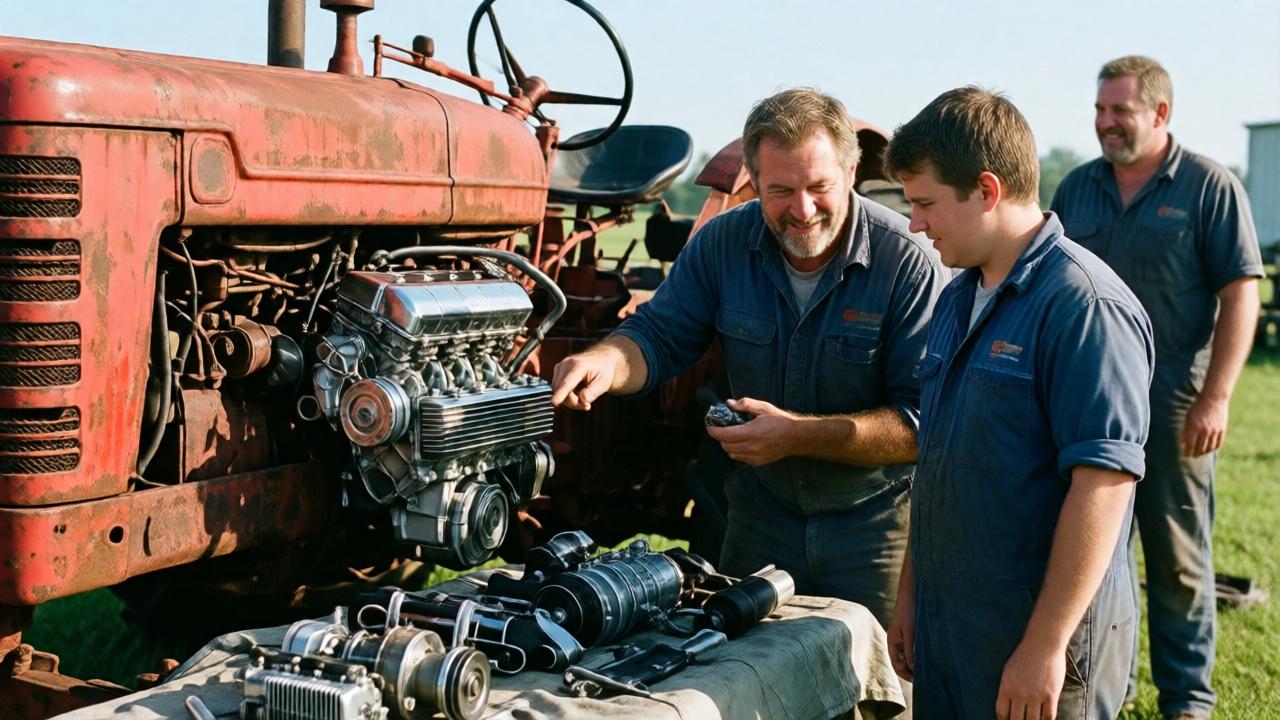
The old tractor, piece by piece, began to shine again, not as a sale item, but as a monument to a simple, selfless act performed on a rainy night decades prior—proof that goodness, once planted, can yield an unexpected harvest for generations.