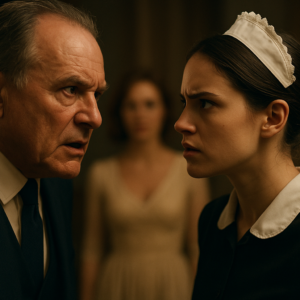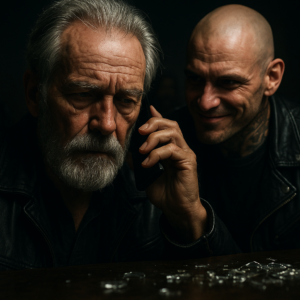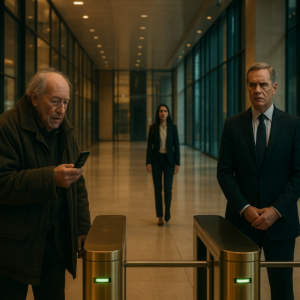
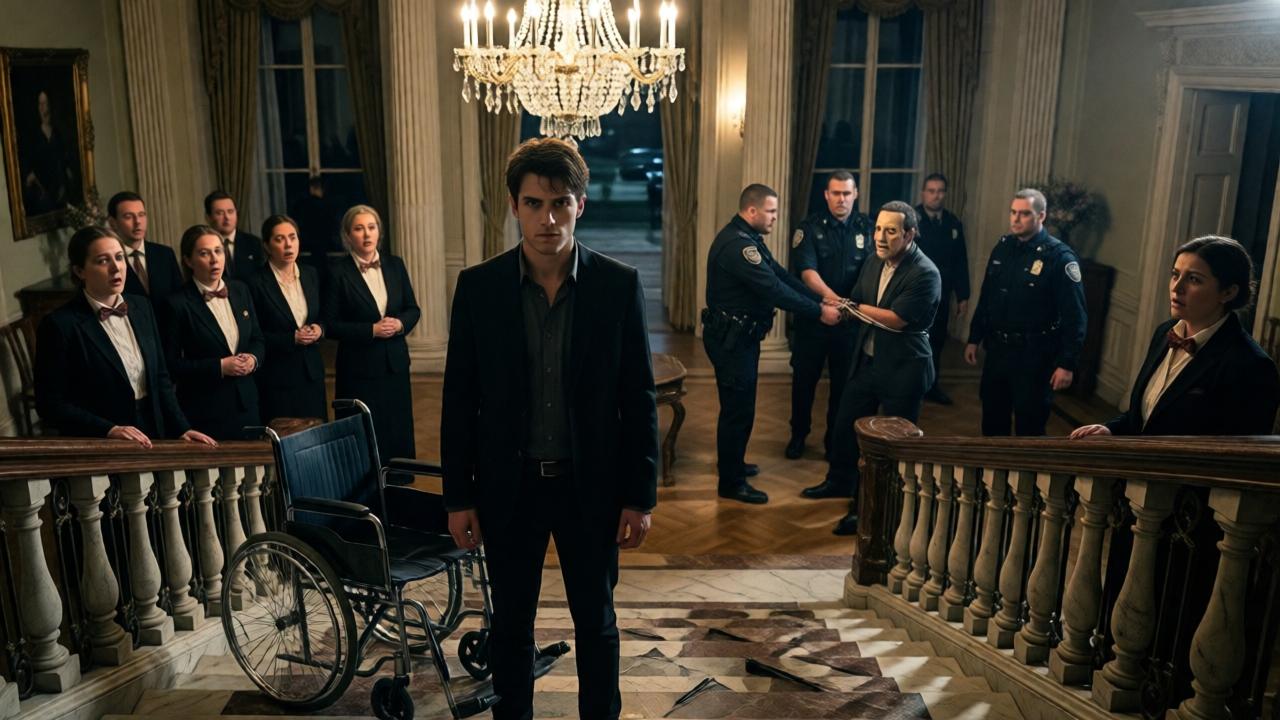
The silence in the grand foyer was heavier than the fallen chandelier dust. As police led the struggling imposter away, Noah stood tall, his legs trembling not from weakness, but from a surge of long-suppressed power. The servants huddled together, their whispers a frantic chorus of confusion and fear. “But if that’s not Mr. William,” the head housekeeper, Mrs. Higgins, stammered, her face ashen, “then where in God’s name is he?” Noah turned his gaze from the empty space where the imposter had stood to the dark, winding corridors of his home. “That,” he said, his voice steady and clear for the first time in years, “is what we are going to find out.”
For years, Noah had played the part of the frail, observant boy in the wheelchair. Confined to his chair after a childhood accident doctors deemed irreversible, he had turned his sharp mind inward, studying the patterns of the house and the people in it. “I never stopped my physical therapy,” he confessed to the head of security later that night. “I practiced in secret, every night, in the old library. The weakness was real, but the paralysis… that was a choice. A disguise, just like his mask.” He had sensed the shift in his ‘father’ weeks before the disappearance—the slight hesitation in recalling private jokes, the new aversion to a favorite brandy. The cameras were his answer, his silent guardians.
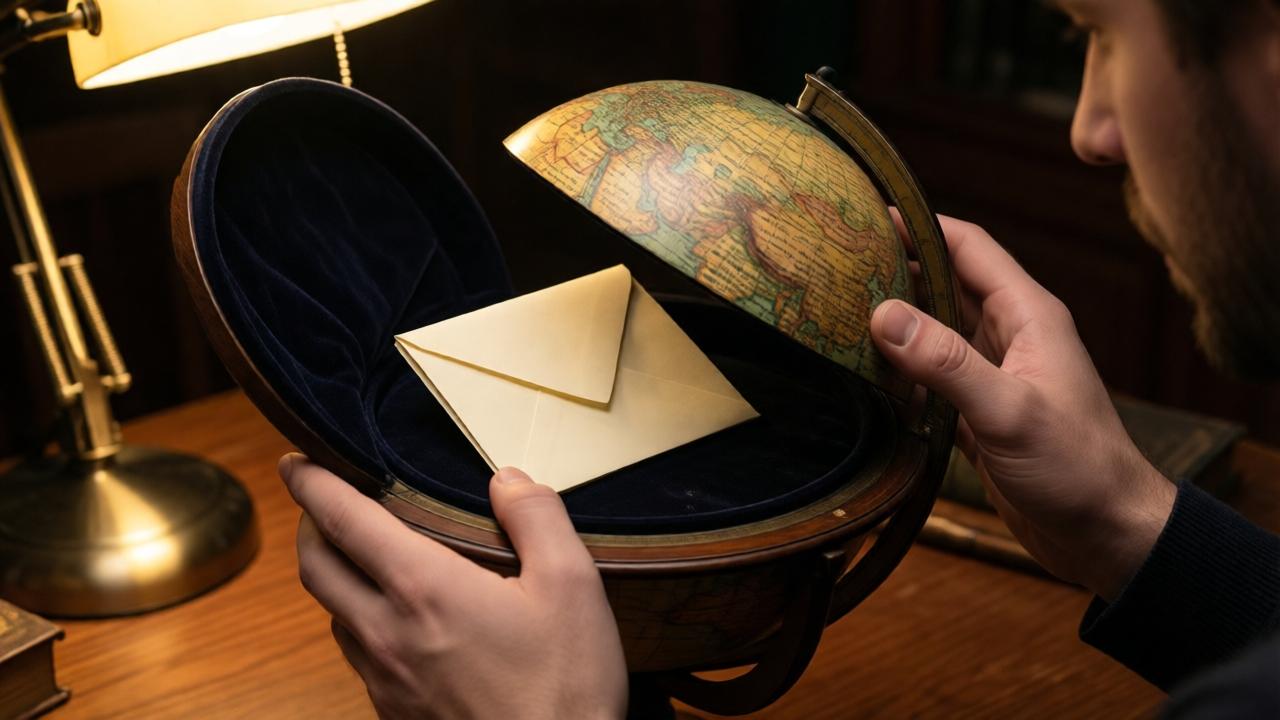
The investigation, led by Detective Miller, moved swiftly through the mansion’s secrets. “The imposter’s name is Victor Krane,” Miller announced, standing in William’s study. “A master forger and con artist with a history of targeting isolated wealthy individuals. He claims he found William already gone when he arrived, saw an opportunity, and took it.” Noah shook his head, leaning against his father’s oak desk. “He’s lying. He knows where my father is. The mask was too perfect, too specific. It required measurements, molds… time with the real William.” His eyes drifted to a large, antique globe in the corner, one his father would often spin absentmindedly. A memory flickered—a hidden compartment his father had shown him as a child, a playful secret. “Check the globe,” Noah said suddenly.
Detective Miller, intrigued, examined the globe. With a firm press on a specific meridian, a small panel clicked open. Inside was not treasure, but a single, folded piece of stationery. William’s elegant script spelled out a chilling message: “If you are reading this, Noah, then ‘he’ is here. The man is dangerous. My safe haven is the one place he fears—the old boathouse. Remember the summer of the herons.” It was a code only Noah could decipher. The summer of the herons referred not to the lake, but to a forgotten storm cellar near the overgrown gardens, a place they had taken shelter during a sudden squall. “He’s alive,” Noah breathed, a wave of relief and terror washing over him. “And he’s trapped.”
Under the cloak of a misty dawn, Noah led police and trusted staff to the derelict boathouse. Its doors were chained from the outside, new padlocks gleaming against the rotten wood. As the chains fell away and the doors creaked open, a foul smell of damp and confinement wafted out. There, in the corner, huddled under a mildewed blanket, was William. He was gaunt and pale, but his eyes, meeting Noah’s, burned with recognition and immense pride. “I knew you’d figure it out,” William croaked, his voice weak but clear. “I knew my boy was never truly broken.” As they helped him to his feet, William explained how Krane had posed as a potential business partner, overpowered him during a private meeting, and imprisoned him here, planning to slowly drain the estate’s accounts before staging William’s ‘accidental’ death.
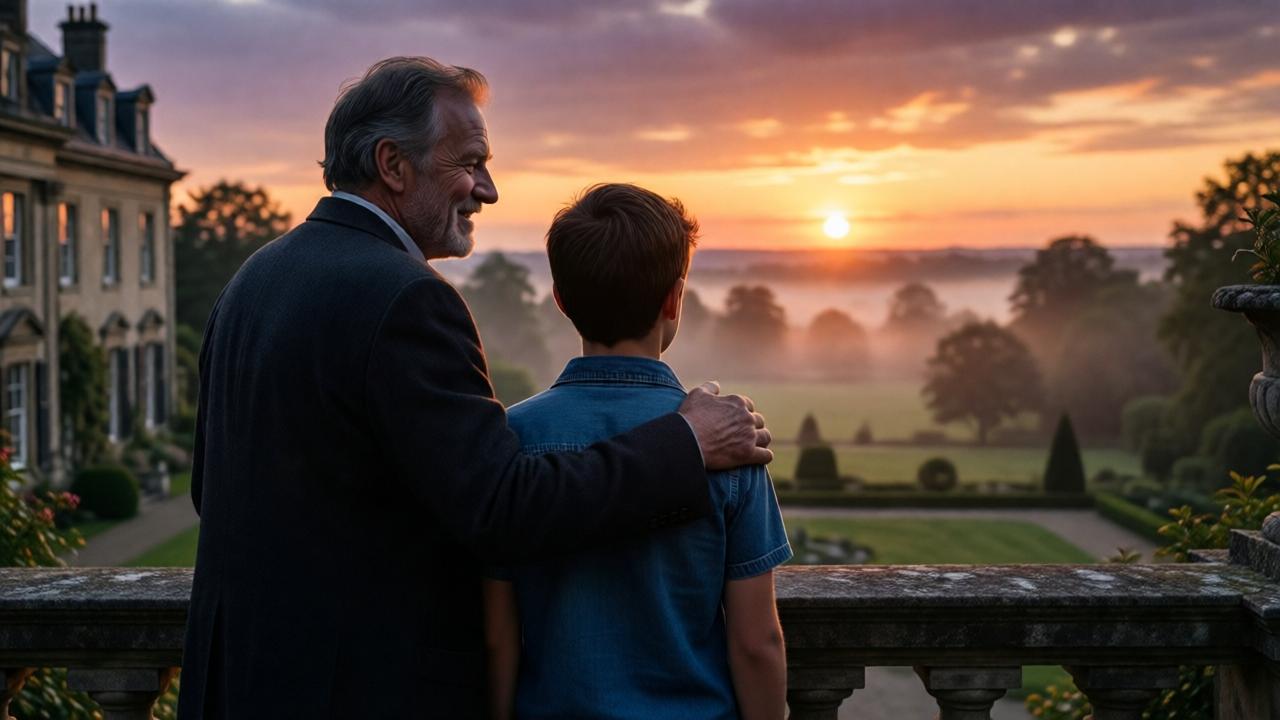
The reunion was bittersweet, overshadowed by betrayal but strengthened by survival. Back at the mansion, with William recovering and Krane in custody facing a lengthy list of charges, a new normal began to settle. Noah no longer needed the wheelchair, his secret strength now his visible foundation. One evening, standing together on the terrace overlooking the gardens, William placed a frail hand on his son’s shoulder. “You saved this family, Noah. Not with your legs, but with your mind and your heart.” Noah looked out at the twilight, the mystery solved but the memory of the fall forever etched in the marble of the stairs below. The mansion’s shadows no longer whispered of fear, but of a resilience that had been hiding in plain sight all along.