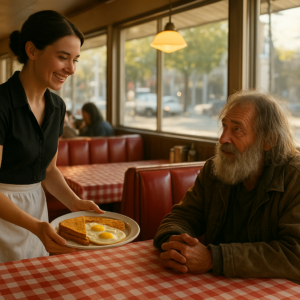

Every morning, rain or shine, a young girl with a worn backpack would cross the old stone bridge on her way to school. There, hunched on a small stool, sat an elderly man with cloudy, unseeing eyes, a humble tray of pencils laid out before him. The river of commuters flowed past him, a blur of indifferent footsteps and averted gazes. But the girl always stopped. Even on days when her own pockets held only a few coins for lunch, she would carefully select one pencil, place her payment in his hand, and say with genuine warmth, “Have a good day, sir.” The old man’s face would crinkle into a smile, a silent thank you that needed no words.
Years flowed under that bridge like the water below, carrying the girl into adulthood. One autumn afternoon, drawn by a wave of nostalgia, she found herself walking that familiar route. Her heart sank slightly; the stool was empty, the pencil tray gone. In its place stood a charming little bookstore with a freshly painted sign she couldn’t yet read. Pushing the door open, a bell chimed softly. The scent of old paper and coffee filled the air. A man looked up from behind the counter, his eyes—clear, bright, and knowing—meeting hers. “You finally came back,” he said, a gentle smile playing on his lips.
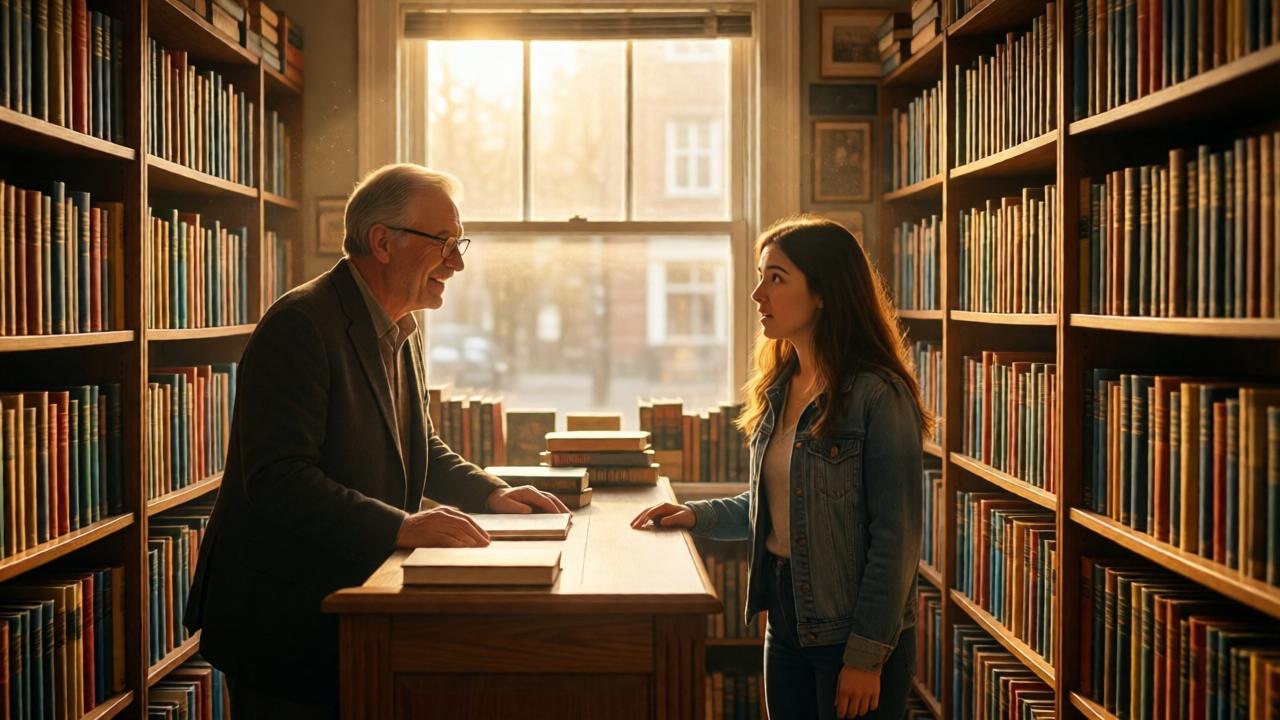
She was utterly bewildered. “I’m sorry, do I know you?” The man’s laughter was soft, like pages turning. “I’m the blind man who used to sell pencils on the bridge.” Her eyes widened in disbelief. “You can see now?” “Yes,” he nodded, his voice thick with emotion. “A surgery restored my sight a few years ago. I had saved money for decades, but what truly saved *me* were the kind words of one little girl who never failed to see the person behind the blindness.” He reached under the counter and handed her a beautifully bound book. “I named this place after you.” She looked at the cover, then at the sign above the door she had missed: “The Pencil & Promise Bookshop.” Tears welled in her eyes.
This was not the end, but a beautiful new beginning. The man, whose name was Arthur, invited her for tea. Over steaming cups, he shared the rest of the story. “Every pencil you bought, every ‘good day’ you wished me, was a deposit into an account of hope I didn’t know I had,” he explained. “When I regained my sight, this dream of a bookstore, a place of stories and connection, suddenly had a shape. And it had a name: the kindness you showed.” He had used his life savings, combined with a small grant for disabled entrepreneurs, to turn the spot where he once felt invisible into a community hub.
The young woman, named Clara, began visiting the bookstore every week. What started as catching up evolved into a partnership. Clara, who worked in graphic design, helped Arthur with the shop’s branding and community events. She designed beautiful posters for author readings and children’s story hours. Arthur, with his newfound vision, curated a special section dedicated to stories of resilience and human connection. “You know,” Arthur told her one evening as they were closing up, “for years, I knew your voice and the weight of your coins in my hand. Now, I get to know your smile. It’s even brighter than I imagined.”
The Pencil & Promise Bookshop thrived, becoming a beloved local landmark. But its greatest story was the one lived by its founders. On the tenth anniversary of the shop’s opening, Arthur made a proposal. “This place is ours, Clara. A promise kept from a bridge to these shelves. I would be honored if you would become my official business partner.” He presented her with a small box. Inside, nestled on velvet, wasn’t a ring, but an old, slightly chewed yellow pencil, framed in a tiny glass case. A plaque on it read: “The First Deposit.”
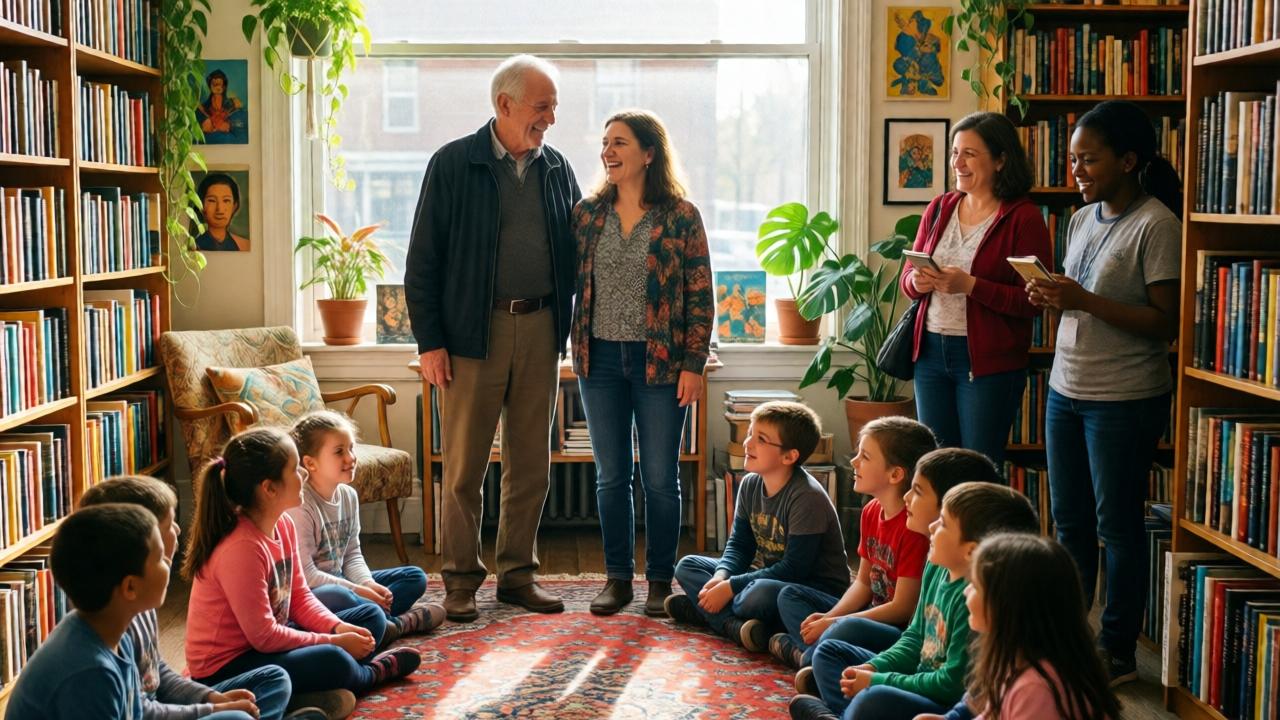
Clara accepted, not just the partnership, but the profound legacy it represented. The little girl’s daily act of recognition had built more than a business; it had rebuilt a man’s world and, in turn, shaped her own. They often told their story to visitors, always ending with the same lesson. Arthur would say, “Never underestimate the currency of kindness. A pencil bought with compassion can, one day, purchase a future.” And Clara would smile, adding, “And a simple ‘good day’ can eventually build a home for a thousand good stories.” The bridge still stands, but now it connects more than two riverbanks; it connects a past of simple grace to a present built on its promise.