
Every year, millions of people receive blood test results or routine health checkups filled with numbers they don’t fully understand. Blood pressure, cholesterol, blood sugar, hemoglobin, vitamins… these values can seem confusing at first glance. However, they provide valuable information about how your body is functioning and can help detect potential health issues before symptoms appear.
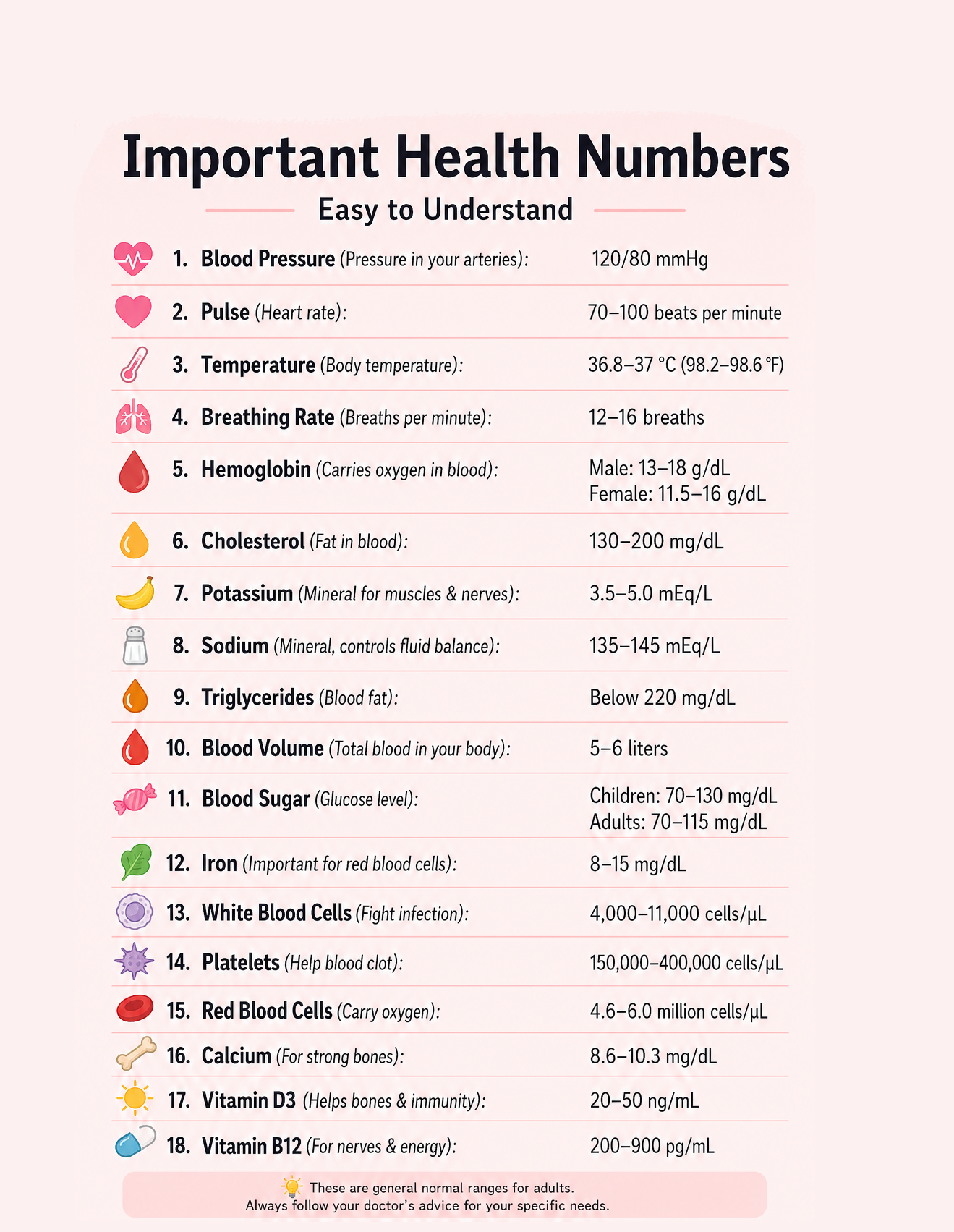
The infographic above summarizes some of the most important health numbers for adults. While these values are general reference ranges and should never replace professional medical advice, understanding them can help you make better decisions about your health.
1. Blood Pressure
A healthy blood pressure is generally around 120/80 mmHg.
Blood pressure measures the force of blood pushing against the walls of your arteries. High blood pressure often develops without noticeable symptoms, which is why it’s commonly called the “silent killer.” If left untreated, it can increase the risk of heart disease, stroke, kidney damage, and vision problems.
Healthy habits:
- Check your blood pressure regularly.
- Reduce sodium (salt) intake.
- Stay physically active.
- Maintain a healthy weight.
- Avoid smoking and limit alcohol consumption.
2. Pulse (Heart Rate)
A normal resting heart rate for most adults ranges from 70 to 100 beats per minute.
Your heart rate naturally increases during exercise, excitement, or stress. People who exercise regularly often have a lower resting heart rate because their hearts work more efficiently.
Tips for a healthy heart:
- Exercise regularly.
- Get enough sleep.
- Stay hydrated.
- Practice stress management through walking, meditation, or deep breathing.
3. Body Temperature
Normal body temperature usually falls between 36.8°C and 37°C (98.2°F-98.6°F).
Body temperature can vary slightly throughout the day depending on activity level, environment, and age. A persistent fever may indicate an infection or another medical condition.
Remember:
- Drink plenty of fluids when you’re sick.
- Rest if you develop a fever.
- Seek medical advice if a high fever persists.
4. Breathing Rate
Healthy adults typically take 12 to 16 breaths per minute while resting.
An unusually fast or slow breathing rate may signal respiratory or cardiovascular problems, anxiety, or other medical conditions.
Support healthy lungs by:
- Avoiding smoking.
- Staying physically active.
- Practicing deep breathing exercises.
- Spending time outdoors whenever possible.
5. Hemoglobin
Hemoglobin is the protein in red blood cells that carries oxygen throughout your body.
Low hemoglobin levels can lead to anemia, causing fatigue, weakness, dizziness, and shortness of breath.
To support healthy hemoglobin levels:
- Eat iron-rich foods such as lean meat, beans, spinach, and lentils.
- Include vitamin C-rich foods to improve iron absorption.
- Have routine blood tests if you experience ongoing fatigue.
6. Cholesterol
Cholesterol is essential for many body functions, but too much “bad” cholesterol can contribute to clogged arteries and heart disease.
Healthy cholesterol management is about balance rather than eliminating fats completely.
Heart-friendly habits include:
- Eating more fruits and vegetables.
- Choosing healthy fats like olive oil and nuts.
- Limiting fried and highly processed foods.
- Exercising most days of the week.
7. Potassium and Sodium
These two minerals play a critical role in muscle function, nerve signaling, hydration, and maintaining a healthy heartbeat.
Too much sodium may increase blood pressure, while low potassium levels can affect muscle and heart function.
Maintain a healthy balance by:
- Eating bananas, potatoes, leafy greens, and beans.
- Limiting processed foods high in sodium.
- Drinking enough water throughout the day.
8. Triglycerides
Triglycerides are a type of fat found in your bloodstream.
High triglyceride levels are often linked to excessive sugar intake, obesity, inactivity, and poor dietary habits.
Lower your risk by:
- Cutting back on sugary drinks.
- Limiting refined carbohydrates.
- Exercising regularly.
- Maintaining a healthy weight.
9. Blood Volume
The average adult has approximately 5 to 6 liters of blood circulating through the body.
Blood volume becomes especially important during surgery, major injuries, or severe illness. For everyday health, maintaining proper hydration and good circulation is far more important.
Simple ways to improve circulation:
- Stay active.
- Drink enough water.
- Avoid sitting for long periods without moving.
10. Blood Sugar (Glucose)
Glucose is your body’s primary source of energy.
Persistently high blood sugar levels can damage blood vessels, nerves, kidneys, and eyes, eventually leading to diabetes-related complications.
Protect your blood sugar by:
- Eating balanced meals.
- Limiting added sugars.
- Choosing whole grains over refined carbohydrates.
- Staying physically active.
11. Iron
Iron is essential for producing healthy red blood cells and delivering oxygen throughout the body.
Iron deficiency is one of the most common nutritional deficiencies worldwide.
Good dietary sources include:
- Lean red meat
- Poultry
- Fish
- Beans and lentils
- Spinach
- Fortified cereals
12. White Blood Cells, Platelets, and Red Blood Cells
Each type of blood cell has a specific role:
- White blood cells help fight infections.
- Platelets help your blood clot after an injury.
- Red blood cells transport oxygen throughout the body.
Changes in these values can indicate infections, inflammation, nutritional deficiencies, or other health conditions. That’s why a complete blood count (CBC) is one of the most commonly ordered laboratory tests.
13. Calcium, Vitamin D, and Vitamin B12
These nutrients are essential for maintaining overall health.
Calcium supports strong bones and teeth.
Vitamin D helps your body absorb calcium and supports immune function.
Vitamin B12 is important for healthy nerves, brain function, and red blood cell production.
A balanced diet usually provides adequate amounts, although some people may require supplements based on blood test results and medical advice.
Everyday Habits That Make a Difference
Many of these health numbers can be improved through consistent lifestyle choices rather than drastic changes.
Simple habits include:
- Sleep 7-9 hours each night.
- Walk 7,000-10,000 steps daily.
- Drink enough water.
- Eat plenty of fruits and vegetables.
- Limit highly processed foods and added sugar.
- Avoid smoking.
- Drink alcohol in moderation.
- Schedule an annual health checkup, even if you feel well.
Final Thoughts
Your health is more than a single number on a lab report. Blood pressure, blood sugar, cholesterol, vitamins, and blood cell counts all work together to paint a picture of your overall well-being. Regular checkups and routine blood tests can help identify potential problems long before symptoms develop.
Remember that these ranges are general guidelines, not personal diagnoses. Age, sex, medical history, medications, and lifestyle all influence what is considered normal for an individual. If one of your results falls outside the reference range, don’t panic. Discuss it with your healthcare provider, who can interpret your results in the context of your overall health.
Your body is remarkably resilient. Treat it well with good nutrition, regular movement, quality sleep, and preventive care, and it will usually return the favor. Humans do have a curious habit of ignoring maintenance until something starts making alarming noises. Fortunately, unlike a car engine, your body often gives you the chance to change course before real damage is done.