The rain came down in sheets, hammering the diner’s windows like a thousand impatient knuckles. Inside, the world was amber and chrome, a warm bubble of fluorescent light against the cold, wet dark. Neon signs—’OPEN 24 HOURS’, a faded martini glass—bled their colors into the slick asphalt outside, creating a rippling mirror of red and blue. The air smelled of coffee, old grease, and the faint, clean scent of rain that clung to every coat that came through the door.
Luka, twenty years old, wiped down the counter with a practiced hand, his dark green shirt a shade darker than the booth upholstery. He was the night shift’s only server, a kid with steady hands and a quiet way of moving. The diner was nearly empty—a couple in the corner, heads bent over a shared plate of fries, and a truck driver nursing a cup of coffee, his eyes fixed on the rain-streaked glass.
Then the door opened, and the rain blew in with him.
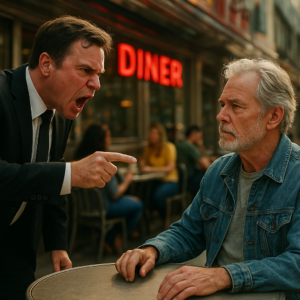
An old man, so thin he seemed to have been carved from shadow, shuffled inside. His back was bent, his long white beard and hair damp and stringy. He wore a blue denim jacket, soaked through, and his boots left dark, wet prints on the linoleum. He didn’t look at anyone. He just moved, slowly, painfully, to the red vinyl booth by the window and sank into it with a sigh that seemed to come from somewhere deep and tired.
Luka watched him for a moment, then picked up a menu. But as he approached, he noticed the man’s hands—the way they trembled, the way his eyes, hollow and dark, stared at the table as if it held all the answers he’d lost long ago.
‘Coffee?’ Luka asked, his voice soft.
The old man looked up. For a second, there was a flicker of something—surprise, maybe, or just the recognition that someone had spoken to him. He nodded, once.
Luka brought him a cup, then hesitated. He glanced over his shoulder at the kitchen. The cook had stepped out for a smoke. The clock on the wall read 11:47. The old man’s hands wrapped around the cup, trying to draw warmth from it, and Luka saw the way his knuckles were white, the way his whole body seemed to be braced against something.
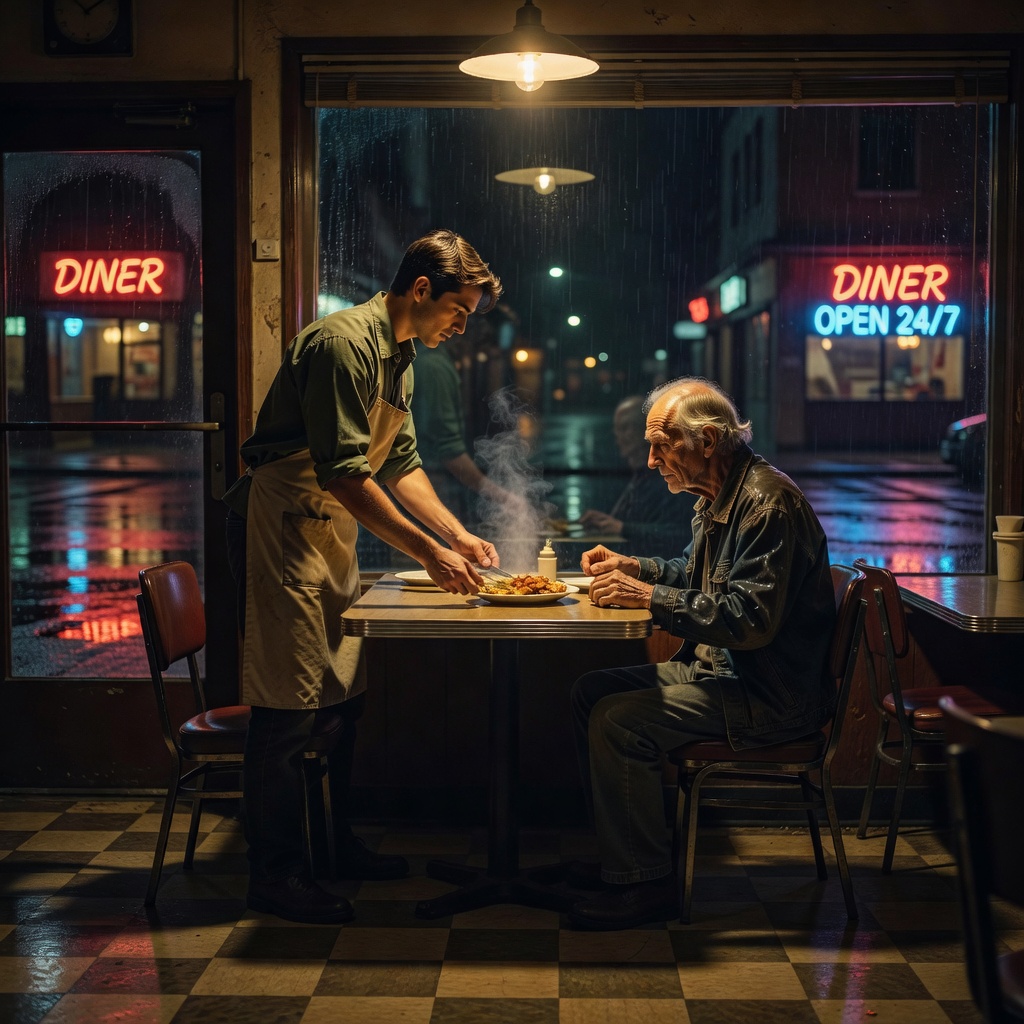
Without a word, Luka walked back to the counter, grabbed a plate from the warmer—the one with the special, the meatloaf and mashed potatoes that had been sitting there for the night shift’s break—and brought it to the table. He set it down gently, the steam rising in a slow curl.
The old man stared at the plate. Then at Luka. His eyes, for the first time, seemed to focus.
‘Thank you,’ he said, his voice a low rumble, like distant thunder.
Luka just nodded. ‘Eat. It’s cold out there.’
The old man ate slowly, methodically, as if each bite was a decision. The couple in the corner left, the door swinging shut behind them with a jingle. The truck driver paid and walked out into the downpour, leaving Luka and the old man alone with the sound of rain and the hum of the refrigerator.
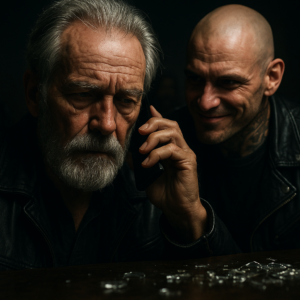
When the plate was clean, the old man reached into his pocket and pulled out a black smartphone, an expensive model that seemed out of place in his worn hands. He dialed a number, his thumb moving with surprising precision. He held the phone to his ear, waiting. No one answered, but he didn’t seem to mind. He just listened, then hung up.
The kitchen door swung open, and Marco stepped out. He was in his forties, with a face that had seen too many late shifts and too few apologies. His light gray shirt was stained, his brown apron cinched tight. He looked at the empty plate, then at Luka, and his jaw tightened.
‘That’s employee food,’ Marco said, his voice flat, but with an edge that cut through the hum of the diner.
Luka met his eyes. ‘He needs it more than I do.’
‘You’re fired.’ Marco’s words were clipped, final.
Luka didn’t flinch. ‘I’d make the same choice again.’
There was a silence, heavy as the rain outside. Then the old man spoke, his voice calm, serious, carrying a weight that made both men turn.
‘He gave me his dinner. Bring my attorneys.’
Marco blinked. ‘What?’
The old man didn’t repeat himself. He just looked at Marco, and for the first time, Marco noticed the man’s eyes—sharp, calculating, not the eyes of a homeless wanderer, but the eyes of someone who was used to being obeyed.
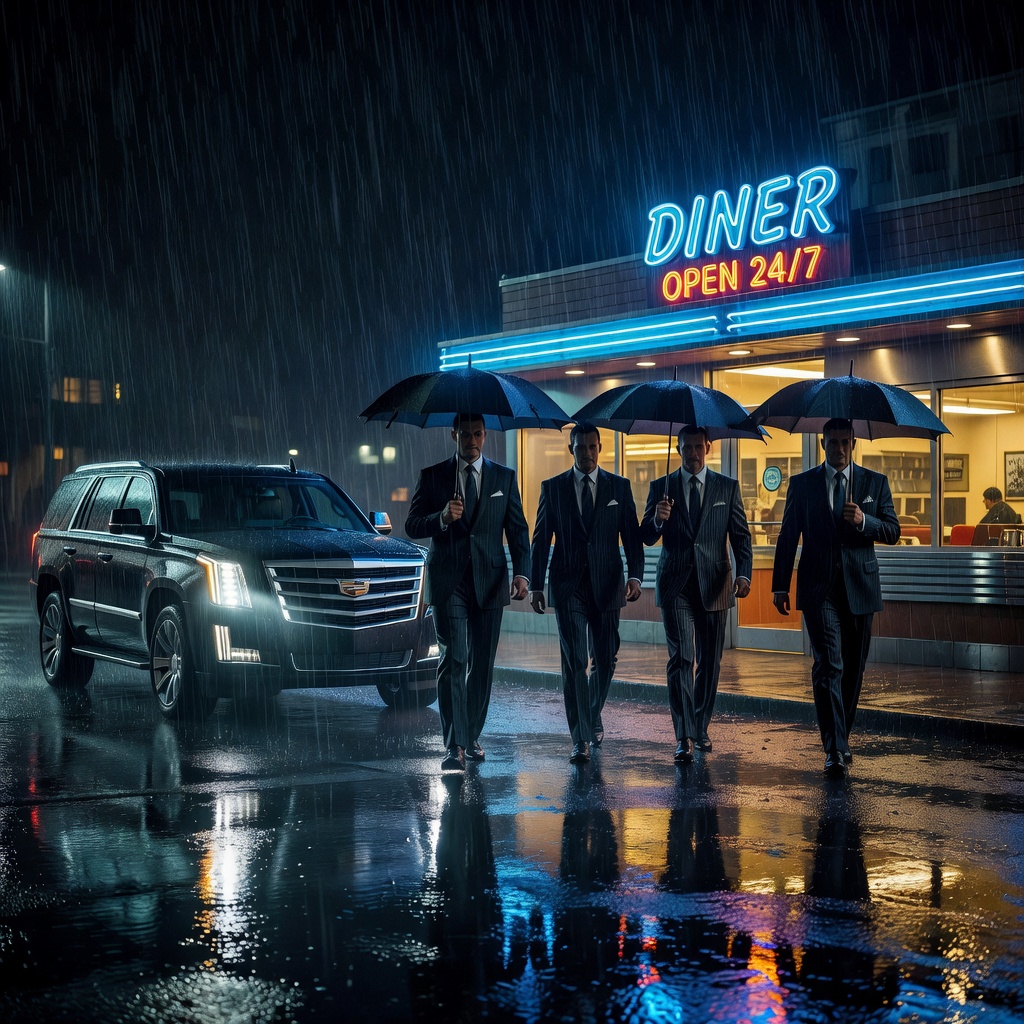
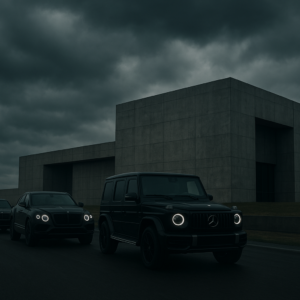
The door opened again, but not with the jingle of a single customer. This time, it was the sound of engines—low, powerful, rumbling. Two black Cadillac Escalades pulled up to the curb, their headlights cutting through the rain like twin beams of authority. The windows were tinted, but the doors opened in unison, and four men in dark suits stepped out, umbrellas snapping open over their heads.
Luka and Marco stood frozen at the window, watching the men approach. The old man remained seated, his phone now placed on the table like a talisman. The door opened, and the men filed in, filling the small diner with the scent of expensive cologne and wet wool.
The lead man, tall and broad, looked at the old man and gave a slight nod. ‘Mr. Whitmore. The car is ready.’
The old man—Mr. Whitmore—rose slowly, his joints creaking. He looked at Luka, and for a moment, something passed between them. A flicker of warmth, of recognition.
‘You have a good heart, boy,’ he said. ‘That’s rare. Don’t lose it.’
He turned to Marco, who was pale, his mouth opening and closing like a fish. ‘As for you—I’ll have my attorneys contact the owner. I think a man who fires an employee for an act of kindness needs to reconsider his position.’
He walked to the door, one of the men holding it open. The rain seemed to pause, as if waiting for his exit. Then he was gone, swallowed by the night and the waiting Escalades.
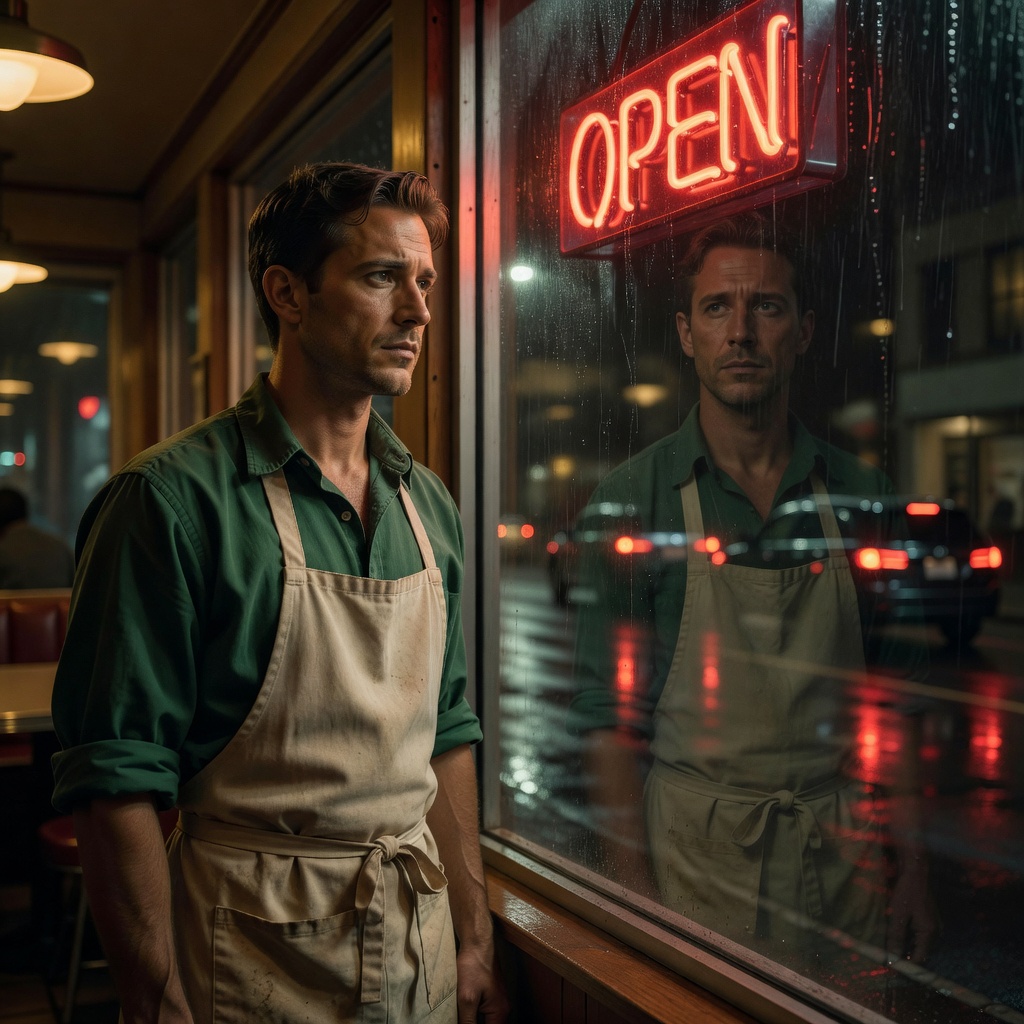
Luka stood at the window, watching the taillights disappear down the rain-slicked street. The neon signs flickered, casting their colors on the wet pavement. He didn’t know what had just happened. But he knew he’d made the right choice.
He turned back to the empty diner, the warm light, the smell of coffee. Somewhere in the distance, thunder rolled. And for the first time that night, the rain began to let up.
The marble floors of the villa gleamed under the soft glow of the crystal chandelier, casting dancing shadows across the high ceilings. In this palace of opulence, secrets…
The morning sun streamed through the windows of Rosie’s Diner, casting a warm glow over the red-and-white checkered tablecloths and the gleaming chrome of the counter. The air…
The midday sun beat down on the cracked pavement outside Rosie’s Diner, where the smell of grilled onions and stale coffee mingled with the exhaust of passing cars….
The kitchen smelled of stale bread and fresh violence. Viktor, sixty-eight, sat motionless at the oak table, a half-eaten sandwich on the plate before him. His black leather…
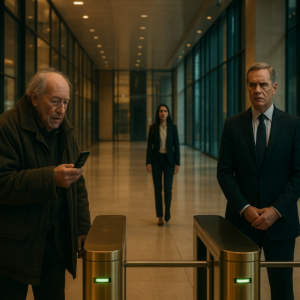
The lobby of Meridian Tower was a cathedral of glass and polished stone, a monument to corporate success. Sunlight streamed through the vast windows, catching the golden turnstiles…
The air in the modern canteen was thick with tension, a stark contrast to its minimalist design of grey concrete walls and warm wooden floors. Dim lighting cast…
Adblocker detected!
We see that you are using an ad blocker. The advertising on our site helps us to further develop the project, improve content, and offer everything to you free of charge.
If you would like to support our service, please disable your ad blocker for this page.