
Tales

The Elevator Interview: When Kindness Opens the Door

The metallic chime of the elevator doors closing felt like a final verdict to Maya. Balancing on her crutches, she watched the numbers light up: 2, 3, then darkness. A jarring halt. ‘No, no, no, no,’ she whispered, the mantra of her last six months of rejections escaping her lips. A calm voice cut through the blackness. ‘It happens. Give it a minute.’ It was the maintenance man who had slipped in just before the doors sealed. In the profound silence, she slowly lowered herself to the floor, the cold linoleum a stark contrast to the heat of her anxiety.

To her surprise, she heard a rustle of fabric as he sat down beside her. A flashlight beam pierced the dark, creating a small island of light around them. ‘What are you doing?’ she asked, bewildered. ‘My knees hurt standing,’ he replied simply. His unassuming presence, this small act of shared space, began to dissolve the walls she had built. After a long silence, the truth she had been carrying spilled out. ‘I’m not going to get this job anyway,’ she said quietly. ‘Because I walk in on these crutches and I watch their faces change. Before I even say one word.’
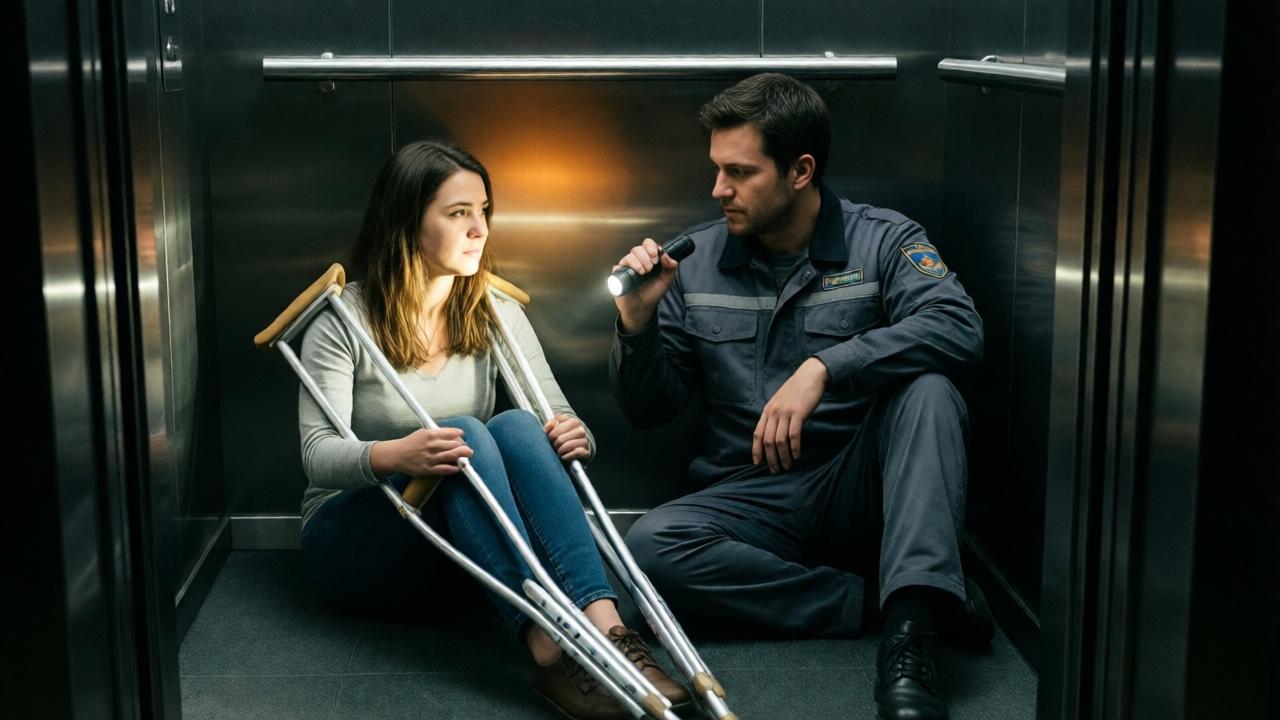
A cinematic scene inside a stalled, dark elevator. A woman sits on the floor, crutches across her lap, her face illuminated by the soft glow of a flashlight held by a man in a maintenance uniform sitting beside her. The mood is intimate and vulnerable. The lighting is dramatic, with high contrast between the deep shadows and the warm pool of light, highlighting their expressions of quiet connection. The composition is a medium shot, slightly from above, emphasizing their shared space on the elevator floor. The colors are muted blues and grays with a warm amber light center.


He listened, then asked a question that caught her off guard. ‘What do you see when you look at yourself?’ He clarified, ‘Not what they see. What do *you* see?’ In that dark capsule, stripped of pretense, she found her answer. ‘Someone who fought for everything,’ she said, her voice cracking with emotion. ‘Someone who never gave up. Someone who deserves a chance.’ His response was a quiet command that resonated in her bones. ‘Then walk in there like that person.’ As if on cue, the elevator hummed back to life, the lights flickering on. They stood. ’12th floor. Go,’ he said.

The encounter fueled her steps, but the reception desk was a bucket of cold water. The receptionist’s eyes traveled from Maya’s crutches to her screen. ‘You’re late.’ Then, with a dismissive glance, ‘With that many applicants today, I’m not sure why you even came. No offense. But look at your competition.’ Maya sat, defeated, hands folded in her lap, the man’s words feeling distant. A few minutes later, the maintenance man walked through the lobby. He saw her stricken face, then looked at the smirking receptionist. He approached the desk. ‘Oh, mister!’ the receptionist chirped. He leaned in, his voice low but firm. ‘Why were you rude to her?’
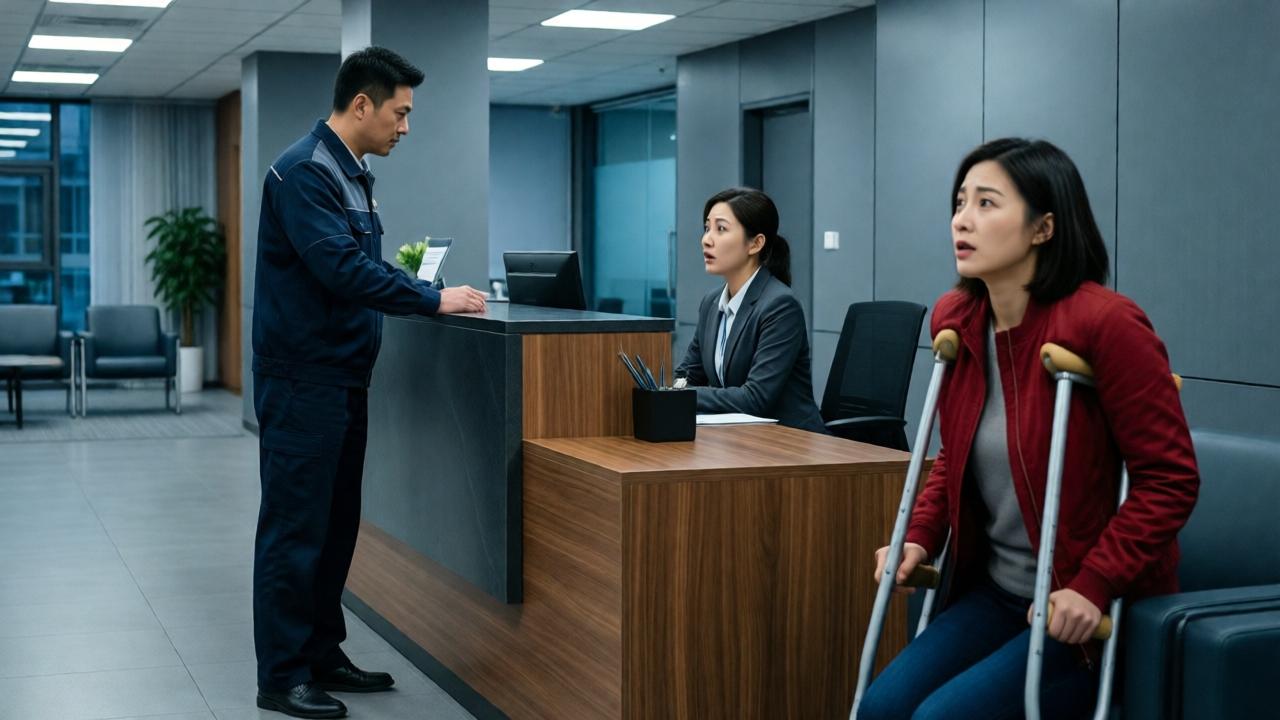
A dramatic scene in a modern corporate lobby. A man in a maintenance uniform stands authoritatively at a sleek reception desk, confronting a shocked receptionist. In the foreground, a woman with crutches watches from a seating area, her expression a mix of shock and dawning hope. The mood is tense and revelatory. The lighting is bright and corporate but focused on the trio. The composition uses leading lines of the lobby architecture to draw the eye to the confrontation. The colors are cool grays and blues of the office, with the warm wood of the desk and the red of the woman's jacket as focal points.


‘Sir, I was just being honest,’ the receptionist defended. ‘You looked at her crutches and decided. Before she said one word,’ he stated, his tone leaving no room for argument. ‘In this company, we treat every person with dignity. That is not a suggestion.’ He turned his back on the frozen receptionist and walked to Maya. He held out a crisp, white business card. Her eyes scanned the embossed letters: Chief Executive Officer. She looked up, speechless. ‘You told me in that elevator exactly who you are,’ CEO Daniel Reeves said. ‘That is who I want in this company. Come with me upstairs.’

The sequel to their story began in his sunlit office on the 12th floor. It wasn’t a formal interview but a conversation about vision, resilience, and the culture he wanted to build. A week later, Maya started not as an applicant, but as the head of a new department focused on inclusive hiring and workplace accessibility. Her first initiative? Mandatory empathy training for all client-facing staff. The frozen receptionist from that day was her first trainee. The lesson was simple, yet profound: ‘Treat every person with dignity. You never know who is sitting beside you.’

An inspiring scene in a bright, modern office conference room. Maya, now dressed in professional attire, stands confidently at the head of a table, leading a training session. She points to a slide that reads 'Dignity First' on a screen. Daniel Reeves, the CEO, watches from the side with a proud smile. Diverse employees are engaged in listening. The mood is hopeful and progressive. The lighting is natural sunlight streaming through large windows. The composition is wide, showing the collaborative environment. The colors are warm and inviting, with greens and natural wood tones promoting growth and clarity.


Months later, Maya and Daniel shared a coffee in the lobby. ‘You sat on the floor with me,’ she reminded him, her voice soft with gratitude. He smiled. ‘You needed someone to sit with you.’ That single act of shared humanity in a dark elevator didn’t just change a career; it transformed a company’s heart. It proved that the most powerful interviews don’t happen in boardrooms, but in the unscripted moments where character is revealed not by a resume, but by the courage to be seen and the wisdom to truly see another.
Related Posts

The Stall Boy’s Warning: A Helicopter, a Bomb, and the Truth That Wouldn’t Stay Buried

The sun hung high over the von Auerbach estate, pouring gold across the manicured lawn that stretched like a green carpet toward the great house. It was the…

The Man Who Waited: A Story of Max, Walter, and the Dog Who Came Home

The 7:42 train to Alexanderplatz was always half-empty on Tuesday mornings. The fluorescent lights hummed their sterile white hymn, bleaching the orange seats and the tired faces of…

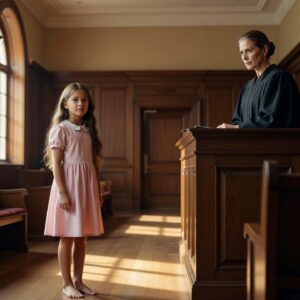
A young girl with long wavy light-brown hair, barefoot, wearing a pale pink dress with a white collar, stands facing a stern female judge in a black robe inside a wood-paneled courtroom. The girl's face is tear-streaked but determined. Behind the judge, an American flag hangs softly lit. Warm afternoon light filters through tall windows, casting long shadows across the wooden benches. The atmosphere is tense yet hopeful, with muted browns, golds, and the soft pink of the girl's dress dominating the composition. Camera angle is slightly low, emphasizing the child's courage.

The Little Girl Who Stopped a Trial: A Courtroom Drama Unfolds

The heavy oak doors of the county courthouse groaned open, and a small figure burst through. Bare feet slapped against the cold marble floor as a girl of…

A dramatic sunset over a marina, wooden pier stretching into calm water, a large white yacht gleaming under orange and gold sky, palm trees silhouetted in the background, an elderly man in a gray jacket and brown leather bag standing alone, a young man in a beige polo walking away with his head down, cinematic lighting, warm tones, emotional atmosphere, wide shot

The Sunset Key A Yacht, a Stranger, and the Secret That Changed Everything

The sun hung low over the marina, bleeding orange and gold across the water. The wooden pier creaked gently underfoot as an elderly man walked slowly toward the…

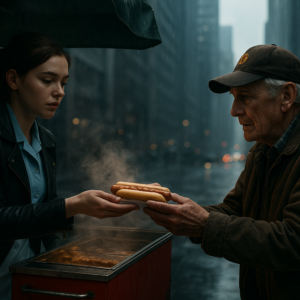
Cinematic shot of a rainy city street with towering skyscrapers, cold and wet. Emma, a 20-year-old European woman with chestnut hair in a ponytail, wears a light blue waitress uniform with a white apron under a black leather jacket, black leggings, and white sneakers. She stands behind a red hot dog cart with steam rising under a green fabric awning. Close-up on her hands passing a hot dog over the cart to the hands of Walter, a 70-year-old European man with gray hair, in a brown cap with a yellow logo, brown jacket, and plaid shirt. The background is blurred, focus on the exchange. Mood is cold yet warm, lighting is dim with rain reflections.

Rain Over the City: The Hot Dog Cart Encounter

The rain fell in sheets over the city, turning the streets into mirrors that reflected the cold, indifferent glow of skyscrapers. Emma pulled her black leather jacket tighter…

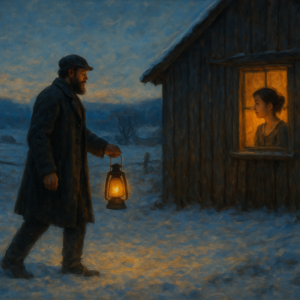
A snowy farmyard at dawn, a tall bearded man in a dark grey coat carries a lantern toward a weathered wooden barn while soft blue morning light spreads across the fields, inside the cabin window a young woman with chestnut hair in a bun watches him go, her expression thoughtful and moved, warm golden light spilling from the window onto the snow, painterly historical style, mood of quiet hope and new beginnings, palette of deep blues, warm ambers, and soft whites

No Child Sleeps in My Barn: The Unexpected Mercy of Jesse Brand

The lantern sputtered against the log walls, throwing long, restless shadows across the cabin. Mary Campbell set the last empty plate down on the rough timber table with…