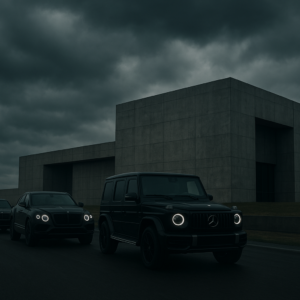

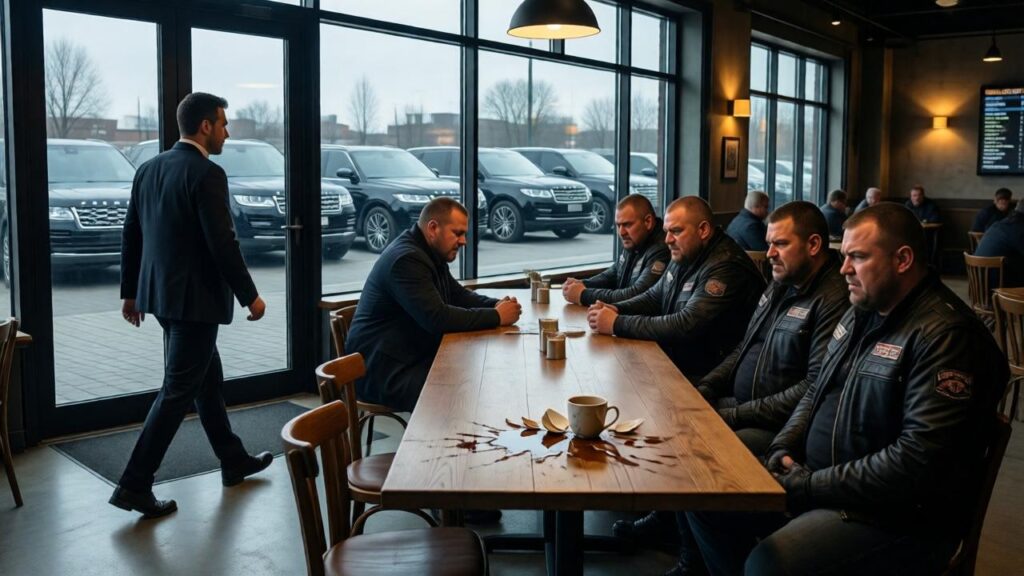
The shattered ceramic still skittered across the long wooden table when the first black Mercedes-Benz G-Wagen rolled to a silent stop outside the panoramic windows. Then another. Then three more. Then the Bentleys. Within ninety seconds the entire curb in front of the industrial café was occupied by a private motorcade that looked less like transportation and more like a declaration of war.
Kane’s mocking smile froze. The men behind him—broad-shouldered, shaved heads, tactical jackets—shifted their weight. One of them muttered something low and ugly in a language that wasn’t English. No one answered.
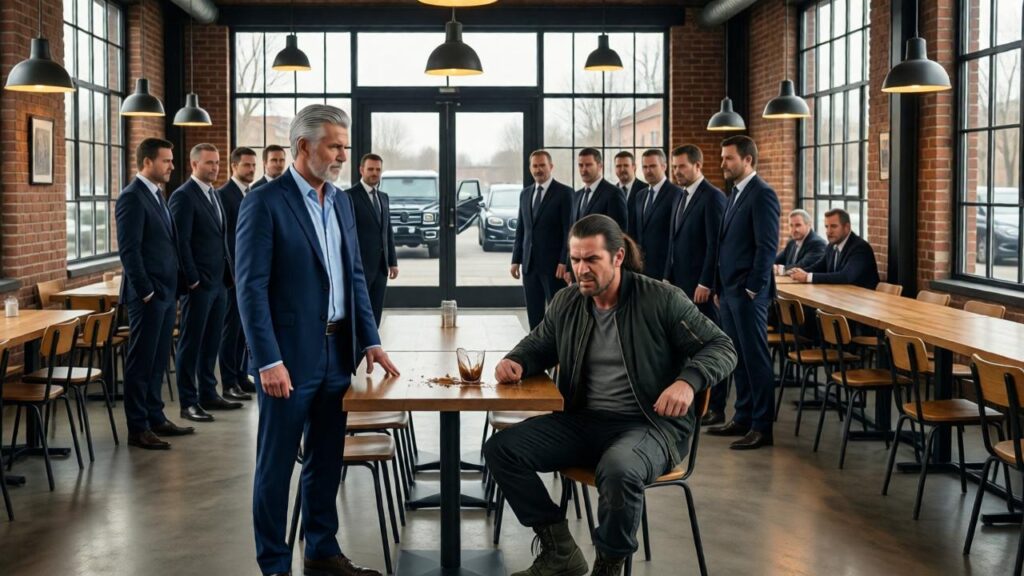
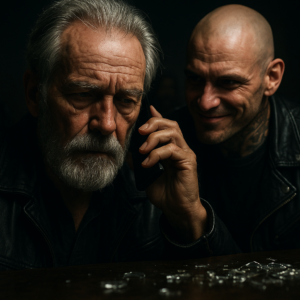
Elias lowered the phone without haste. He placed it face-down on the table beside the spreading coffee stain and the white shards. His silver hair caught the warm afternoon light; the short grey beard looked almost soft. Only his eyes were hard.
“You asked what I was calling for,” he said, voice still calm, almost conversational. “I was calling for them.”
Doors opened in perfect sequence. Twelve men stepped out. They wore dark tailored suits, not the cheap kind that stretched over muscle, but the expensive kind that was cut to conceal it. No visible weapons. No raised voices. They simply formed a loose semicircle between the café entrance and the parked vehicles, waiting.
Kane recovered first. He laughed once, sharp and forced.
“Old man, you think a dozen bodyguards scare us? We own this side of the river. You picked the wrong café.”
Elias tilted his head a fraction, as if considering the statement for its intellectual merit.
“You don’t own anything,” he replied. “You rent space. And the lease is about to expire.”
One of the bikers—tall, neck thick with ink—took a step forward. Kane raised a hand and the man stopped. Pride warred with the sudden understanding that the atmosphere in the room had changed. The warm daylight still poured through the high windows, the hanging industrial lamps still glowed, the polished concrete still reflected everything, but the air itself felt heavier.
Elias stood. He did it without hurry, brushing an invisible speck of dust from the sleeve of his dark-blue suit. The light-blue shirt remained open at the collar. He looked like a retired university professor who had wandered into the wrong neighbourhood—until you noticed that none of the twelve men outside moved until he did.
“I am going to walk out of here,” Elias said. “You and your associates will remain seated. If any of you stands before I reach the door, the conversation ends differently.”
Kane’s jaw worked. The cruel smile tried to return and failed.
“And if we don’t?”
Elias’s answer was soft.
“Then the men outside will come in. And they are less patient than I am.”
Silence stretched. Somewhere in the kitchen a coffee machine hissed and died. One of the bikers’ boots scraped against the concrete. No one else moved.
Finally Kane exhaled through his nose and sat back down, hard enough to make the chair creak. The others followed, slower, faces dark with the particular rage that comes from realising you have been outmanoeuvred by someone who never raised his voice.
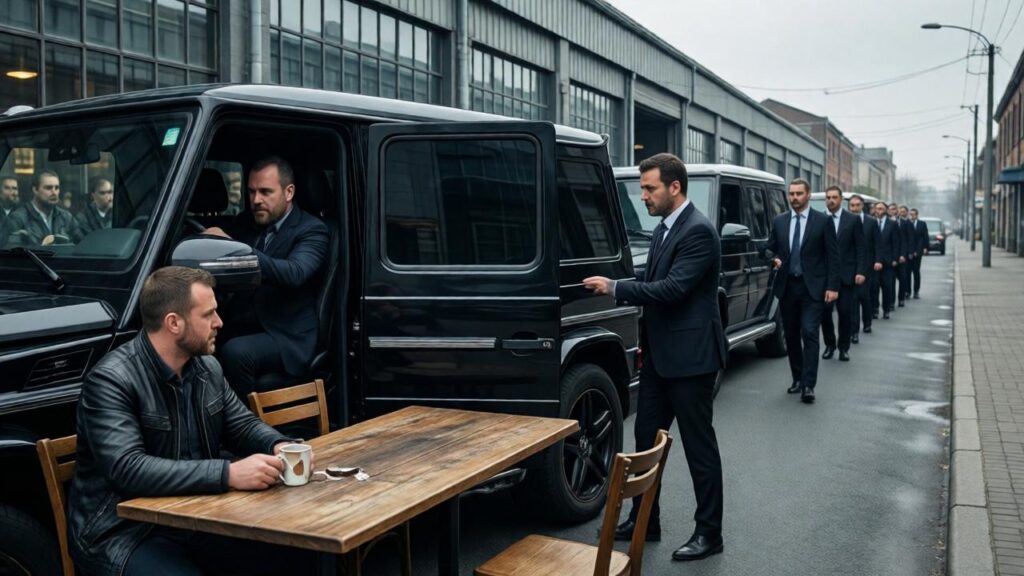
Elias nodded once, almost politely, and walked toward the glass doors. The twelve men outside parted just enough to let him pass. He did not look back.
As the lead G-Wagen’s rear door closed behind him, Kane stared at the empty chair across the table. The broken mug still lay in pieces. Coffee dripped slowly onto the polished floor.
Outside, engines started in perfect, expensive unison. The motorcade pulled away as quietly as it had arrived, leaving only the grey sky and the sudden, absolute knowledge that the old man had never been alone.