

The morning sun streamed through the windows of Rosie’s Diner, casting a warm glow over the red-and-white checkered tablecloths and the gleaming chrome of the counter. The air smelled of fresh coffee and sizzling bacon. It was an ordinary Tuesday, and the lunch rush was just beginning to build. Sarah, the young waitress with her dark chestnut hair neatly pinned back, balanced a plate of scrambled eggs, a side salad, and golden toast as she navigated between tables.
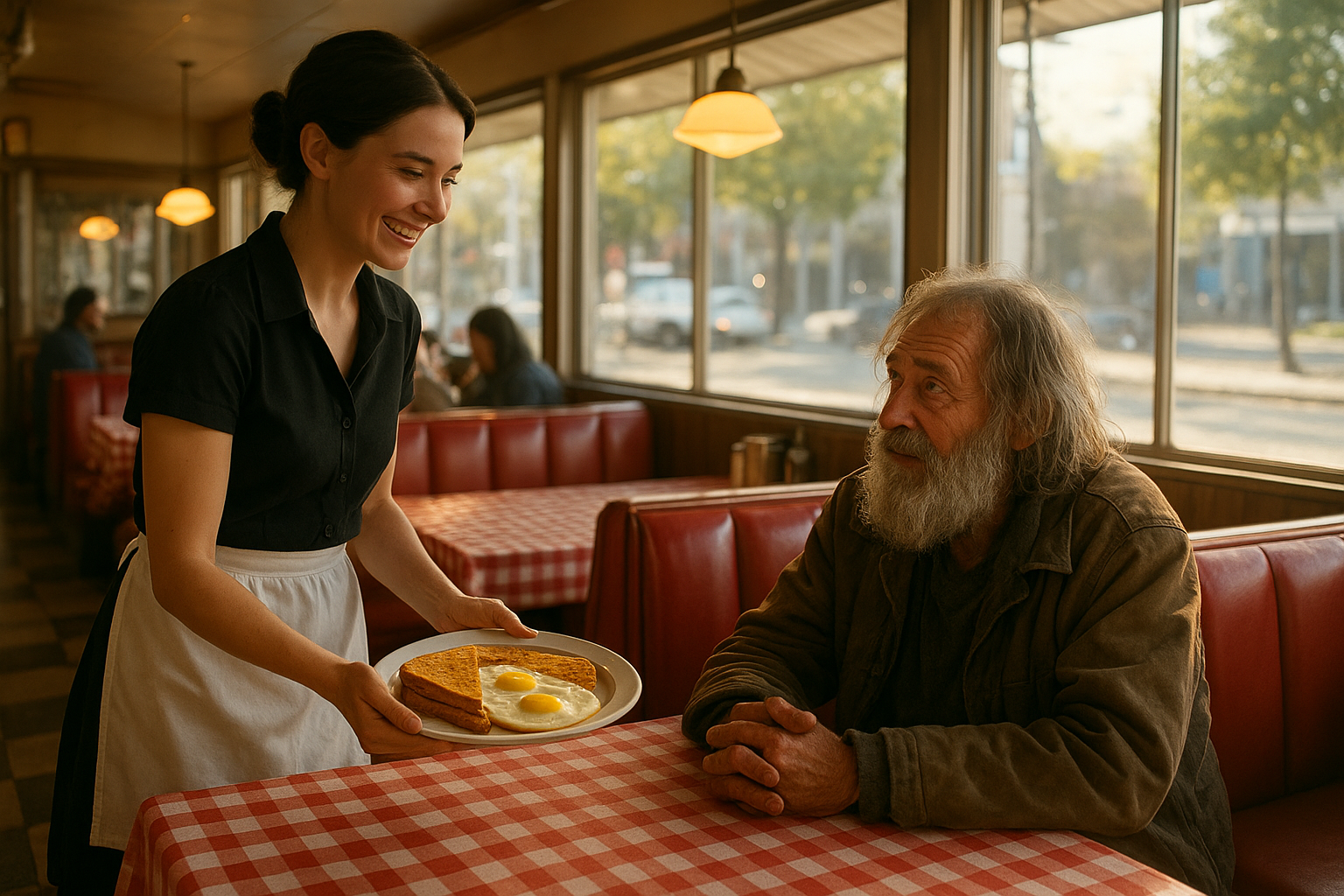
She approached the corner booth where an elderly man sat quietly. His long gray hair was tangled, his beard unkempt, and his brown jacket worn and dirty. He looked like he hadn’t had a decent meal in days. Yet his eyes held a calm dignity that made Sarah’s heart ache.
“Here you go, sir. Hope you enjoy it,” she said with a warm, polite smile, setting the plate before him.
The old man looked up at her, a flicker of gratitude in his tired eyes. “Thank you, young lady,” he murmured.
But before he could lift his fork, a shadow fell over the table. Marcus, the manager, stormed over from behind the counter. His black suit was immaculate, his tie perfectly knotted, but his face was twisted with rage. His voice boomed across the diner, silencing every conversation.
“This trash doesn’t deserve to eat!” he snarled, his hand sweeping across the table. The plate crashed to the floor, eggs and toast scattering across the linoleum. Sarah gasped, her hands flying to her mouth in horror. The old man didn’t flinch. He simply sat there, his gaze steady, as if he had expected this all along.
The diner fell into a stunned silence. Customers stared, unsure whether to intervene or look away. Sarah’s heart pounded in her chest as she watched her boss loom over the old man, his face inches away.
“I’m the owner,” Marcus declared, his voice calm but laced with authority. He crossed his arms, a smug smile playing on his lips. “You’re not welcome here.”

The old man slowly rose from his seat. Despite his ragged clothes and weathered face, there was an unexpected strength in his posture. He looked Marcus straight in the eye, his voice quiet but firm, cutting through the tension like a knife.
“You’re fired.”
Marcus blinked, his confident smirk faltering. “What did you say?”
“You heard me,” the old man replied, his tone steady as a rock. “You’re fired.”
For a moment, the world seemed to stop. Sarah’s mind raced. Who was this man? How could a homeless wanderer fire the manager of Rosie’s Diner? She glanced at Marcus, whose face had gone pale, then red. His jaw dropped, and he sputtered, his composure crumbling.
“You can’t be… I—I…” Marcus stammered, his eyes wide with disbelief. His hands trembled at his sides. “I’ve been running this place for five years!”
The old man reached into the pocket of his worn jacket and pulled out a small, tarnished badge. It glinted in the sunlight, and Sarah recognized the emblem of the restaurant chain’s corporate office. The old man—no, the owner—spoke with quiet authority.
“I bought this diner thirty years ago, and I built it from nothing. I’ve watched you treat my customers and my staff with disrespect for far too long. Today, I decided to see it for myself.” He paused, letting the weight of his words sink in. “You’re done.”
Marcus staggered backward, his mouth opening and closing like a fish out of water. The diner erupted in whispers. Sarah felt a surge of hope mixed with disbelief. She looked at the old man—his gray beard and tattered coat now seemed like a disguise, not a sign of poverty.
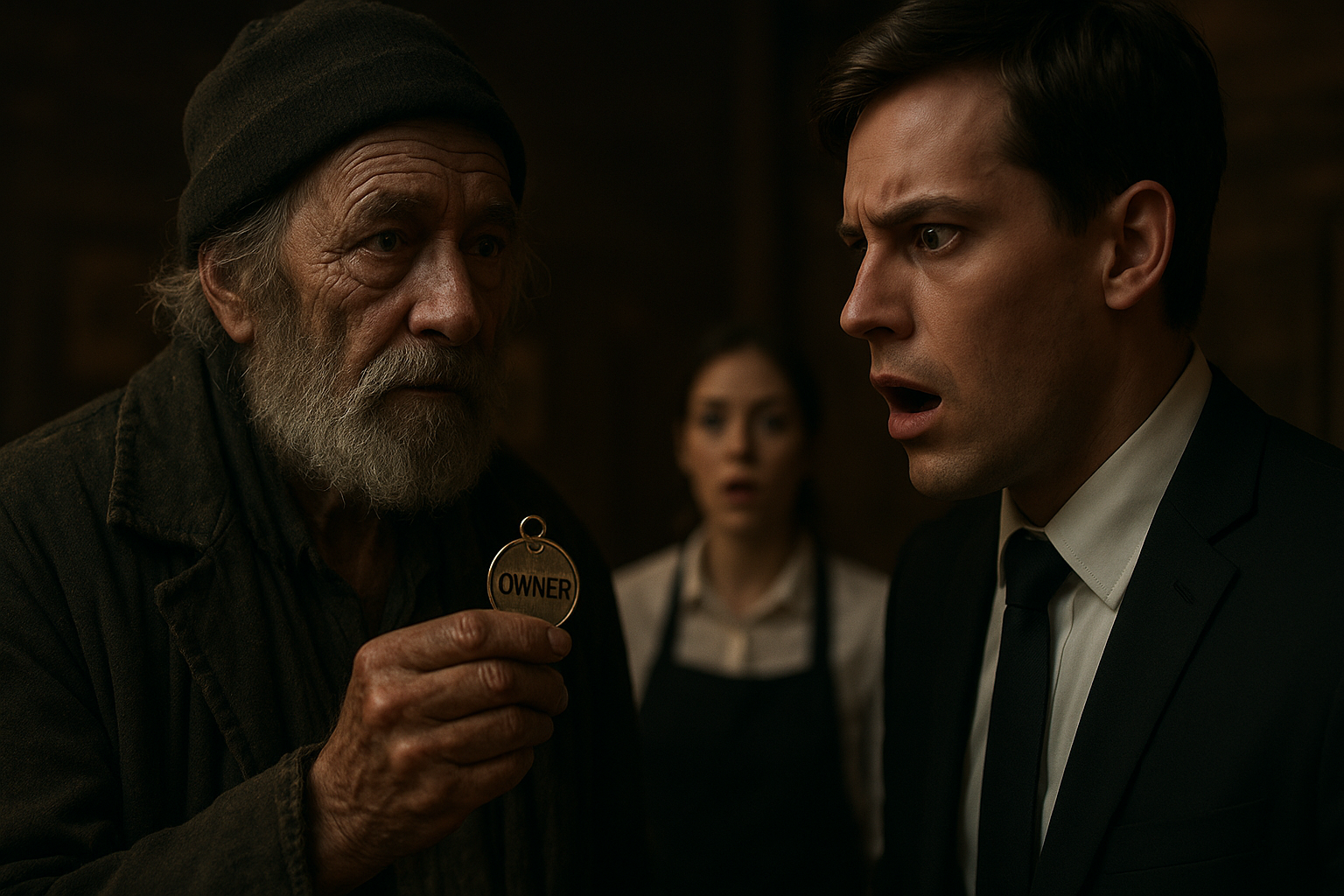
“Security will escort you out,” the old man said, gesturing toward the door. Two burly men in uniforms appeared, flanking Marcus.
As Marcus was led away, he shot one last venomous glare at the old man. “You’ll regret this!” he shouted, but his voice lacked conviction.
When the door swung shut, a strange quiet settled over the diner. The old man turned to Sarah, his expression softening. “Young lady, what’s your name?”
“S-Sarah,” she stammered.
He smiled, a gentle warmth replacing the steel in his eyes. “Sarah, you have a kind heart. You treated me with dignity when no one else would. From now on, you’re the manager.”
Sarah’s eyes welled with tears. She opened her mouth to protest, but the old man raised a hand. “No arguments. You earned it.”
The diner broke into applause. Customers cheered, and the kitchen staff peeked out from the back, grinning. The old man—Mr. Harrison, as Sarah later learned—sat back down in his booth and gestured to the mess on the floor.
“Now, how about a fresh plate of eggs, Sarah? And maybe some coffee for the road.”
Sarah laughed, wiping her eyes with her apron. “Coming right up, sir.”
As she walked toward the kitchen, she glanced back at the old man, who was now chatting with a family at the next table. In his tattered coat, he looked like a saint in disguise. She realized that sometimes, the people we judge the harshest are the ones carrying the most grace. And sometimes, a simple act of kindness can change everything.
The rest of the day, Sarah moved with a new lightness. She greeted each customer with a genuine smile, and when she finally served Mr. Harrison his fresh breakfast, she whispered, “Thank you for believing in me.”
He winked. “Just remember, Sarah—true worth isn’t measured by appearances, but by how you treat the least of us.”
And as the sun set over Rosie’s Diner, the red-and-white checkered tables gleamed, and the smell of fresh coffee filled the air—a new chapter had begun.