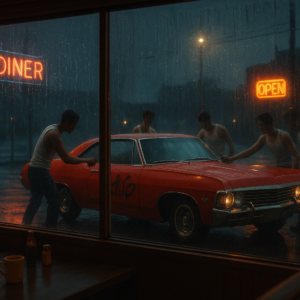
The rain drummed a steady rhythm against the diner’s windows, blurring the neon sign outside into a watercolor smear of pink and blue. Inside, the air smelled of coffee, bacon grease, and something warm — something that felt like home. Walter sat in his usual red booth, the vinyl cracked and patched with silver tape, his gnarled hands wrapped around a ceramic mug that had seen better days. He wore his brown cap with the faded yellow logo — a relic from a job he’d retired from two decades ago — and his plaid shirt was buttoned wrong, as it often was.
Emma appeared at his table like she always did, balancing a plate with practiced ease. Eggs, sunny-side up. Bacon, crispy. Toast, buttered. Coffee, black. She set it down with a soft clink and smiled, tucking a stray strand of chestnut hair behind her ear.
“Here you go, Walter. The usual.”
He looked up at her, and for a moment, the weight of the world seemed to lift from his shoulders. But then his expression shifted — a flicker of worry, a tightening around the eyes. He reached into his pocket and pulled out a crumpled five-dollar bill, then a few coins. Not enough. Not nearly enough.
“Emma,” he said, his voice rough with embarrassment, “I don’t have enough money today.”
She didn’t even blink. She just slid the plate closer to him and said, “Then it’s on me today, Walter.”
He stared at her, genuinely surprised. “Why are you always so nice to me?”
Emma felt her cheeks flush. She looked down at her white apron, at the small stain near the pocket, anywhere but at his kind, weathered face. She had asked herself the same question a hundred times. The answer was simple, really. He reminded her of someone she’d lost. Someone who used to sit in that same booth and tell her stories about the sea.
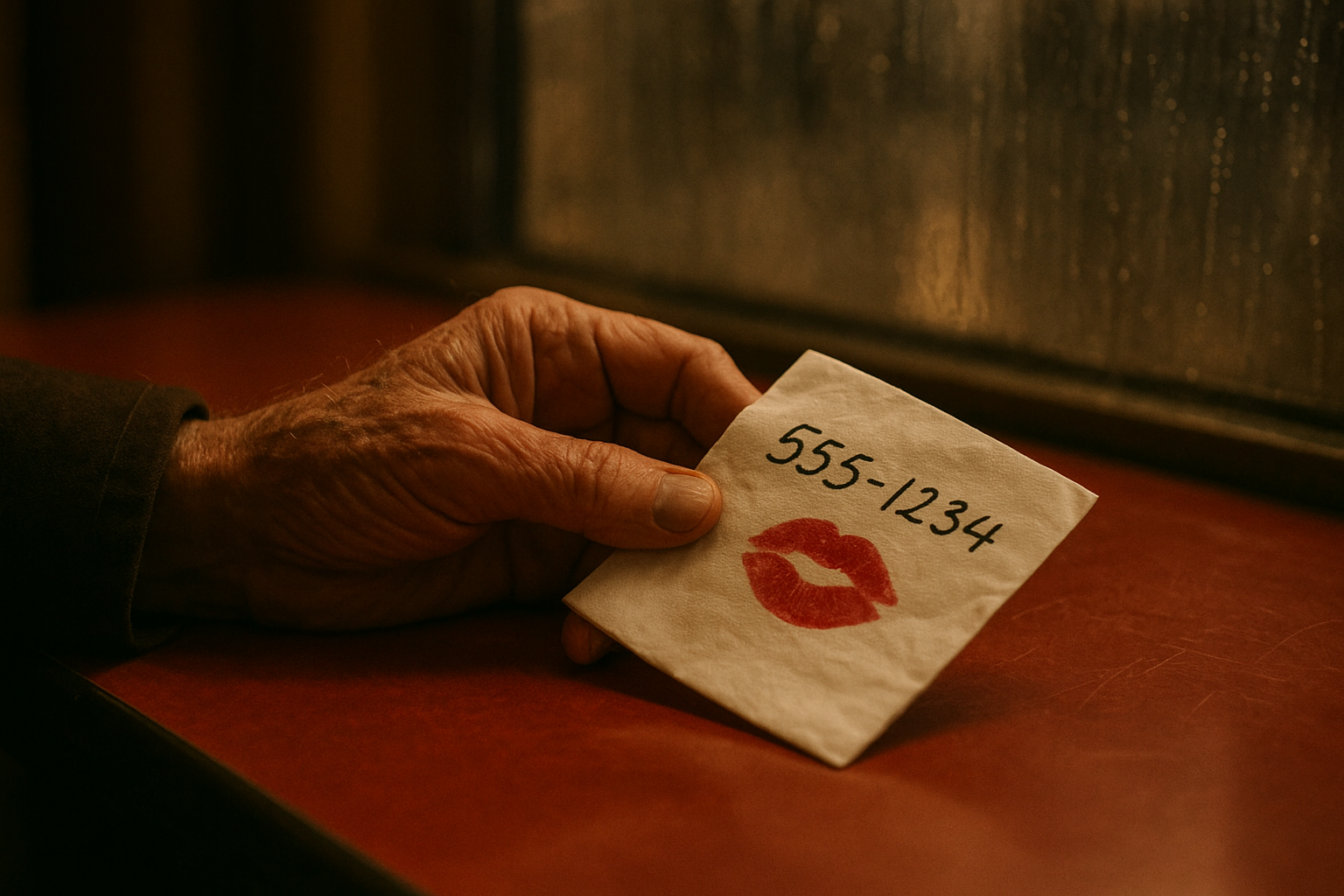
She reached into her apron pocket and pulled out a napkin. On it, she had written a phone number — 49-222-55* — and pressed her lips to the paper, leaving a perfect red imprint of her lipstick. She placed it on the table, next to his coffee, and whispered, “I love you, Walter.”
Then she turned and walked away before he could respond.
Walter sat frozen, staring at the napkin. His hand trembled as he picked it up. He traced the number with his finger, then the kiss mark. A tear slipped down his cheek and disappeared into the stubble of his beard.
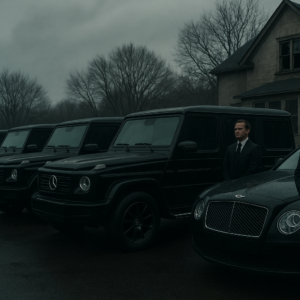
Outside, the rain had turned the parking lot into a mirror of gray sky and asphalt. Two vehicles sat facing each other like chess pieces — a black SUV and a black sedan. Their engines were off, but their headlights were on, cutting through the downpour. At the same moment, both doors opened.
Two men stepped out. The first was bald, clean-shaven, in a black suit that fit like a glove. The second had chestnut hair, a long beard, and glasses; he was built like a linebacker. They walked toward each other, meeting between the cars. Neither spoke. The bald man nodded. The bearded man adjusted his glasses. Then they turned, in unison, toward the diner.
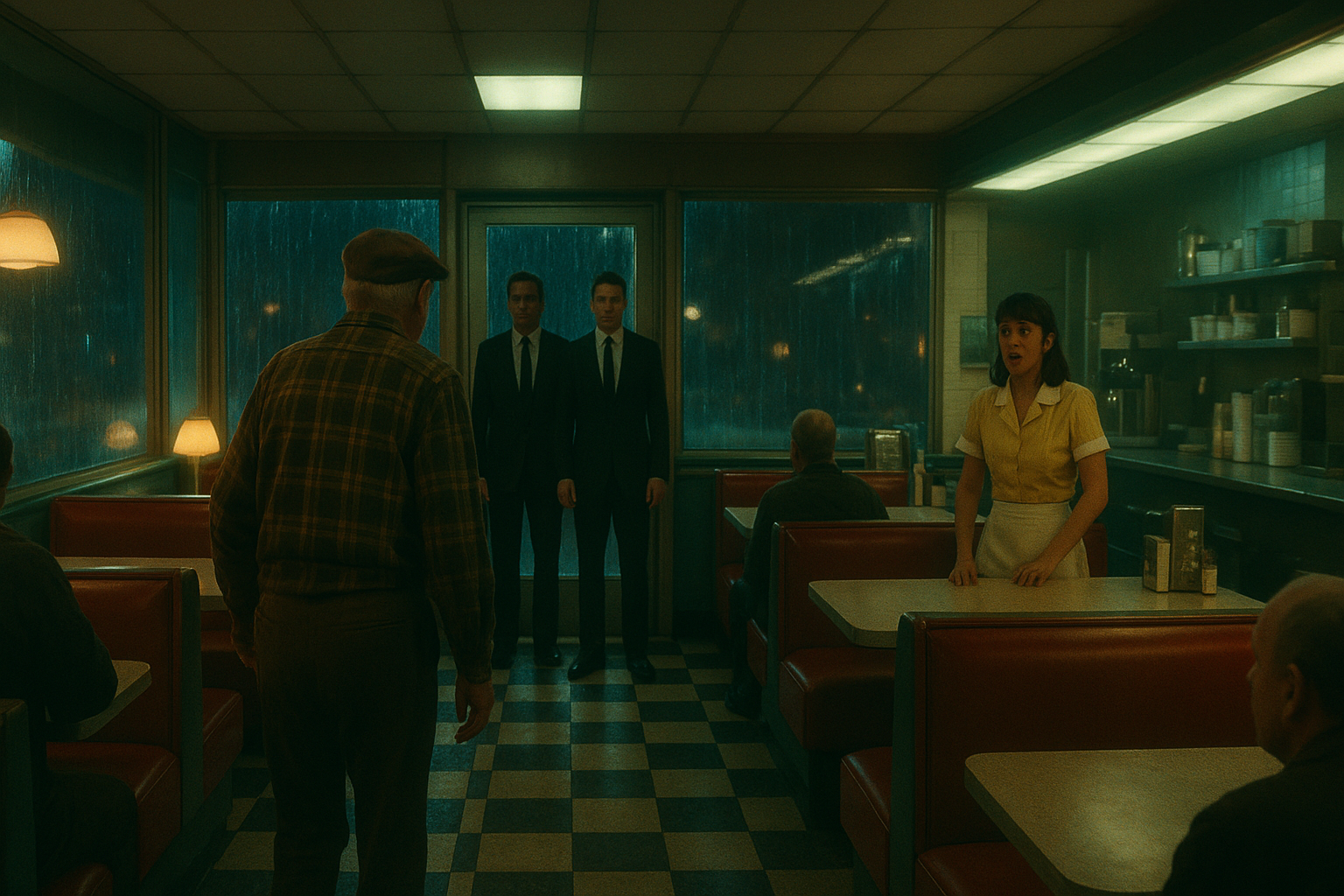
Inside, the bell above the door jingled. Walter looked up. His expression changed — the softness gone, replaced by something hard and serious. He stood, straightening his back, and for the first time in years, he looked like the man he used to be.
A waitress near the counter — blonde, in a green cardigan — nearly dropped her pot of coffee. “Emma,” she hissed, “who the hell is that?”
Emma had just come out of the kitchen. She froze. The plate in her hand tilted, and a fork slid off and clattered to the floor. She stared at Walter, at the way he stood, at the two men in black suits who had just entered and were now flanking the door.
“This is Walter,” she said, her voice barely above a whisper. There was a pause — a long, heavy pause — as if she were deciding whether to say more. Her eyes met Walter’s. He gave a tiny shake of his head. Not now. Not here.
Other customers had noticed. A trucker in the corner put down his newspaper. A young couple stopped mid-conversation. The diner, which had been alive with the clatter of dishes and the hum of conversation, went quiet. Even the rain seemed to hold its breath.
Walter walked toward the two men. He didn’t hurry. He didn’t look back at Emma. But as he passed her, his hand brushed hers — just for a second — and she felt the napkin being pressed back into her palm. She looked down. On it, below her number and her kiss, he had written a single word in shaky blue ink: Soon.
The bald man opened the door for Walter. The bearded man scanned the room one last time, his eyes lingering on Emma. Then they were gone, swallowed by the rain and the gray light.
Emma stood there, the napkin clutched in her fist. The blonde waitress hurried over. “Emma, what just happened? Who were those men? And why did Walter
“I don’t know,” Emma lied. But she did know. She had known for weeks, ever since she found the old newspaper clipping in his booth, the one with the headline: Local Man Cleared of All Charges After 30 Years. She had asked him about it once, and he had just smiled and said, “Ancient history, sweetheart.”
But it wasn’t ancient. It was happening right now.
She looked down at the napkin. She folded it carefully and tucked it into her apron pocket, next to her heart. Then she picked up the fallen fork, straightened her shoulders, and went back to work. The rain kept falling. The coffee kept brewing. And somewhere out there, in the back of a black SUV, Walter was telling two men in suits about a girl who had given him a reason to come back.
He would return. She knew it. And when he did, she would be ready — with a plate of eggs, a cup of coffee, and a thousand questions she was finally brave enough to ask.
The chandeliers of The Gilded Ox threw warm pools of light across the mahogany tables, and the clink of silverware rose and fell like distant music. Emma had…
The glass shattered in a glittering cascade, shards skittering across the polished floor of the spacious living room. White walls, minimalist decor—a sanctuary violated by the intrusion. Sam…
Elena had been staring out the car window for what felt like an eternity. The endless stretch of highway, flanked by dense pine forests and occasional glimpses of…
The sprawling courtyard of the modern country house lay under a cold, diffuse daylight, a light fog clinging to the air. A long wooden table, set for a…
The rain fell in steady sheets against the diner’s windows, turning the world outside into a blurred watercolor of neon and asphalt. Inside, the warm glow of fluorescent…
Adblocker detected!
We see that you are using an ad blocker. The advertising on our site helps us to further develop the project, improve content, and offer everything to you free of charge.
If you would like to support our service, please disable your ad blocker for this page.


 NotATabooo
September 14, 2026
NotATabooo
September 14, 2026