The bakery smelled like butter, cinnamon, and warm bread. It was the kind of café where nothing ever felt urgent. Soft music played from hidden speakers, expensive coffee brewed in silence, and pastries sat in elegant rows—ordered just to be admired, maybe nibbled, then left behind. Everything was warm. Controlled. Comfortable. Until the door opened.
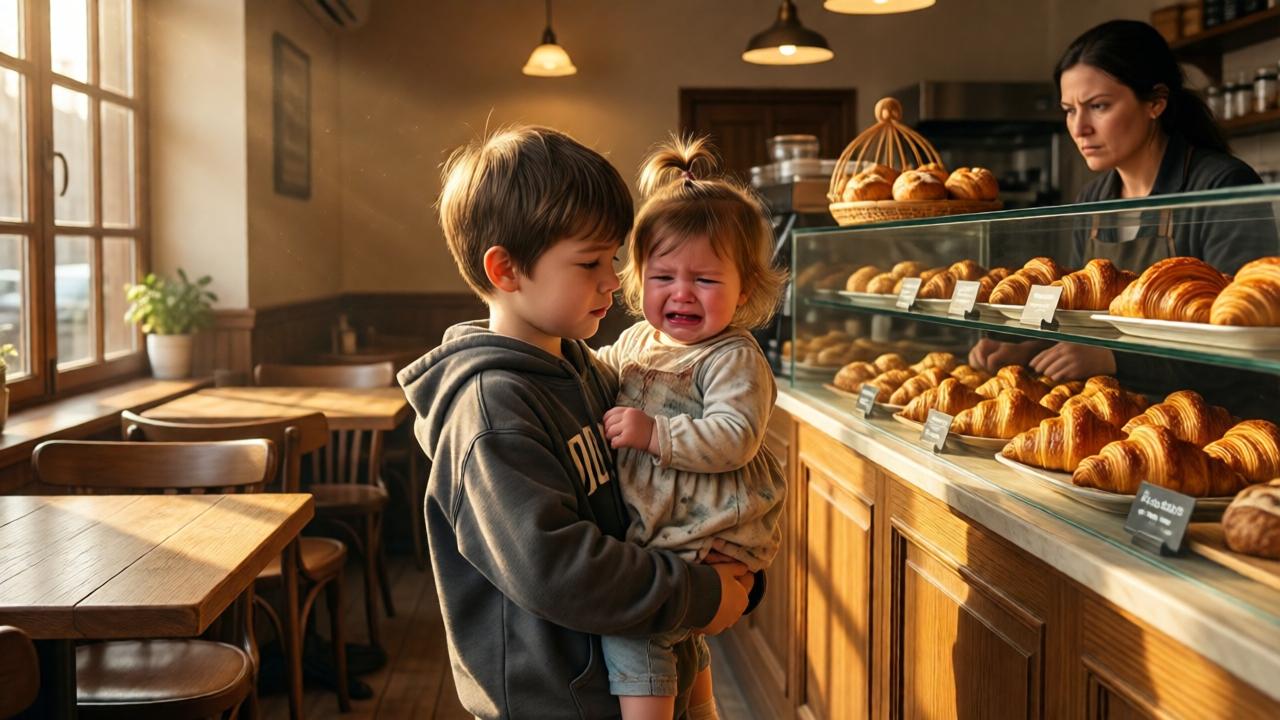
A skinny boy stepped in—no older than eight—holding a crying toddler against his chest. His hoodie swallowed his small frame. Her beige dress was stained and wrinkled. Both of them looked like they hadn’t rested in days. The toddler buried her face into his shoulder, voice breaking: “I’m hungry…” The boy swallowed it down—whatever he was feeling—and walked to the counter. Slowly. Carefully. Like hope was something fragile… and already cracked.
He looked up at the woman behind the register. “Do you have any bread from yesterday,” he asked quietly, “that you sell for less?” For one second—just one—her face softened. Then it disappeared. “We don’t sell leftovers here.” The answer didn’t come out loud. But it hit hard. The boy didn’t argue. Didn’t beg. Didn’t even look angry. He just lowered his eyes… and held the little girl tighter as her crying grew louder.
At a table by the window, an older man in a black suit slowly set his coffee down. He had been watching. Listening. And something about the boy’s voice had already unsettled him. Then he stood. His chair scraped across the floor, loud enough to silence the room. He walked to the counter. Calm. Controlled. Expensive. “Pack everything,” he said. The worker blinked. “Sir?” “Everything.”
The café went still. Hands paused mid-air. Conversations died mid-sentence. The worker turned, rushing to gather pastries, bread, anything within reach. But the man wasn’t looking at the food. He stepped closer to the children. “Come with me,” he said gently. The boy reacted instantly. Half a step back. Arms tightening around the toddler. His eyes changed. Not grateful. Careful. “Why?” he asked.
The man opened his mouth—then stopped. His gaze had fallen to the little girl’s face. First, her eyes. Then her mouth. Then—when she turned slightly through tears—he saw it. A small crescent-shaped birthmark near her temple. Everything inside him cracked. Shock. Pain. Recognition. His hand lifted… trembling… reaching toward her—and stopped. Just short. Like he already knew the answer… and feared it.
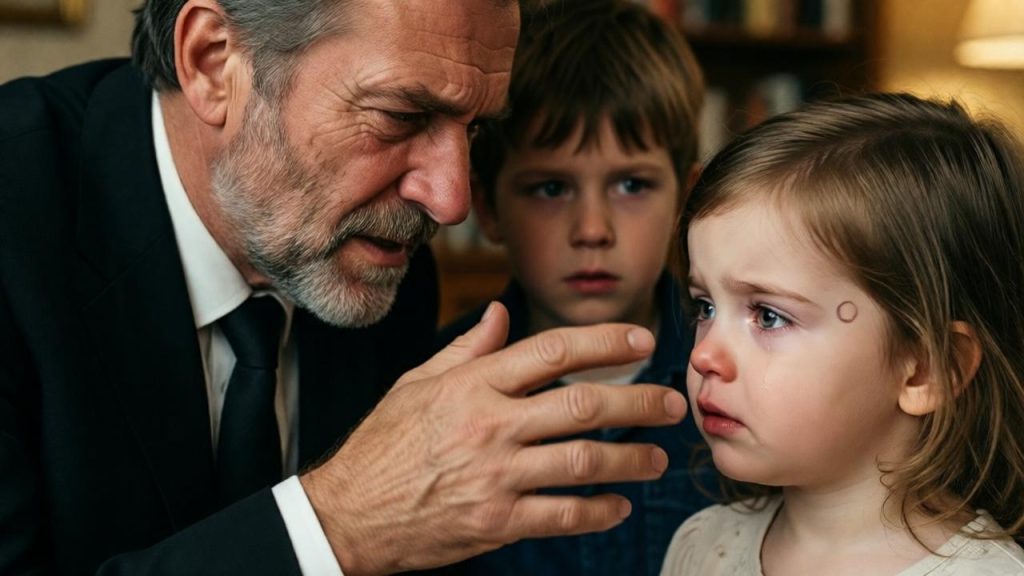
The boy noticed. His voice sharpened. “What?” The man struggled to breathe. “What’s her name?” The boy hesitated. Eyes flicking to the door. To the worker. Back to the man. Then—“Lily.” The name hit like a memory brought back from the dead. The man’s face drained of color. Years ago… his daughter used to laugh and say, If I ever have a girl, I’ll name her Lily. His throat tightened. “And your mother?”
This time—the boy froze. That question hurt. You could see it. He looked down at the toddler. Then back up. “…She’s gone.” The café felt smaller. Quieter. Too quiet. “Gone… how?” the man asked. The boy forced the words out. “She got sick in the winter.” The man closed his eyes. Just for a second. Like something inside him had shattered. The little girl whimpered, clinging tighter. He looked at her again. Then at the boy. And now—he saw it. Not just hunger. Not just dirt. Not just fear. He saw her. His daughter. In both of them.
The worker had stopped moving completely. Even she knew—this wasn’t about food anymore. The man’s voice trembled. “What was your mother’s name?” The boy looked at him. Long. Careful. Then whispered: “Elena.” The world tilted. His knees nearly gave out. Elena. His daughter. The one he had pushed away five years ago… because she chose love over his approval. Because she chose a life he didn’t accept. Because he chose pride. Over her. He hadn’t seen her since.
- The boy slowly reached into his hoodie and pulled out an old envelope, worn and soft at the edges.
- He held it out but didn’t let go yet.
- “Mom said… if we ever got too hungry… and if a man looked at Lily like he knew her… I should give him this.”
- The man stared at the envelope: four faded words on the front—”For my father.”
His fingers trembled as he took it. The entire café held its breath. He opened it. His eyes dropped to the first line—and everything inside him collapsed. Because it said: “Dad, if you’re reading this… hunger reached your grandchildren before your pride did.” The letter continued, each word a knife: “I never stopped loving you. I just couldn’t be the daughter you wanted. But these children—they are your blood. Please, don’t let them go hungry. Don’t let them feel the cold of your silence.”
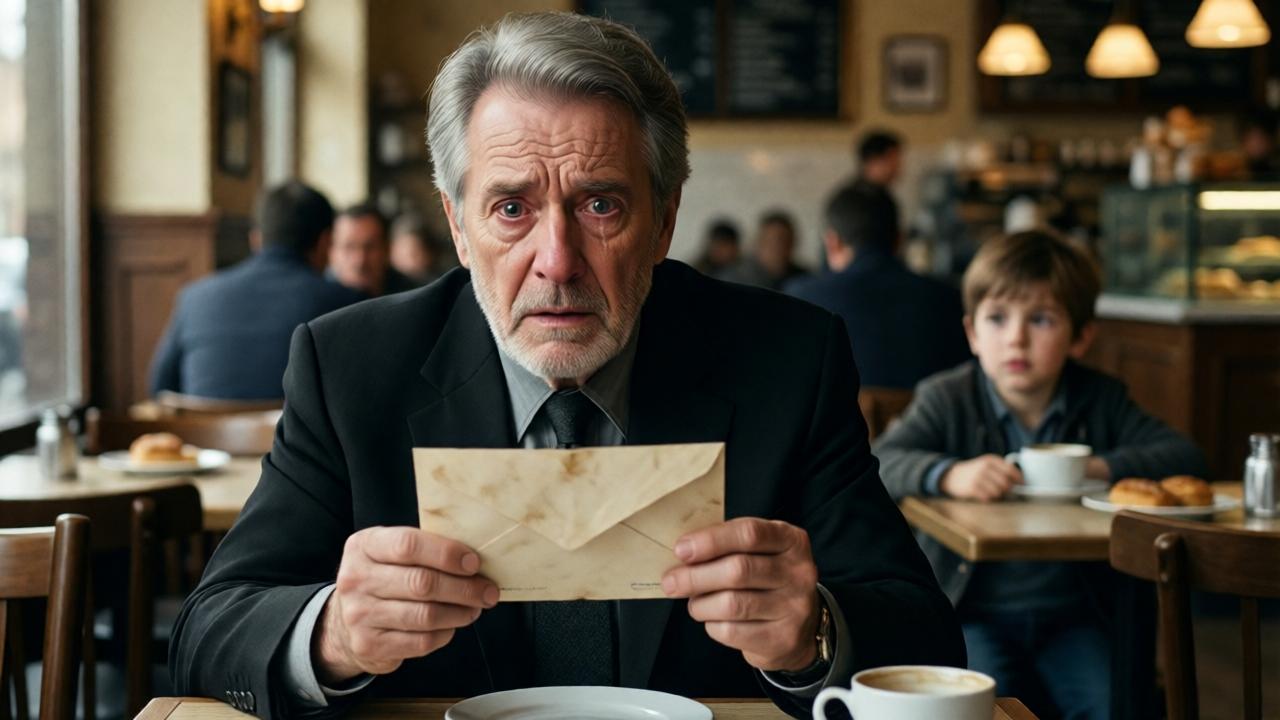
The man looked up, tears streaming down his face. He knelt in front of the children, his voice breaking. “I’m your grandfather.” The boy’s eyes widened, then narrowed. “Why should I believe you?” The man held up the letter. “Because your mother wrote this for me. And because… I’ve been a fool for five years. I’m sorry. I’m so sorry.”
The toddler—Lily—stopped crying. She stared at the man with curious eyes, then reached out a sticky hand and touched his cheek. The man sobbed, taking her tiny hand in his. “I’ll never let you go again,” he whispered. “Neither of you.” The boy hesitated, then slowly stepped closer. “We’re really hungry,” he said quietly. The man stood, wiping his eyes. “Then let’s get you everything this café has. And then—we’ll go home.”
The worker began packing boxes of pastries, bread, and cakes. Other customers quietly added money to the counter, some slipping bills into the boy’s pocket as they passed. The man put his arm around the boy’s shoulders. “What’s your name, son?” he asked. The boy looked up, a flicker of trust in his tired eyes. “Marco. Mom named me after you.” The man’s breath caught. He pulled both children close, holding them as if they were made of glass—and hope. Because sometimes, the hardest walls are the ones we build around our own hearts. And the only key is love, waiting to be found.