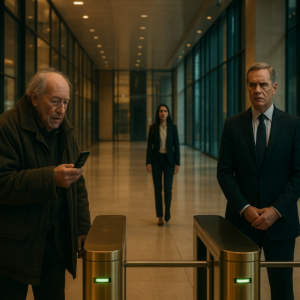

The laughter from the thirty ballerinas hung in the air like a toxic perfume. Isabella’s challenge—’You dance ballet, a homeless woman? If you can dance Swan Lake without embarrassing yourself, I’ll give you my entire year’s salary’—was not an invitation but a spectacle, a cruel joke to put the intruder in her place. Natalie, standing in her dirty clothes with her hair tied by a frayed elastic, felt the weight of every contemptuous glance. These dancers, with their expensive pointe shoes and bodies sculpted by years of private lessons, saw only filth and failure. Yet, as Isabella pointed to the center of the lavish studio, a strange calm settled over Natalie. She had danced on concrete amidst spit and scorn; this polished floor held no new terror.
Without a word, Natalie bent down and carefully removed her worn sneakers. The simple act was deafening in the hushed room. She walked barefoot to the exact center, feeling the unfamiliar smoothness of the maple wood under her calloused feet. She stopped directly under the main spotlight, a single figure illuminated in the vast space. The studio, moments ago filled with derisive whispers, fell into a profound, waiting silence. Natalie closed her eyes, not to block them out, but to find the music within—the same internal rhythm that guided her through the cacophony of city streets.
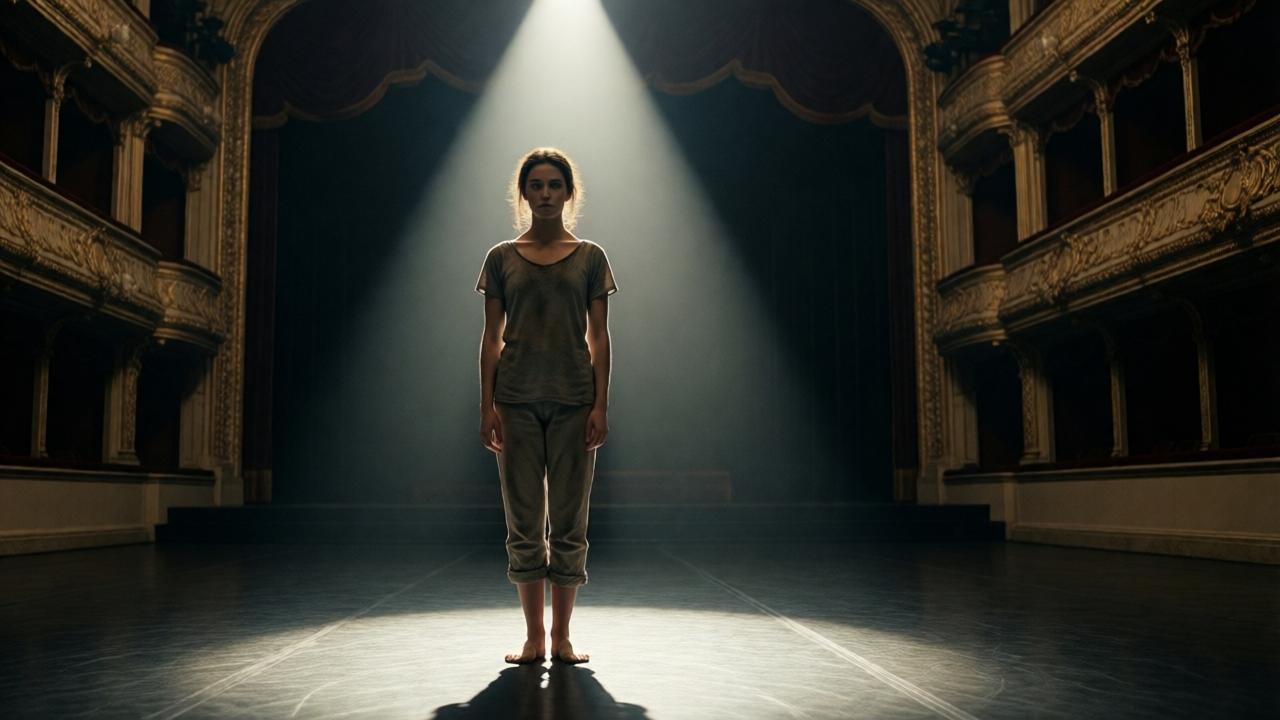
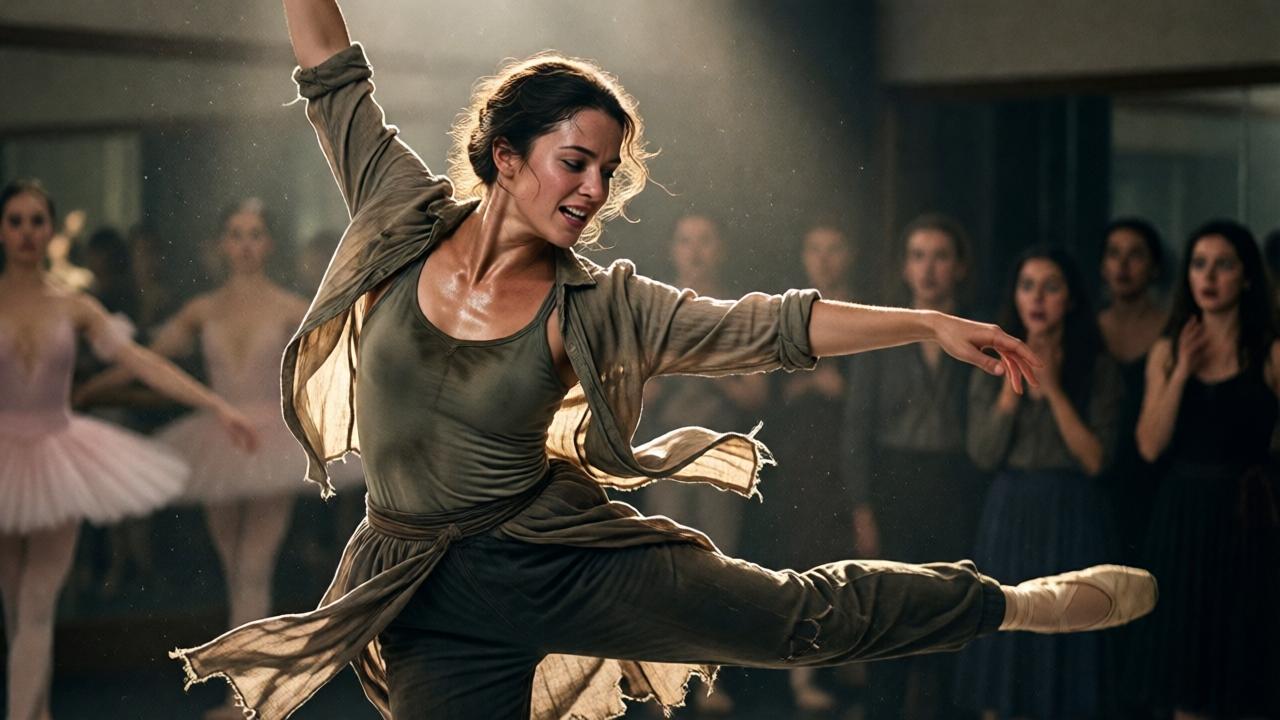
And then, she began. It was not the technically perfect, rehearsed-to-death Swan Lake of the academy. This was something raw, alive, and heartbreakingly beautiful. Her arms, thin but strong, became wings that didn’t just mimic a swan—they told a story of flight, of struggle, of a soul yearning for the sky while anchored to the earth. Her turns were not about pristine balance but about momentum, survival, the dizzying whirl of a life spent falling and getting back up. Every extension of her leg, every arch of her back, spoke of a pain and a grace that no amount of money could buy. The studio’s silence transformed from mockery to awe.
Isabella, who had watched with crossed arms and a smirk, felt her expression freeze, then slowly melt into disbelief. The ballerinas along the wall stopped exchanging glances. One, a girl with perfect blonde hair in a tight bun, felt a hot tear trace a path through her stage makeup. The security guard at the door, peering in, forgot his post. Natalie danced the entire pivotal scene, her body translating Odette’s enchantment and despair into a language everyone suddenly understood. When she finished, collapsing into a final, fragile pose on the floor, the silence was no longer empty—it was full, thick with unspoken emotion.
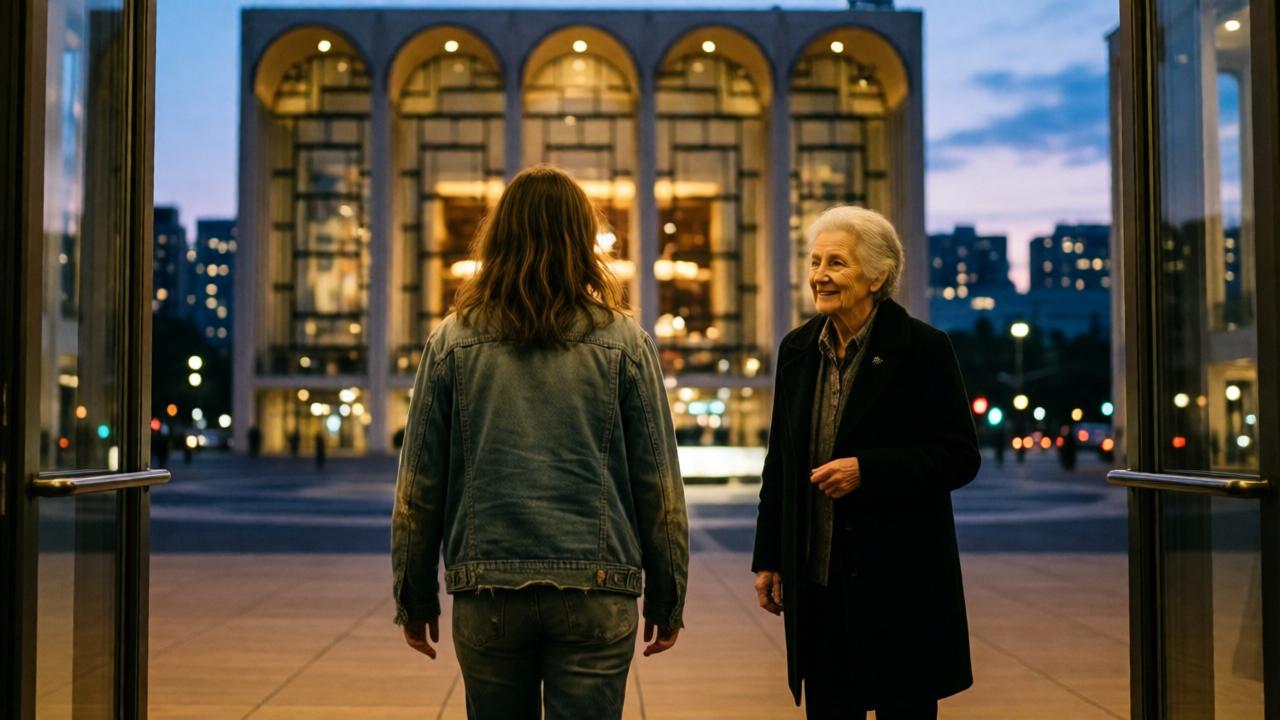
For a long moment, no one moved. Then, a single, slow clap echoed from the doorway. It was Martha, the old woman who had first seen Natalie’s gift on the sidewalk. She had followed, unseen, to witness this moment. Her clap was deliberate, a punctuation mark in the stillness. It broke the spell. Isabella uncrossed her arms, her business-like demeanor shattered. She walked slowly toward Natalie, who was now sitting on the floor, breathing heavily. ‘I… I was wrong,’ Isabella said, her voice uncharacteristically soft. ‘That wasn’t just not embarrassing. That was…’ She trailed off, unable to find a word grand enough.
Natalie looked up, not at Isabella’s face, but past her, toward the windows where the city lights were beginning to twinkle. ‘The salary,’ she said quietly, her voice hoarse. ‘I don’t want it.’ A gasp rippled through the room. Isabella blinked. ‘What do you want, then?’ Natalie stood up, gathering her quiet dignity. ‘A chance,’ she said, meeting Isabella’s gaze directly. ‘A real one. Not a dare. An audition. For your company.’ The challenge in the air had shifted. It was no longer about humiliating a homeless woman; it was about a professional recognizing raw, undeniable talent. Isabella, the shrewd businesswoman, saw more than charity—she saw an investment. She extended her hand. ‘Be here tomorrow at nine. Clean clothes will be provided.’ As Natalie walked out, past the now-silent ballerinas, she didn’t feel their stares as contempt. She felt them as a new kind of silence—the silence that comes before a storm, or before a new beginning.
Ready!!! there is: