
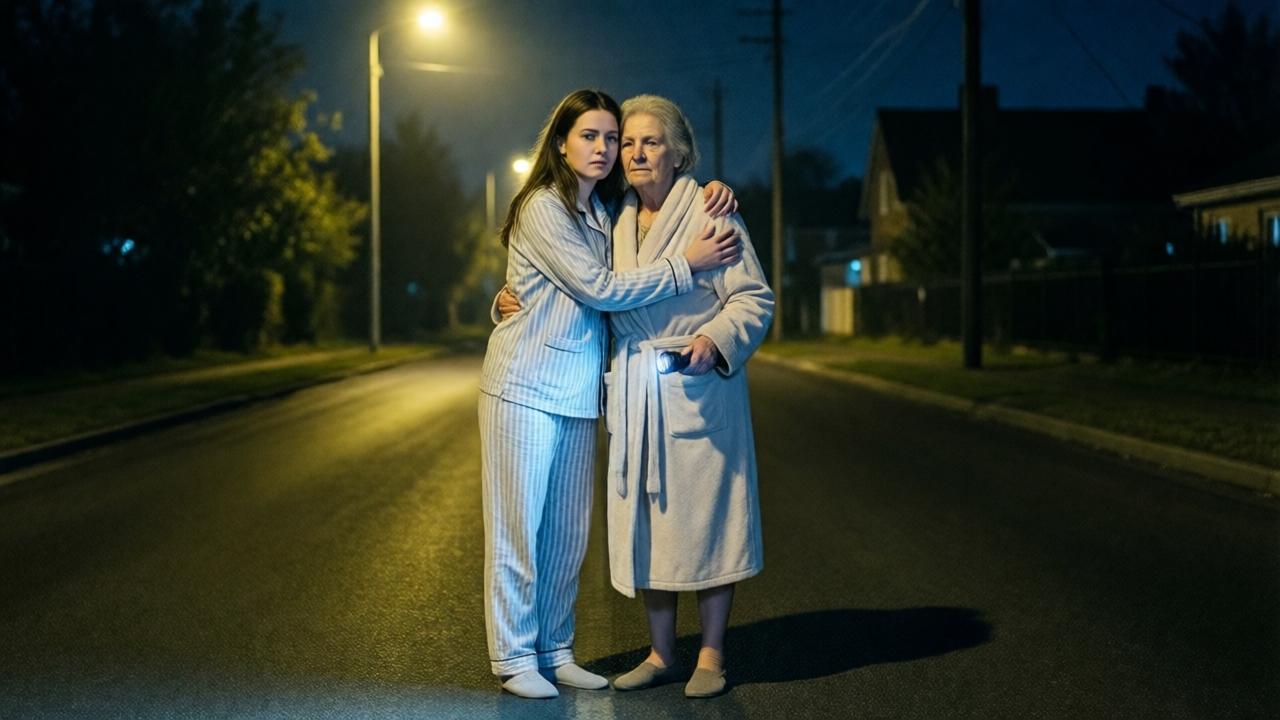
I froze when I heard my name. That voice — soft, familiar, yet completely unexpected — cut through the silence of the empty street. I turned slowly, my heart pounding so loud I was sure it would wake the whole neighborhood. Standing a few feet away was Mrs. Patterson, my elderly neighbor from two houses down. She was wrapped in a worn bathrobe, holding a small flashlight.
“Emily, honey, what are you doing out here at this hour?” she asked, her eyes scanning my trembling figure. I couldn’t speak. My lips parted, but no words came out. She stepped closer, and in the dim light, I saw her expression change from confusion to concern. “Oh, sweetheart,” she whispered, pulling me into a gentle hug. That simple embrace broke something inside me. I sobbed into her shoulder, the tears I had held back finally flooding out.
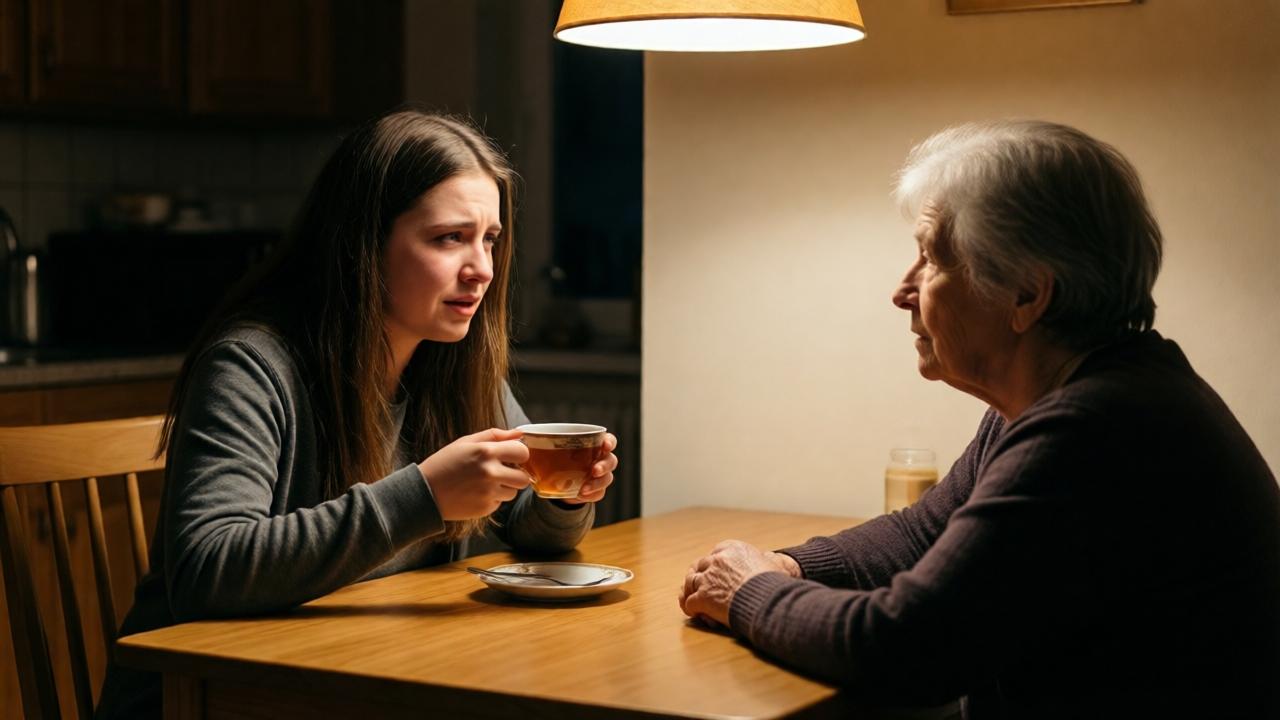
Mrs. Patterson didn’t ask questions. She just held me until my sobs quieted, then guided me to her small house. Inside, she made me a cup of hot tea and sat across from me at her kitchen table. The clock on the wall ticked loudly. “You don’t have to tell me anything,” she said softly, “but if you want to, I’m listening.” I looked into her kind eyes, and for the first time in years, I felt safe enough to speak.
“It’s David,” I whispered, my voice cracking. “He… he did something terrible.” I told her everything — the drugged drink, waking up in pain, the horror of seeing him beside me. As I spoke, Mrs. Patterson’s face grew pale, but she never interrupted. When I finished, she reached across the table and took my hand. “You are so brave, Emily,” she said. “And you don’t have to face this alone.”
- Mrs. Patterson called the police for me
- An officer arrived within 15 minutes
- I gave my statement at the station with her by my side
- David was arrested the next morning
The days that followed were a blur of interviews, medical exams, and court meetings. I moved in with Mrs. Patterson temporarily. She became my anchor. But the hardest part was facing my classmates and neighbors. Rumors spread like wildfire. Some people whispered that I was lying, that I was just a troubled teen seeking attention. Others looked at me with pity, which somehow felt worse.
I remember standing in the school hallway a week later, when a girl I barely knew walked up to me. “Is it true?” she asked, her voice loud enough for everyone to hear. “Did your stepdad really… you know?” The hallway went silent. I felt my face burn. But instead of running away, I looked her straight in the eye. “Yes,” I said, my voice steady. “And I’m not ashamed. He is.” A few people nodded. Some looked away. But I didn’t break.
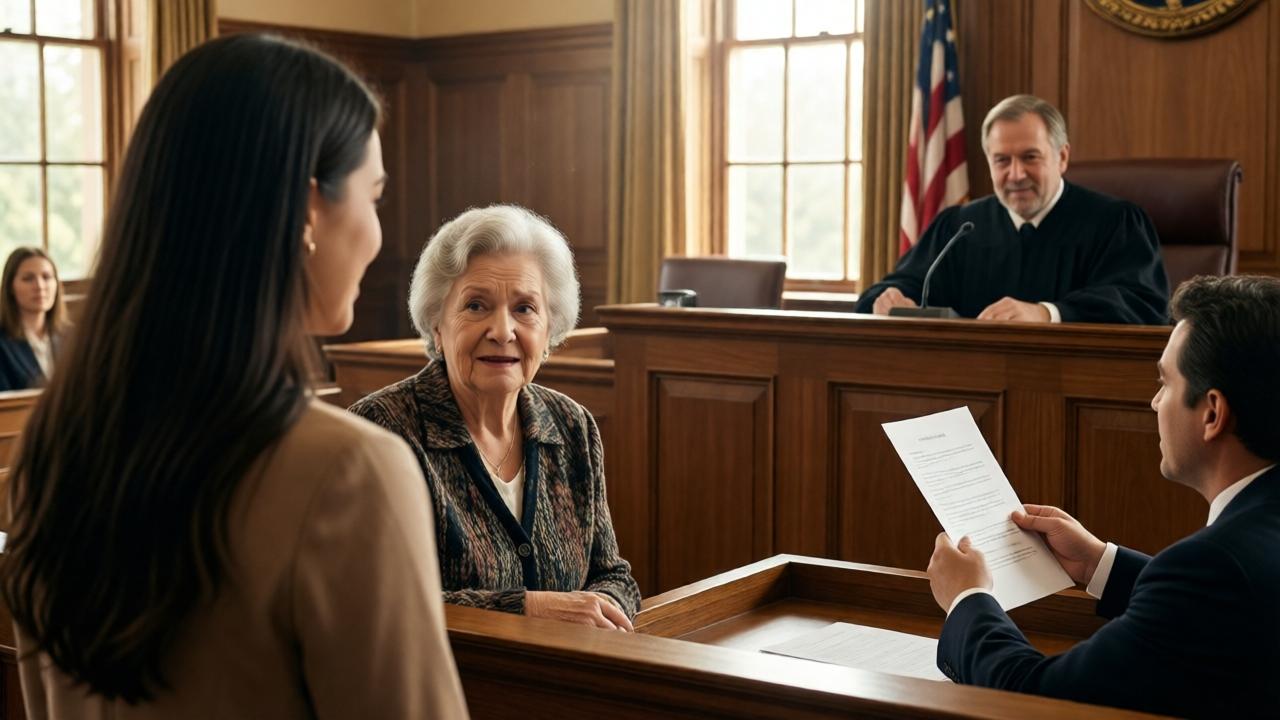
The trial was brutal. David’s lawyer painted me as a confused teenager with a history of rebellion. They brought up a time I had skipped school and a minor shoplifting incident from two years ago. But the evidence was overwhelming — the toxicology report, the bruises, the consistent testimony. When the jury returned with a guilty verdict, I collapsed into Mrs. Patterson’s arms, sobbing with relief.
Now, two years later, I’m studying psychology at the University of Washington. I want to help other survivors find their voice. Mrs. Patterson still calls me every Sunday to check in. “You’re my miracle,” she says. And I remind her that she was mine. The night I walked out of that house, I thought my life was over. But it was really just beginning. If you’re reading this and you’re in a similar situation, please know: you are not alone. There is help. There is hope. And you are so much stronger than you know.