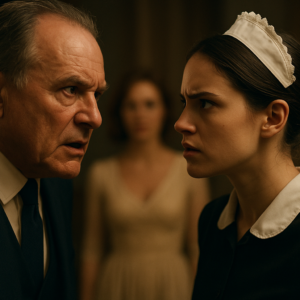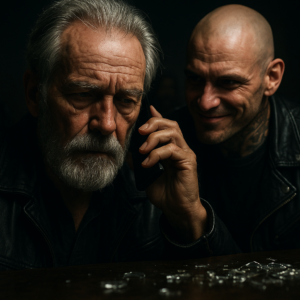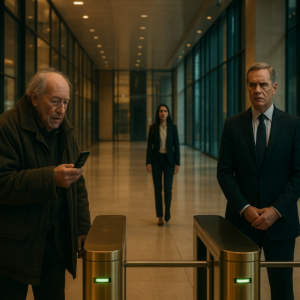

The phone call ended with a dial tone, a sharp electronic buzz that seemed to vibrate through my very bones. For ten years, I had built a fortress of success and normalcy, brick by brick, around the memory of what I had done. ‘Get out of here! Your mother is dead and I don’t want you anymore!’ I had shouted those words, ice-cold, convinced of my own righteousness. I watched a 14-year-old girl—quiet, polite, and utterly alone—bend down, pick up her torn schoolbag, and walk out of my life without a word. My heart, I told myself, was stone. But now, holding the silent phone, I felt that stone crack.
The gallery address was a sleek, modern space in the old part of the city I now called home. I stood across the street for a long time, watching well-dressed people flow through the glass doors. “Why are you here?” a voice inside me sneered. “To apologize? To be forgiven? You don’t deserve it.” But the caller’s final sentence was a hook in my soul: ‘After your wife passed away, you chased her daughter out of the house.’ It wasn’t an accusation; it was a simple, devastating statement of fact. My debt had found me.
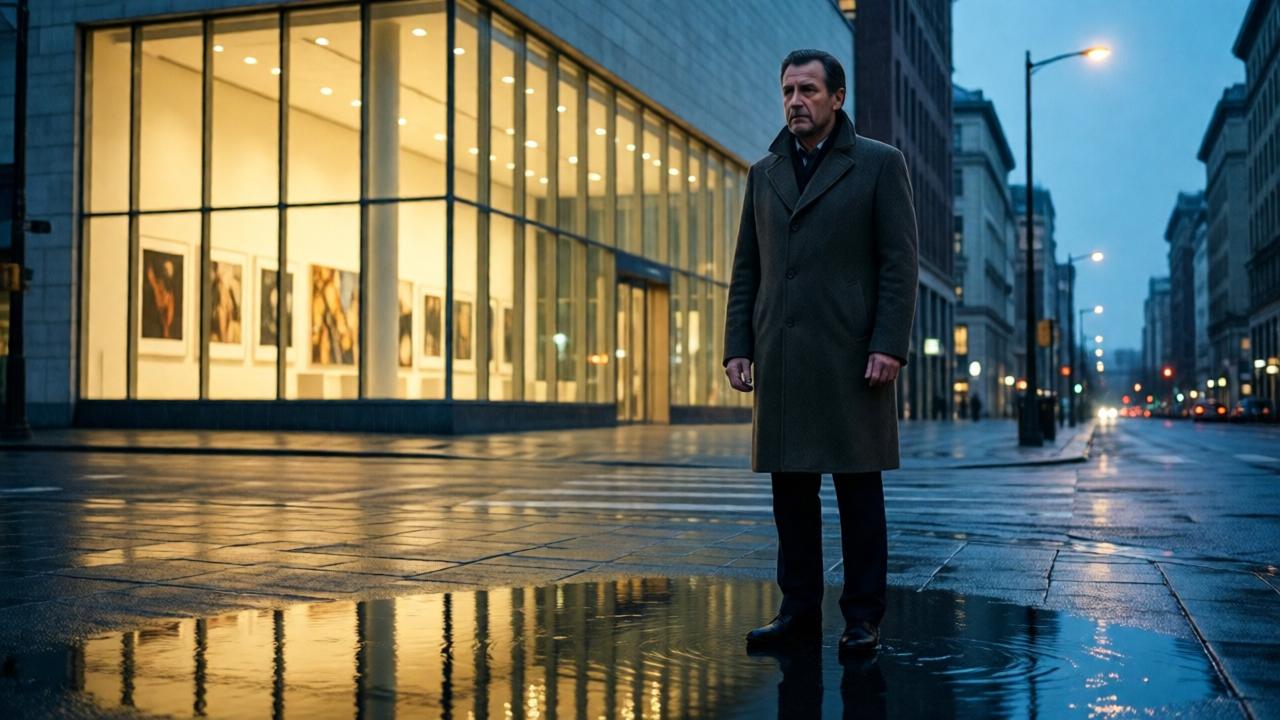
Inside, the air hummed with conversation and the clink of wine glasses. I moved through the crowd like a ghost, my eyes scanning the walls. The artwork was a series of powerful, large-scale charcoal drawings. They depicted empty doorways, fractured reflections, and solitary figures carrying burdens. Then, I turned a corner and froze. There, on the center wall, was a drawing so visceral it stole my breath. It was a detailed, haunting portrait of a younger version of myself, my face a mask of cold dismissal. At my feet was a meticulously rendered, faded schoolbag with a broken strap.
“She called the series ‘Unspoken Goodbyes,'” a calm, familiar voice said beside me. I turned slowly. The girl from my past was now a woman. She stood with a quiet confidence I didn’t recognize, her eyes holding none of the childish fear I remembered, but a deep, unsettling clarity. “I didn’t come for your apology,” she said, preempting the stammered words dying on my lips. “I came so you could see. So you could finally look.”
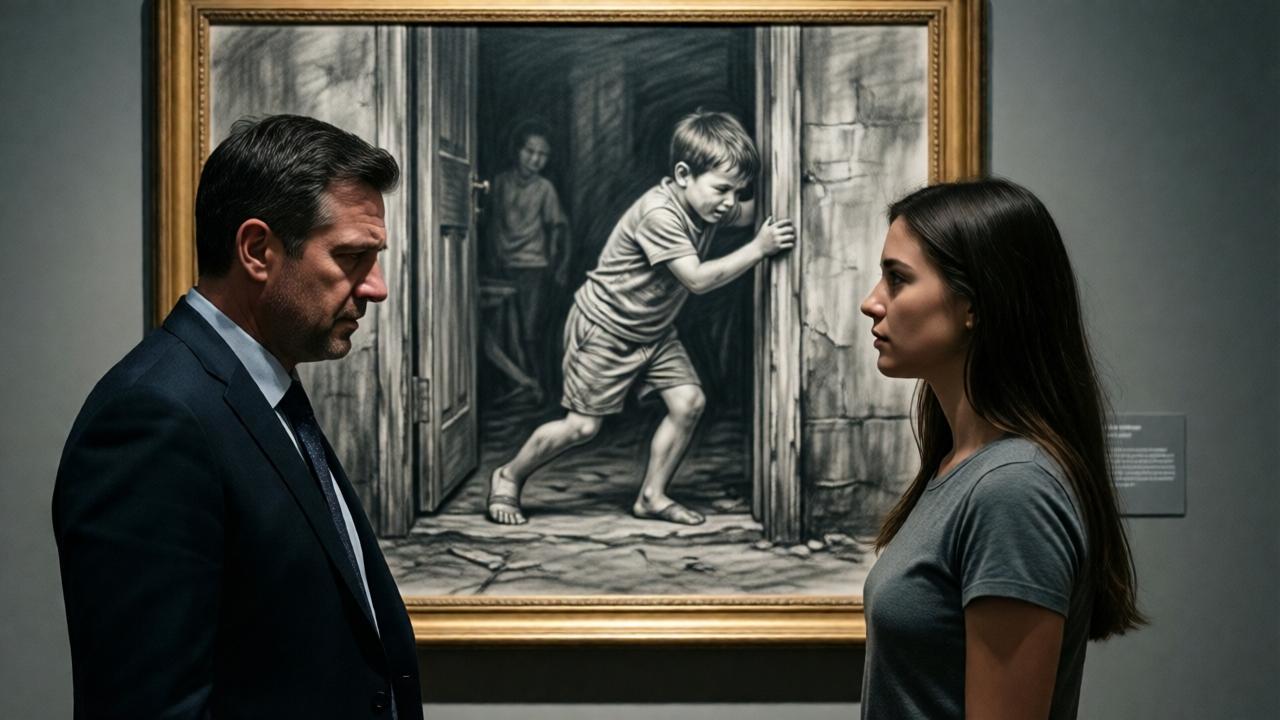
She told me her story in fragments, as we stood surrounded by the evidence of her pain. She slept in hostel corridors, worked cleaning offices at night while studying during the day, and found solace in a community art program. “For years,” she said, her voice steady, “I thought the problem was that I wasn’t good enough, that I wasn’t your blood. Then I realized the problem was never me. It was the hole where your compassion should have been.” Each word was a verdict. I had thought I was freeing myself of a burden; instead, I had become the burden she had to carry and transform.
I left the gallery long after the crowd dispersed. The cold night air felt different. The debt hadn’t been erased—some debts never are—but its shape had changed. It was no longer a ghost chasing me; it was a truth I had to finally hold. I couldn’t undo that moment at the door. I couldn’t give back those lost years. But as I walked away, the image that came to me wasn’t of her leaving. It was of my wife, her mother, the strong woman I had promised to love. I had failed them both. The call hadn’t been about punishment; it had been a summons to witness the resilience of the spirit I had tried to break.
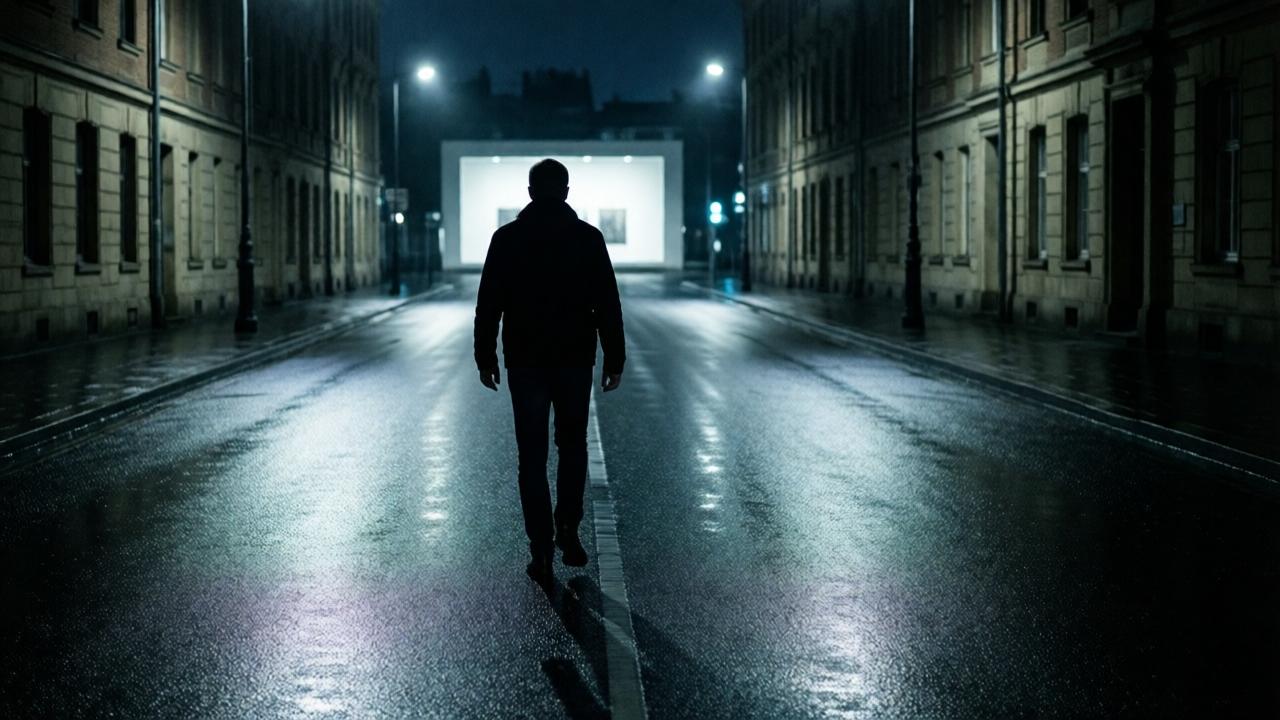
Sometimes, in the quiet of my new, comfortable life, I still hear the click of that door closing. But now, I also see the drawings on the wall. I understand that the conscience I tried to chase out with a child was the only part of me worth saving. The call was my Part 2, not written by me, but forced upon me by the life I discarded. And the story, I see now, is far from over.